




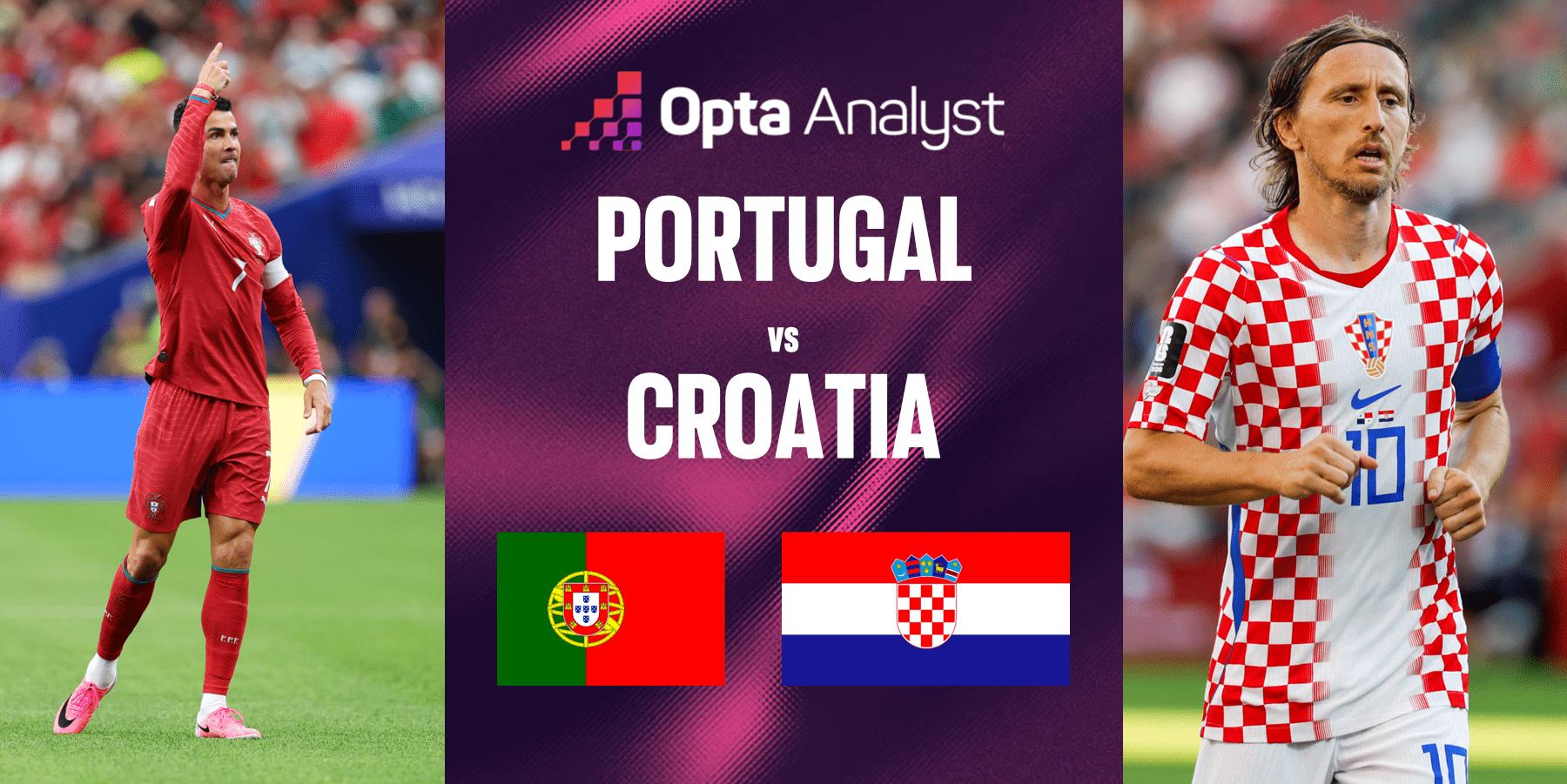


1️⃣ Match Context
This is a World Cup game with the kind of pressure that changes decision-making. Not because the teams don’t know how to play — but because the margin for error shrinks and every “safe” choice becomes more attractive than the optimal one.
Portugal arrive with the familiar expectation: control the ball, control territory, win. Croatia arrive with the familiar burden too: prove they can still manage elite tournaments with an aging core while transitioning without losing their competitive identity.
In this type of fixture, the key question isn’t who has the bigger names. It’s who handles game state better. Portugal are built to dictate. Croatia are built to survive and then punish the moment the opponent gets impatient. If this becomes a one-goal game entering the final half-hour, psychology becomes tactics.
Schedule dynamics matter as well. Tournament football compresses recovery windows, and both squads typically rely on experienced players who can manage tempo — but also carry heavier physical maintenance. That makes the opening 20 minutes important: a fast start can expose legs; a slow start usually signals a long, tight chess match.
2️⃣ Form & Advanced Metrics
Portugal’s recent performance profile is generally defined by territory control and shot suppression. They tend to push opponents back, tilt the field, and force lower-quality shot selection — fewer central-box looks, more rushed attempts, more blocks. When Portugal are “on script,” the opponent’s xG doesn’t just drop; it becomes fragmented into low-leverage moments.
But there’s a volatility layer. Portugal can generate strong xG through sustained pressure and repeated entries, yet become cross-heavy when the central lanes are denied. That can inflate shot volume without improving shot quality. In tournament games, that’s how you end up with 18 shots that feel like eight.
Croatia’s underlying identity is different. Their best versions don’t chase shot volume; they chase control of rhythm. Even when they concede territory, they prefer to keep the opponent’s attacks in predictable zones and then protect the penalty spot with compact spacing. Their defensive “form” often looks like lower PPDA in moments — a coordinated press trigger — followed by longer spells of medium block where they invite circulation but deny penetration.
If we look deeper, Croatia’s recurring issue is not “creating nothing” — it’s the dependency on a small number of high-quality chances. When the first big chance doesn’t arrive, their attacking xG can flatten. Against a side like Portugal that likes to re-press immediately after losing the ball, Croatia’s progression must be clean or it becomes a cycle of clearances and resets.
Stylistically, this projects as a classic: Portugal with the ball and field tilt; Croatia trying to keep the game from becoming stretched. The advanced-metric translation is simple: Portugal’s edge comes from repeatable pressure; Croatia’s edge comes from reducing the game to a handful of decisive possessions.
3️⃣ League Table Snapshot
World Cup formats don’t always reward “best team,” they reward “best moments.” Still, the table context frames urgency.
| Team | Played | Points | GF | GA | Goal Diff |
|---|---|---|---|---|---|
| Portugal | — | — | — | — | — |
| Croatia | — | — | — | — | — |
Takeaway: With tournament group dynamics often decided by small tie-breakers, both teams are incentivized to avoid the “bad loss” more than they’re incentivized to chase a glamorous win. That tends to compress totals and increase the value of structurally sound game plans.
4️⃣ Head-to-Head Analysis
Head-to-heads between these profiles usually repeat the same tactical themes: Portugal seeing more of the ball, Croatia refusing to get pulled into wide-open trading. The real question is whether Portugal can convert dominance into central-box access rather than harmless circulation.
When these matchups lean Croatia, it’s normally because Portugal’s attacks become predictable: wide progression, early crosses, second balls. When they lean Portugal, it’s because Portugal manage to pin the Croatian midfield line and create diagonal entries behind the first pressure wave.
Past results can be misleading here. The underlying matchup is less about historical scorelines and more about whether Croatia can keep Portugal from creating “repeatable” chances — the kind that come every five minutes once field tilt is established.
5️⃣ Tactical Breakdown (Core Section)
Who dictates tempo?
Portugal will try to dictate by possession height — building higher, keeping their rest defense set, and sustaining pressure after losses. Croatia’s objective is to dictate by pace control — slowing the game, turning it into a sequence of set pieces, stoppages, and low-risk phases.
Where is the overload zone?
The overload battle is likely in the half-spaces. Portugal’s best attacking sequences typically come when they can receive between the lines and face forward. Croatia will respond by collapsing the midfield triangle and forcing play wide, where they can defend crosses with numbers.
If Portugal’s interior connections click, Croatia’s back line gets pinned and the cutback zone becomes active. If those connections don’t click, it’s a lot of wing-to-wing circulation and Croatia’s shape stays intact.
Which flanks are exposed?
Portugal’s fullbacks/wingbacks (or wide defenders, depending on shape) can be a strength in territory but a risk in transition. Croatia’s counter threat is less about raw speed and more about first-pass quality and third-man runs into the channel.
That means Portugal’s rest defense structure matters: two defenders plus a screening midfielder must be positioned to stop the “one clean pass” that turns a harmless Croatian regain into a high-value chance.
Midfield control battle
This is the center of gravity. Croatia’s midfield has historically been elite at disguising pressure and keeping the ball under duress. Portugal’s midfield is typically more vertical: win it, advance it, and create entries before the block resets.
If Croatia can force Portugal into repeated slow build-ups, they can keep the game low-event. If Portugal can win second balls and re-press effectively, Croatia’s midfield spends too much time defending and the chance volume climbs.
Pressing triggers and buildup resistance
Portugal’s press is usually about locking the sideline and hunting the predictable pass. Croatia can resist that if their first touch and support angles are clean, but tournament games often reduce risk tolerance — and that’s when clearances and turnovers rise.
Croatia’s pressing is more selective. They’ll press hard on specific triggers (a back pass, a heavy touch, a receiver facing their own goal), but they won’t chase a high PPDA identity for 90 minutes. They want Portugal to feel comfortable… then rush them at the exact wrong moment.
Transition vulnerability
This is where the match can flip. Portugal’s attacking structure can leave space behind wide defenders. Croatia’s transition threat is about arriving in the box with numbers at the right time, not necessarily playing end-to-end. If Croatia get a couple of early counters, Portugal’s midfield may start to hedge — and that reduces Portugal’s chance creation in settled play.
Set-piece dynamics
In compressed, tactical games, set pieces often decide the expected-goals swing. Portugal’s sustained pressure usually wins corners and wide free-kicks; Croatia are typically well-drilled defending them. If this game is tight, the team that generates the better first contact and second-ball structure on dead balls has a real edge.
6️⃣ Odds & Market Evaluation
| Market | Portugal | Draw | Croatia |
|---|---|---|---|
| 1X2 (Indicative) | 1.95 | 3.40 | 4.20 |
Those prices translate roughly to implied probabilities (before margin) of: Portugal ~51%, draw ~29%, Croatia ~24%.
The betlabel.games team evaluates this matchup as slightly tighter than a typical “Portugal at 1.95” spot because Croatia’s style is structurally designed to suppress variance. According to our calculations, Portugal should still be favored — they carry the more reliable territorial platform — but the draw probability is often under-respected in games where one side willingly plays without the ball and protects central zones well.
Market evaluation: edge looks marginal rather than explosive. The best angles are likely derivative markets (Asian lines / totals) rather than pure 1X2.
7️⃣ The Hidden Edge (Mandatory Section)
The hidden edge here is about how “control” gets priced. Portugal’s dominance is obvious on broadcast: more possession, more territory, more time in the opponent’s half. That visibility often pushes bettors toward Portugal and toward overs.
But Croatia are one of the better teams at turning an opponent’s control into low-quality control. They concede the outside lanes, they protect the cutback zone, and they keep their box density high. The game can look like it’s tilting toward Portugal while the shot quality stays stubbornly average.
There’s also a second-layer nuance: Croatia’s game plan tends to improve as the match tightens. The longer it stays level, the more Croatia can commit to their preferred rhythm — and the more Portugal can become cross-dependent. That dynamic isn’t always fully priced because the market often treats “stronger team” pressure as inevitably leading to high-quality chances. It doesn’t. Not against this kind of block.
Why the market may be slow: recent scorelines (for either team) can exaggerate attacking sharpness, but this matchup is more about structure than form. Croatia’s ability to suppress central shots is a matchup trait, not a week-to-week trend.
8️⃣ Final Prediction
Main Pick: Under 2.5 Goals
Alternative: Croatia +0.75 (Asian Handicap)
Risk Level: Medium
Logic: (1) Croatia’s defensive structure is designed to keep opponents in low-leverage wide zones, which often reduces true shot quality even when shot volume rises. (2) Portugal’s control can become predictable if interior access is blocked, pushing the game toward crosses, second balls, and set pieces rather than open-play high xG. (3) Tournament pressure generally compresses risk appetite — especially if the game remains level into the second half — which increases draw gravity and lowers total-event tempo.
No guarantees. But in this matchup, the cleanest value usually sits where the game naturally wants to go: tight, tactical, and decided by details rather than chaos.




Leave a Reply