




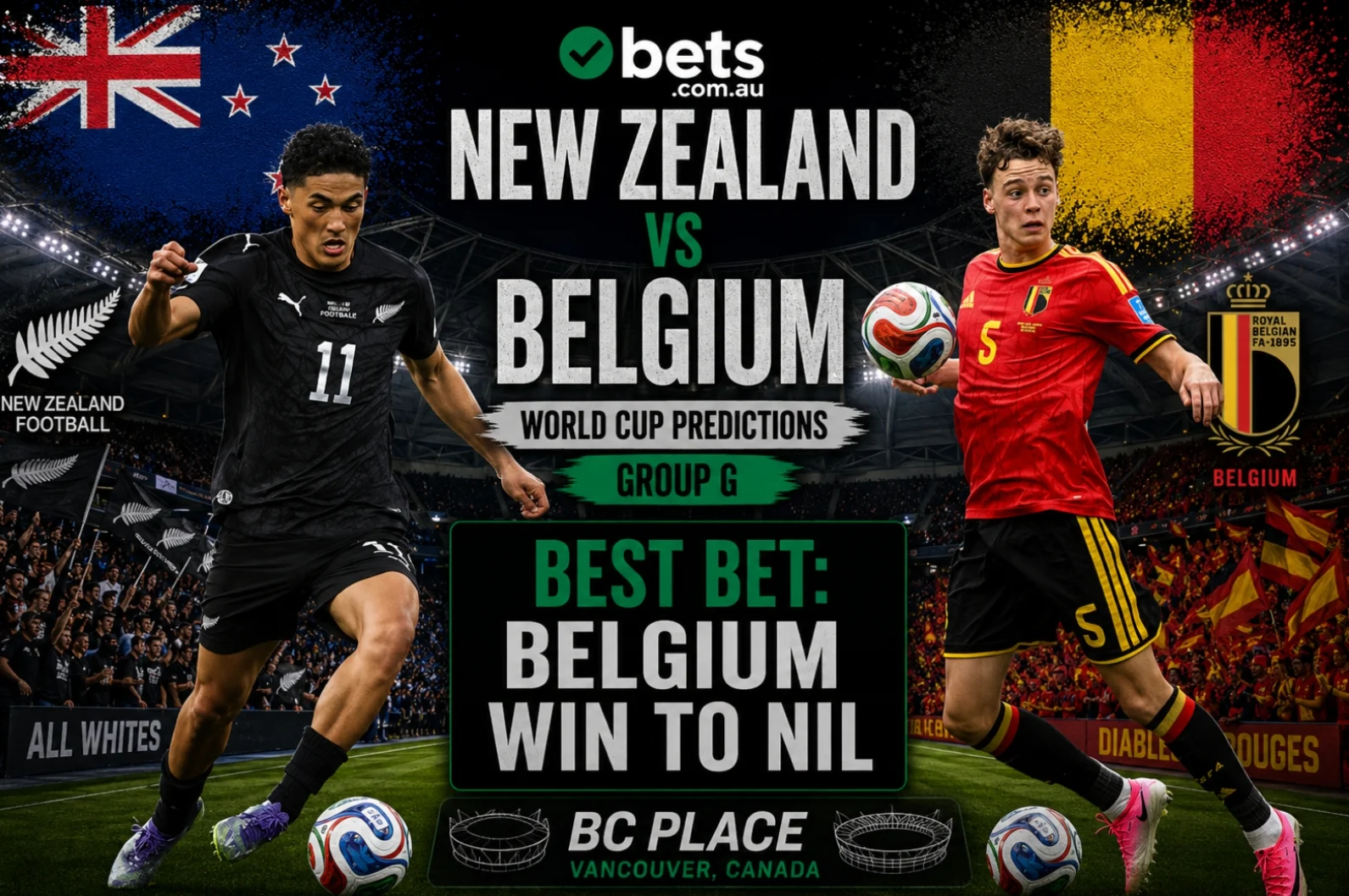


1️⃣ Match Context
World Cup group-stage games often split into two types: open shootouts and controlled executions. This one leans heavily toward the second. Belgium arrive with qualification expectations baked into their identity — anything less than a win becomes a pressure multiplier, not just a dropped result. New Zealand, meanwhile, sit in the familiar underdog space where the emotional target is different: stay alive for as long as possible, keep the game in a state that invites doubt.
The real weight here is psychological, not romantic. Belgium’s squad is built to dominate weaker opponents; when they don’t, the game starts interrogating them — impatience, riskier passing, more aggressive counter-pressing, and a higher transition tax. New Zealand’s job is to drag Belgium into that mood. Slow the rhythm. Survive the first wave. Force Belgium to solve a low-block puzzle without gifting transition lanes.
Schedule context also matters in tournaments: the “big” side tends to rotate or manage intensity if they believe control is enough. That can create a strange dynamic where the favourite wins comfortably without posting the kind of shot-count that inflates goal lines. If New Zealand can keep the first hour tight, the final 30 minutes becomes a test of Belgium’s composure rather than just talent.
2️⃣ Form & Advanced Metrics
Belgium’s underlying profile in recent competitive cycles has been consistent: they generate high-quality chances through structured possession rather than pure chaos. Their xG tends to come from central access — cutbacks, half-space combinations, and second-phase attacks after regains. That matters because it travels well in tournaments: you can have an “average” finishing day and still create enough to win.
Defensively, Belgium’s biggest tell is less about how many shots they allow and more about what happens when the press is bypassed. Their best version is compact, aggressive, and territorial: they push possession high, compress the pitch, and win the ball back quickly. But when an opponent can clear first pressure and run into space, Belgium can become leggy — the back line can be asked to defend bigger distances than you’d like in a knockout-style environment.
New Zealand’s metric reality is usually the inverse. Their best spells are defined by shot suppression rather than shot creation. They can keep teams to lower-quality efforts if their block stays connected, but their own attacking output often relies on set-pieces, direct play, and isolated transitions. That’s not automatically bad — it’s rational tournament football for a side that expects less ball. The issue is volatility: when you don’t create much, you need your defensive plan to be near-perfect, because there’s no cushion.
Pressing intensity is the key translation point. PPDA (passes per defensive action) isn’t just a number — it tells you whether a team tries to win the ball early or sits and guards space. Belgium’s pressing tendencies typically force opponents into longer sequences under stress, particularly in wide build-up zones. New Zealand are more likely to accept territory and protect the middle. That clash usually produces a predictable pattern: Belgium pile up territory and entries; New Zealand’s “success” is measured by how few of those entries become clean shots.
3️⃣ League Table Snapshot
| Team | P | W | D | L | GF | GA | Pts |
|---|---|---|---|---|---|---|---|
| New Zealand | – | – | – | – | – | – | – |
| Belgium | – | – | – | – | – | – | – |
Takeaway: early World Cup group context is often less about table maths and more about game-state leverage. Belgium want a lead because it unlocks their control game; New Zealand want 0–0 as long as possible because it forces Belgium into higher-risk decisions and increases the value of one set-piece or one transition.
4️⃣ Head-to-Head Analysis
Head-to-head history matters only when it reveals repeating structure. In matchups like this, the repetition usually comes from style rather than identity: a possession-heavy European side against a compact, transition-focused underdog. The pattern tends to be consistent across eras — territorial dominance for the favourite, low event volume for the underdog, and a decisive moment that’s often either a set-piece, a second-ball finish, or a fatigue-triggered breakdown late on.
The key is whether those past outcomes were “shot-driven” or “moment-driven.” If the favourite’s wins came with sustained shot quality, it’s repeatable. If they came from one wonder strike and little else, it’s fragile. In this specific pairing, you’d expect Belgium’s chance creation to be more repeatable than New Zealand’s, simply because Belgium can manufacture pressure without needing game-state gifts.
5️⃣ Tactical Breakdown (Core Section)
Who dictates tempo?
Belgium, almost by default. Their structure is built to circulate possession, pull the opponent laterally, then access the half-spaces. Against a lower block, the danger is sterile dominance — lots of ball, few clear looks. But Belgium’s advantage is that they can vary the route: wide overloads for cutbacks, central combinations, and direct switches to isolate fullbacks.
Where is the overload zone?
The half-spaces are the battleground. New Zealand’s block will likely protect the centre first, meaning Belgium’s best path becomes wide progression into low crosses and cutbacks. This is where field tilt (territory control) becomes practical: if Belgium sustain attacks, New Zealand’s wide midfielders get pinned, and the back line is forced to defend facing its own goal. That’s where second-phase shots appear.
Which flanks are exposed?
For New Zealand, the risk is the far-side fullback getting isolated after switches — a classic problem when the block shifts too aggressively. Belgium’s ability to move the ball from one wing to the other quickly is a structural edge. For Belgium, the exposure is usually behind the advanced fullbacks: if New Zealand can win one clean duel and release early, there’s space to run into. The issue is whether New Zealand can progress the ball cleanly enough to reach those lanes.
Midfield control battle
This is less “who wins midfield” and more “who controls the second ball.” Belgium will have more controlled possession; New Zealand need to disrupt rhythm through compact spacing, physical duels, and forced turnovers that turn into immediate forward play. If New Zealand can keep Belgium’s central playmakers receiving with backs to goal, they can turn the match into a sequence of slower wide attacks — lower shot quality, higher crossing volume.
Pressing triggers and buildup resistance
Belgium’s pressing triggers usually appear on negative touches in wide build-up or backward passes under pressure. If New Zealand insist on playing short, they invite turnovers in dangerous zones. If they go direct, they concede possession but reduce immediate danger. Expect a pragmatic New Zealand plan: direct outlets, fight for territory, and try to win set-pieces. Belgium’s counter-press will be designed to stop exactly that.
Transition vulnerability
This is the one area where New Zealand can create real discomfort. Belgium’s rest defence must be clean: centre-backs positioned to defend the first long ball, midfield screening ready to stop the second pass. If Belgium score first, they can manage this. If they don’t, and they start throwing numbers forward, New Zealand’s transition value rises sharply even if their total shot count stays low.
Set-pieces
New Zealand’s most realistic “equaliser” is a dead-ball situation — corners, wide free-kicks, long throws. Belgium, for all their control, have historically had phases where defensive set-piece concentration dips, especially when they expect dominance. That’s not a talent issue; it’s an attention-tax issue. If New Zealand can win 6–8 attacking set-piece moments, they have a route to a goal without needing open-play volume.
6️⃣ Odds & Market Evaluation
| Market | Selection | Odds | Implied Probability |
|---|---|---|---|
| 1X2 | New Zealand | 12.00 | 8.3% |
| 1X2 | Draw | 5.50 | 18.2% |
| 1X2 | Belgium | 1.25 | 80.0% |
Those implied probabilities won’t sum to 100% due to margin, but the message is clear: the market prices Belgium as a heavy favourite, and that’s justified structurally. According to our calculations at betlabel.games, Belgium’s true win probability sits a touch lower than the raw market anchor in many books, not because Belgium aren’t superior, but because low-block underdogs compress variance and reduce the favourite’s “easy goal” paths.
The edge, if any, is rarely found in the 1X2 at prices like this. It’s found in derivatives: handicaps, team totals, and goal lines tied to match texture rather than brand power.
7️⃣ The Hidden Edge (Mandatory Section)
There’s a structural nuance here: dominance doesn’t always equal a high-scoring game. When a superior side faces a well-drilled, low-event opponent, you often get a match with heavy field tilt but fewer clean shots than the possession would suggest. The market sometimes over-prices “big team = goals” in group games, especially when the favourite’s name attracts public money.
If Belgium take the lead, they’re not obliged to chase a second at full throttle — tournament logic rewards control. That can produce a 1–0 or 2–0 that feels inevitable without being explosive. If Belgium don’t score early, New Zealand’s confidence grows and the block tightens, which can drag the match into a slower second-half script.
Meanwhile, New Zealand’s path to a goal is narrow but not imaginary: one set-piece, one scrappy second ball, one deflection. That single event can flip handicap markets even if Belgium remain the better team for 85 minutes. The market is sometimes slow to price that type of underdog scoring route correctly because it’s not “chance volume”; it’s chance type.
8️⃣ Final Prediction
Main Pick: Belgium -1.5 (Asian Handicap)
Alternative: Under 3.5 Total Goals
Risk Level: Medium
Why these angles fit the match:
1) Territorial control should be one-way. Belgium’s ability to sustain attacks and pin New Zealand back creates a high floor for winning — even if the finishing isn’t perfect.
2) New Zealand’s open-play creation is likely limited. Their most dangerous moments come from set-pieces and transitions, which are real but not reliably repeatable across 90 minutes.
3) Tournament game-state favours controlled margins. Belgium can win without turning the match into a track meet, which keeps the under angle live even in a comfortable favourite performance.






Leave a Reply