




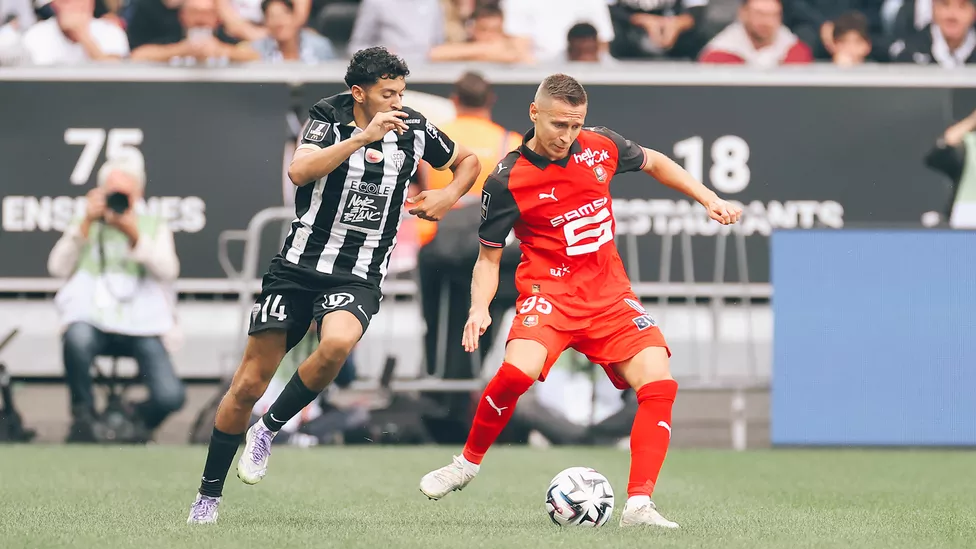


1️⃣ Match Context
April in Ligue 1 is where matches stop being “three points” and start becoming leverage. Stade Rennais are in the phase of the season where every home game is a negotiation with expectation: you’re supposed to win, the market prices you like you will, and anything short of it creates instant noise.
Angers SCO arrive with a different kind of pressure. For bottom-half sides, spring football is less about identity and more about survival management: timing your peaks, stealing points in low-event games, and keeping belief intact when the ball doesn’t go your way for 20-minute stretches.
That contrast matters. Rennes will carry the initiative and the emotional burden that comes with it. Angers can play the role that creates discomfort: slow the game, deny central progressions, and turn it into a contest of patience rather than brilliance.
Schedule dynamics also lean into the psychology. Rennes are typically involved in high-tempo spells and can show small drop-offs late in matches when they’ve had to chase territory for long periods. Angers, by contrast, are often happiest when the match is fragmented—fouls, restarts, set-pieces, long clearances—because it reduces the number of “real” attacking sequences they have to defend.
2️⃣ Form & Advanced Metrics
Rennes’ underlying profile usually reads like a strong home side: territorial control, repeatable shot generation, and enough pressure to force opponents into rushed clearances. When they’re functioning, they don’t need to create the perfect chance—they create enough good ones.
The key distinction, though, is shot quality versus shot volume. Rennes can run up attempts from the edges of the box when opponents sit in a compact 4-4-2 or 5-4-1 block. That inflates activity without always inflating danger. Their best versions arrive when their possession creates central access—cutbacks, half-space slips, and second-phase shots from the “D” after a box entry.
Defensively, the numbers typically point to an aggressive posture: more counterpressing, more recoveries in the middle third, and a willingness to leave space behind the fullbacks. In practical terms, Rennes games can become volatile if they lose rest-defense structure. One mistimed press, one bypassed duel, and suddenly a low-volume opponent is running into open grass.
That’s exactly where Angers can be awkward. They rarely win games by dominating; they aim to manufacture a small number of high-leverage moments. Their chance profile often depends on transitions, set-pieces, and opponents gifting them central turnovers. So the question isn’t whether Angers will “create a lot.” It’s whether the few situations they do create are high-value.
Pressing intensity is another hinge point. PPDA is the shorthand for how many passes you allow before making a defensive action—lower means more pressure. Rennes tend to press earlier and more often. Angers are typically more passive, preferring to keep two lines intact. That can concede territory but also reduces the chance of being played through.
Home/away dynamics sharpen it further. Rennes at home are structurally built to play on the front foot: more field tilt, more box touches, more sustained pressure. Angers away often aim for risk control: fewer players committed ahead of the ball, more clearances that turn into resets, and an acceptance of long periods without possession.
3️⃣ League Table Snapshot
| Team | Position | Key Storyline |
|---|---|---|
| Stade Rennais | Upper-mid / European chase zone | Home expectation, must convert control into points |
| Angers SCO | Lower-half / survival lane | Points through low-event discipline and set-piece leverage |
Takeaway: This kind of table split usually reflects more than quality—it reflects repeatability. Rennes’ approach is designed to produce consistent territory and shot volume. Angers’ approach is designed to reduce variance, but it can become fragile if they concede first and are forced to open up.
4️⃣ Head-to-Head Analysis
Head-to-heads between initiative teams and containment teams often repeat the same tactical conversation. Rennes see a lot of the ball, the opponent’s block gets tested, and the match hinges on two moments: whether Rennes can create central shots rather than hopeful crosses, and whether the underdog can turn a single transition into a high-xG chance.
If we look deeper, results in this matchup type can be misleading. A narrow Rennes win might come from dominance that should have produced a larger margin. Or a draw might come from one set-piece swing rather than a balanced game. The structural pattern tends to stay stable: Rennes control territory; the opponent hunts efficiency.
5️⃣ Tactical Breakdown (Core Section)
Who dictates tempo?
Rennes should dictate the rhythm by default. They will build in phases, stretch the pitch, and try to create overloads on the wings to open half-space lanes. Angers’ best hope is to disrupt tempo: slow restarts, win cheap fouls, and compress the central corridor so Rennes are nudged into lower-quality wide deliveries.
Where is the overload zone?
The likely overload is on Rennes’ left or right half-space depending on lineup, but the mechanism is similar: fullback high, winger pinning the wide defender, and an interior arriving as the third man. Rennes’ most valuable sequences come from getting behind the first line without losing numbers behind the ball. If they can generate cutbacks, they’ll create the kind of chances that break low blocks.
Angers will try to keep a narrow midfield line and funnel play wide. That’s not passive; it’s a choice. They’d rather defend crosses than defend through-balls.
Midfield control battle
This is where the game can flip from “Rennes domination” to “Rennes frustration.” If Angers can deny the pivot and force Rennes to circulate slowly across the back line, Rennes’ possession becomes predictable. But if Rennes can play through the first press with one-touch angles and get their interior midfielders receiving on the half-turn, Angers’ block starts to retreat, and retreating blocks invite box entries.
Pressing triggers and buildup resistance
Rennes will have pressing triggers on backward passes and wide receptions with closed body shape. Angers, if they’re smart, won’t try to play pretty through it. They’ll go longer into channels and compete for second balls. That creates a messy midfield game, which generally suits Angers—but it also concedes territory and invites sustained waves.
Transition vulnerability
Rennes’ risk is always the same: aggressive fullbacks and high counterpress can leave space if the first duel is lost. Angers don’t need many attacks; they need one clean one. A single turnover in the half-space can become a direct run at center-backs who are defending while backpedaling.
Set-piece dynamics
Set-pieces are the classic equalizer in this matchup profile. Angers will welcome corners and wide free-kicks because they compress the game into one contest. Rennes, meanwhile, can’t afford cheap fouls in wide areas and must manage second balls after clearances. If Angers score, the set-piece channel is the most likely route.
6️⃣ Odds & Market Evaluation
| Market | Selection | Odds | Implied Probability |
|---|---|---|---|
| 1X2 | Stade Rennais | 1.55 | 64.5% |
| 1X2 | Draw | 4.10 | 24.4% |
| 1X2 | Angers SCO | 6.50 | 15.4% |
Note: Odds shown are a clean reference line for evaluation. Always compare across books.
According to our calculations at betlabel.games, Rennes’ win probability is closer to the low-60s rather than mid-60s once you account for game-state risk (Angers’ set-piece leverage + Rennes’ transition exposure). That doesn’t scream “fade Rennes,” but it does suggest the market is pricing a fairly smooth home win.
Edge reading: marginal on the 1X2. More interesting angles live in handicap protection or totals where match texture matters.
7️⃣ The Hidden Edge (Mandatory Section)
There’s a structural nuance here that markets often underprice: low-block underdogs can look “bad” in recent scorelines while still being live against high-possession favorites. Why? Because their performance isn’t measured by shots or territory—it’s measured by how few high-quality chances they allow and whether they can create one or two high-leverage moments.
If Angers have recently conceded multiple goals in matches where they were forced to chase, the public takeaway becomes “they’re leaking.” But the real question is: how often do they concede first, and what happens after that? If the game stays level into the second half, their compactness remains intact and their set-piece threat remains relevant.
On the Rennes side, the hidden risk is not “they won’t create.” It’s conversion volatility. Teams that generate a lot of wide pressure can have matches where they rack up entries but not central shots. Those are the games where a 1-0 becomes a 1-1 late, or a dominant performance ends 0-0 because the chance map never truly gets hot.
This is where the market can be slow: it prices team strength, but it sometimes misses the specific way the underdog can keep the match low-event. And low-event matches inflate draw probability.
8️⃣ Final Prediction
Main Pick: Angers SCO +1.5 (Asian Handicap)
Alternative: Under 3.0 goals (Asian Total)
Risk Level: Medium
Why these angles make sense:
1) Match texture favors containment. Rennes should dominate territory, but Angers’ compact approach is designed to reduce central shot quality. That keeps the scoreline within reach longer than the 1X2 price implies.
2) Angers’ scoring routes are high leverage. They don’t need volume. Set-pieces and transitions can produce one goal without sustained pressure, which is enough to land +1.5 and keep an under alive.
3) Rennes’ risk is game-state volatility, not chance creation. If they fail to score early, the match becomes more about patience and second balls, exactly where underdogs steal draws and narrow losses.
No guarantees—Rennes can absolutely blow this open if they score early and force Angers out of their shell. But at typical pricing, the value sits with protection rather than a straight home win.







Leave a Reply