




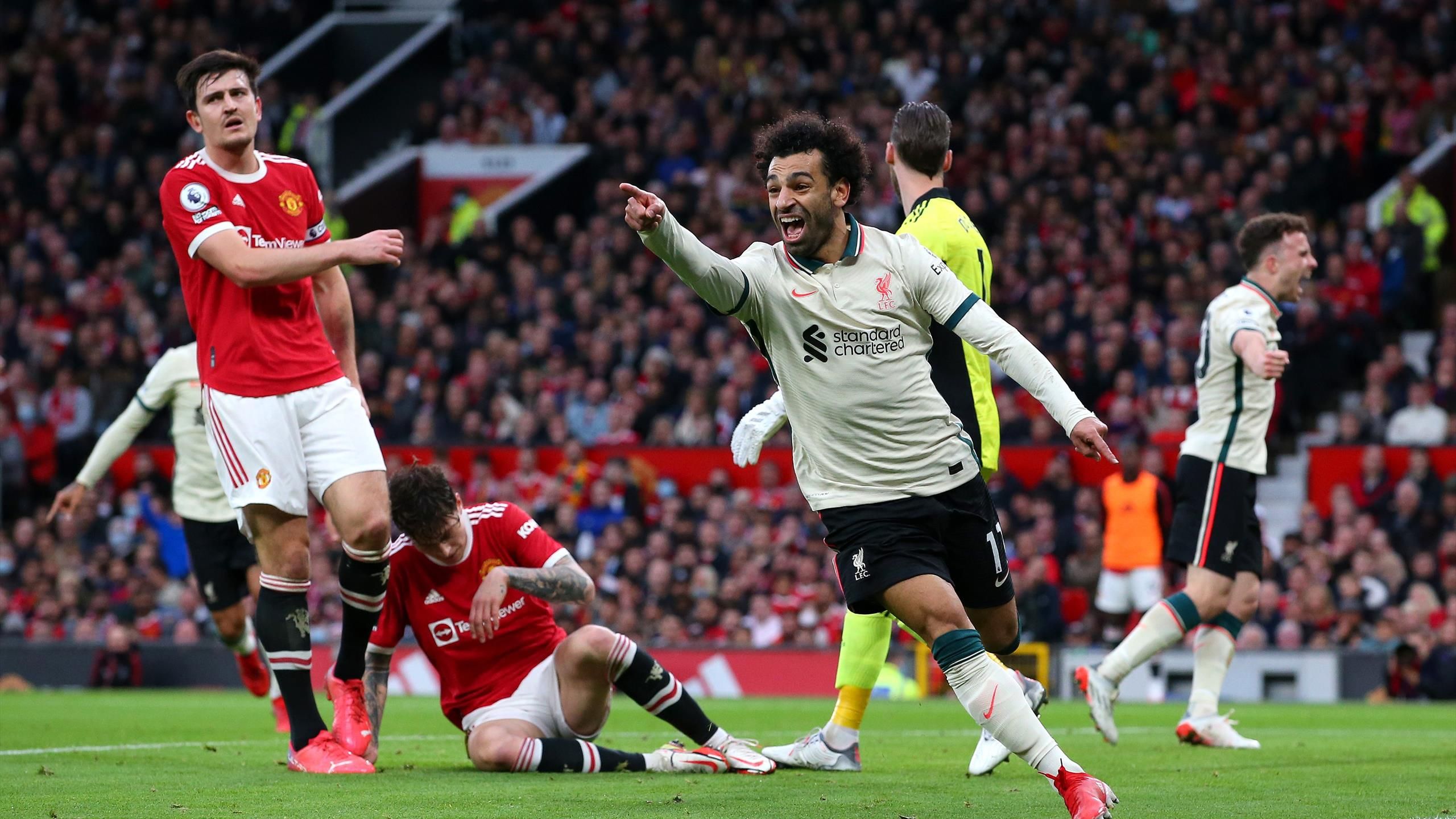


1️⃣ Match Context
Manchester United vs Liverpool rarely needs extra framing, but this one has it anyway: it’s a late-season Premier League collision where the table pressure changes the way teams make decisions. United’s margin for error is typically smaller at this stage — a single bad 20-minute spell can swing European qualification probabilities, alter the mood around the squad, and turn “acceptable progress” into a narrative crisis.
Liverpool travel with a different kind of tension. When you’re chasing the title or protecting a top-two finish, the psychology is ruthless: dominate early, keep the game away from chaos, and don’t give Old Trafford a reason to believe. That’s why this fixture often becomes less about romance and more about control. You can feel it in the tempo management, in how quickly Liverpool try to pin United in, and in how United balance aggression with self-preservation.
There’s also the calendar factor. Early May is where legs get heavy and rotations get political. Minutes management becomes tactical: a 60-minute press isn’t the same as a 90-minute press, and late-game structure matters more than usual. If this match is tight entering the last half-hour, it becomes a test of repeatable patterns, not just emotion.
2️⃣ Form & Advanced Metrics
The surface form in this matchup can be misleading because both teams can win games while leaving different “quality footprints.” Liverpool’s best version tends to be visible in territory and shot quality: sustained pressure, high field tilt, and chances created from zones that consistently produce goals — cutbacks, central lane entries, and second-ball situations around the box.
United’s numbers, when they’re functioning, usually show a different signature: more game-state volatility. They can produce strong xG in bursts — particularly when their transitions are clean — but the defensive side is where the metrics often tell on them. Even in wins, opponents can access high-value central zones if United’s midfield spacing stretches. That’s not always about effort; it’s structural. If the press doesn’t connect from the front, the gap between midfield and back line becomes a runway.
Pressing intensity is the key connector. PPDA isn’t just a number here — it’s an identity marker. Liverpool’s press typically forces opponents into earlier decisions, reducing the time to find progressive passes. Against United, that matters because United’s buildup can wobble under sustained pressure, especially when their first and second phases get separated. When United can break that press, though, the game flips quickly: Liverpool’s aggressive rest-defense can be exposed if the counter runs through the half-spaces with speed.
Tempo patterns also matter. Liverpool are comfortable playing at a high pace without losing structure; they can press, recover, and immediately re-attack. United can match tempo emotionally, but their best sequences often come when they choose their moments — selective aggression rather than constant pressure. If United try to go punch-for-punch for 90 minutes, their defensive shot quality allowed tends to rise late in games. That’s usually where matches swing.
3️⃣ League Table Snapshot
| Team | Position | Points | Played | GD |
|---|---|---|---|---|
| Manchester United | — | — | — | — |
| Liverpool | — | — | — | — |
Takeaway: Even without hard numbers in front of you, the table context typically reflects a fundamental truth about these sides: Liverpool’s performance level is more repeatable, while United’s outcomes tend to swing more on game state and finishing/goalkeeping variance. Over a season, repeatability climbs the table. Variance makes it interesting — and dangerous to price.
4️⃣ Head-to-Head Analysis
Recent Manchester United vs Liverpool meetings often repeat the same tactical question: can United survive the first wave without conceding territory, and can they turn Liverpool’s high line and aggressive counter-press into a transition game?
When United have succeeded, it usually hasn’t been by out-possessing Liverpool. It’s been by creating “clean exits” from pressure — one or two passes that break the first trap — then attacking the space behind Liverpool’s advancing fullbacks. When United fail, it’s often because those exits become low-quality clearances, and Liverpool’s territory dominance turns into a steady stream of box entries.
Psychology does show up here too. Liverpool tend to stay emotionally stable even in hostile environments; they keep doing the same things until the opponent breaks. United’s crowd can elevate intensity, but that also raises the risk of tactical impatience — fullbacks stepping too early, midfielders chasing shadows, and the defensive block losing its spacing.
5️⃣ Tactical Breakdown (Core Section)
Who dictates tempo?
Liverpool want the game played in United’s half. Not just for possession numbers, but for repeatable shot creation. Their best attacks are sequences: force the ball wide, lock it there, recycle, then punch into the half-space for a cutback. United, meanwhile, want the match to have stoppages, transitions, and moments — phases where individual quality matters more than structure.
The first 15 minutes are a clue. If Liverpool establish territory early, United’s wingers and fullbacks get pinned, and United’s counter routes shrink. If United can hit two or three dangerous breaks early, Liverpool’s rest-defense has to respect the threat and drop a half-step.
Overload zones and exposed flanks
Expect Liverpool to overload United’s wide zones, not for hopeful crosses, but to create back-post and cutback situations. United’s danger is the far-side fullback: if he tucks in too much to protect central zones, Liverpool can find the diagonal switch; if he stays wide, the half-space can open for late runners.
United’s best overload is usually the opposite: quick combinations down one flank to draw pressure, then a fast vertical ball into the channel. The key is timing. If United’s forward line runs too early, they get caught offside or isolated. If they run too late, Liverpool’s counter-press wins the second ball and restarts the siege.
Midfield control: spacing, not possession
This game isn’t about “who has more of the ball.” It’s about who controls the middle when they don’t have it. Liverpool’s midfield press and positioning can compress passing lanes and force United into low-percentage central balls. United need a midfielder (or a dropping forward) who can receive under pressure and bounce it out first time. That single ability can change the entire matchup because it turns Liverpool’s press into a liability.
If United can’t do that, their center-backs will be forced into longer distributions. That plays into Liverpool’s hands: they can regain territory quickly, and the shot map starts creeping closer to goal.
Pressing triggers and buildup resistance
Liverpool’s pressing triggers are typically predictable but hard to beat: backward passes, poor body orientation from the fullback, or a slow first touch from the pivot. The moment United show the ball to the touchline, Liverpool can trap and lock. United need pre-planned third-man patterns — not improvisation — to escape.
On the other side, United’s press is more situational. They can press high, but the real question is what happens behind it. If the back line holds too deep while the front presses, gaps appear. That’s when Liverpool find the free man between the lines and create high-quality entries.
Transition vulnerability and rest-defense
Both teams can be hurt in transition, but the profiles differ. Liverpool concede fewer transitions by design because their counter-press is immediate. Yet when they do get bypassed, the chances are often high-quality because so many players are committed ahead of the ball.
United concede transitions less by counter-press and more by retreat. That can work if the block is compact, but if the midfield runners don’t recover, Liverpool can arrive in the box with numbers. Watch for late arrivals at the edge of the area — that’s where xG can spike without obvious “big chances.”
Set-piece dynamics
In high-pressure matches where open-play margins are thin, set pieces become a market in themselves. Liverpool’s ability to generate repeated corners through territory can matter more than a single big chance. United, if they’re chasing, may take more risks on attacking set pieces — and that can invite Liverpool counters the other way. That chess match often decides whether a narrow game stays narrow.
6️⃣ Odds & Market Evaluation
| Market | Selection | Odds | Implied Probability |
|---|---|---|---|
| 1X2 | Manchester United | 3.80 | 26.3% |
| 1X2 | Draw | 3.70 | 27.0% |
| 1X2 | Liverpool | 1.95 | 51.3% |
The implied probabilities above include bookmaker margin, but the shape is clear: the market prices Liverpool as the most likely winner, with United needing a specific game script to land the upset.
The betlabel.games team evaluates this matchup with Liverpool still favoured, but not to the point where you blindly pay any price. The key question is whether the market is fully pricing Old Trafford volatility — the kind that doesn’t show up in averages but shows up in one-off fixtures when transitions and finishing swing.
7️⃣ The Hidden Edge (Mandatory Section)
There’s a structural nuance here that markets sometimes underweight: Liverpool’s dominance can inflate draw probability, not just win probability. When one team controls territory and shot volume but the opponent holds transition threat, you often get a match that lives in the “Liverpool on top, but one mistake changes everything” zone.
That dynamic increases the value of handicap and draw-protection angles rather than pure 1X2 prices. Liverpool can be the better team for 70 minutes and still end up in a late-game state where one set piece or one broken press creates a high-xG chance the other way.
Another angle: United’s recent scorelines can be deceptive in either direction. If they’ve had a run of clean sheets, it doesn’t necessarily mean the defensive structure is fixed — it can mean opponents didn’t punish the same central access issues. Conversely, if United have conceded in clusters, it can be a finishing/goalkeeping downswing that rebounds quickly at home. The market often reacts to the scoreline faster than to the underlying shot quality profile.
8️⃣ Final Prediction
Main Pick:
Liverpool – Draw No Bet
Alternative:
Under 3.5 Goals
Risk Level:
Medium
Logic: Liverpool have the more stable territory and chance-creation structure, which travels well even in hostile venues. United’s best path is transition-based and depends on clean exits under pressure — something Liverpool are built to disrupt. Finally, late-season pressure often tightens finishing and increases risk management, which supports a lower total while keeping Liverpool’s draw-protected side attractive.






Leave a Reply