




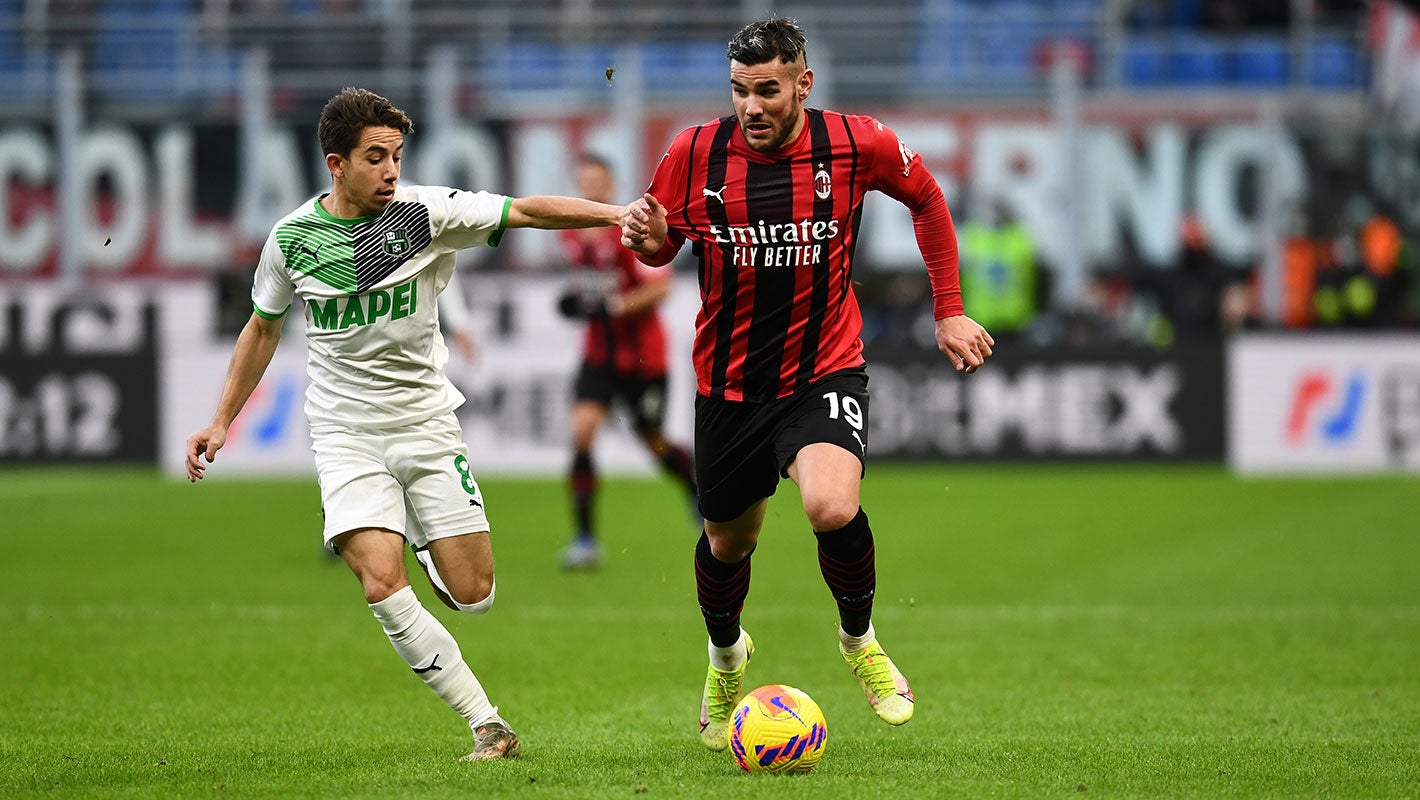


1️⃣ Match Context
Early May in Serie A is where matches stop being “just three points” and start becoming decision points. For Sassuolo, this is typically the part of the season where the margins feel thinner: every open-game concession carries real table cost, and any wobble becomes contagious under pressure. For Milan, the stakes are usually sharper and more public — the expectation to control games, bank wins, and protect a top-end objective (Champions League security or a title chase) changes the emotional temperature of every away trip.
This fixture also sits in a classic scheduling squeeze window. Legs aren’t dead, but they’re not fresh either — and that matters because both teams’ identities are tied to intensity. Sassuolo’s game wants rhythm and combinations; Milan’s game wants repeatable territorial dominance and controlled aggression. When fatigue hits, the first thing that disappears is precision in the half-spaces. And that’s where this match is likely decided.
Momentum narratives can be misleading in May because scorelines are often driven by game state. A team chasing points takes more risks late; a team protecting positioning manages the second half differently. The key here is not “who won last week”, but who can impose structure when the match breaks into transitions.
2️⃣ Form & Advanced Metrics
Sassuolo’s profile tends to be aesthetically pleasing but structurally volatile. They can generate decent shot volume through wide progression and third-man combinations, yet the shot quality often depends on timing rather than raw physical dominance. When their spacing is right, they access cutbacks and central lanes. When it’s off by half a second, the attack becomes low-value shots from wide angles. That’s the difference between “they played well” and “they created chances”.
Defensively, the main issue isn’t simply conceding shots — it’s the kind of shots. Sassuolo can be pulled into lateral defending phases where the back line is forced to defend the box while the midfield is a step late to block the cutback lane. If we look deeper, their concessions tend to tilt toward central and second-phase chances rather than harmless attempts from distance. That creates volatility: the opponent doesn’t need many entries to create one big look.
Milan, by contrast, are usually more stable in the repeatability of their chance creation. They don’t always fire off huge shot counts, but their possession phases tend to end in higher-quality attempts because the ball arrives into the box under control — not as hopeful crosses. Their best spells come when they win territory early, set up camp, and force the opponent to defend facing their own goal.
Pressing intensity matters here. Milan’s press is typically more “trigger-based” than chaotic: they jump when the pass goes into predictable zones, then squeeze the next action. That kind of press doesn’t always show as constant all-out pressure, but it is effective at creating short-field attacks. Sassuolo can play through pressure when their build-up is clean, but under stress they can gift Milan exactly what they want: a transition starting 35 meters from goal.
Tempo is another splitter. Sassuolo prefer a more fluid pace — more touches, more rotations. Milan are comfortable speeding it up once they gain territorial advantage. If this becomes a high-pace game, it usually benefits the team with the better rest-defense structure. That tends to be Milan.
3️⃣ League Table Snapshot
| Team | Position | Points | GF | GA |
|---|---|---|---|---|
| Sassuolo Calcio | 14 | 37 | 42 | 52 |
| Milan | 3 | 67 | 61 | 34 |
The positions reflect two different realities. Sassuolo’s season is consistent with a side that can score but struggles to control the cost of defensive mistakes — a mid-table points total with a negative goal balance is usually a signature of game-state swings and defensive fragility. Milan’s placement indicates a team that wins more often than not because their baseline performance is stable: fewer “bad” halves, fewer chaotic concessions, and more control over territory.
4️⃣ Head-to-Head Analysis
This matchup often repeats the same tactical question: can Sassuolo keep their build-up clean enough to avoid feeding Milan transition chances? When Sassuolo have caused Milan problems historically, it’s been through coordinated occupation of the half-spaces and quick switches that drag Milan’s wide defenders into uncomfortable decisions. But when Milan have controlled it, the pattern is also familiar: Sassuolo’s midfield gets stretched, the distances grow, and Milan start arriving into the box with runners rather than isolated forwards.
Past results in this fixture can be noisy because Sassuolo are capable of one-off execution spikes — a day where their combinations click and they punish the first defensive lapse. The more reliable takeaway is structural: Milan’s ability to force Sassuolo into longer defending phases usually decides the expected-goals balance, even if the scoreboard sometimes hides it.
5️⃣ Tactical Breakdown (Core Section)
Who dictates tempo?
Milan will want the match played in Sassuolo’s half, with long spells of pressure that force defensive concentration errors. Sassuolo will want to turn it into a flowing game — not end-to-end chaos, but a match where both sides exchange possession phases and the ball travels quickly through midfield lines.
The first 20 minutes matter: if Milan establish field tilt early — pinning Sassuolo’s wingers back and forcing full-backs to defend deep — Sassuolo’s outlet becomes limited and their build-up starts taking risks. That’s the danger zone against a trigger-based press.
Overload zones and the key lanes
The structural nuance here is the half-space occupation. Milan’s best attacks come when their wide players and advanced midfielders create a triangle that either opens the cutback lane or forces a central defender to step out. Sassuolo’s defensive block can be narrow, but if their midfield doesn’t protect the channel just outside the box, Milan will repeatedly access the “assist zone” — the corridor where a single pass turns into a clear chance.
Sassuolo’s counter-argument is to pull Milan’s midfield laterally with switches and then attack the far side before Milan’s rest-defense fully resets. That requires crisp execution and brave positioning from their full-backs. The risk is obvious: lose it during the switch, and Milan are running at a back line that’s spread.
Pressing triggers and build-up resistance
Milan’s pressing triggers typically activate when the opponent’s build-up becomes predictable — a pass into the full-back under pressure, or a return ball into the center-back facing his own goal. If Sassuolo insist on building short without offering a third-man outlet, they invite a turnover. The safer route is mixing build-up lengths: sometimes playing through, sometimes going over. But that’s also uncomfortable for a team that thrives on rhythm.
Transition vulnerability
This is where the game can swing. Sassuolo can attack with numbers, but their rest defense can be exposed if the midfield line is bypassed. Milan don’t need ten transition chances — they need two or three clean breaks where the first pass after recovery is forward and decisive. In those moments, Sassuolo’s center-backs are forced to defend space, not duels. That usually favors the attacker.
Set-pieces
Set-pieces are often the hidden accelerator in matches like this. If Sassuolo concede cheap wide free-kicks, they invite pressure even when open play is balanced. Milan’s set-piece value isn’t only about scoring directly — it’s about sustaining territory, keeping Sassuolo pinned, and forcing second balls around the box. For Sassuolo, the offensive set-piece path is more about creating a scramble: one messy bounce, one free shot. That’s a real weapon, but it’s not as repeatable as Milan’s territorial pressure.
6️⃣ Odds & Market Evaluation
| Market | Odds |
|---|---|
| Sassuolo Win | 5.00 |
| Draw | 3.80 |
| Milan Win | 1.70 |
Those prices convert roughly to implied probabilities of 20.0% (Sassuolo), 26.3% (draw), and 58.8% (Milan) before adjusting for bookmaker margin. According to our calculations at betlabel.games, Milan are closer to the low-60s in win probability range in this matchup profile, largely because the tactical interaction leans toward Milan’s strengths: territorial control plus transition threat against a side that can be stretched.
The edge is not enormous — the market broadly respects Milan — but there’s a slight inefficiency if Milan’s win line sits around 1.70. The value is marginal, but real, if team news doesn’t flip the structure.
7️⃣ The Hidden Edge (Mandatory Section)
The market often prices Sassuolo like a “dangerous mid-table attacker” and Milan like a “big-name away favorite”, but the slow adjustment is usually in game control, not headline talent. Sassuolo can look competitive because they have long spells of possession and a clean passing aesthetic — yet their chance prevention is often more fragile than the eye test suggests. They can defend for 60 seconds well, then lose the cutback lane once, and the shot quality conceded spikes.
There’s also a subtle second-half dynamic. Teams that rely on coordinated rotations and timing tend to drop a fraction when fatigue or pressure increases, and that fraction shows up in defensive spacing first. If Sassuolo’s distances widen after the hour mark, Milan’s repeatable pattern — sustained attacks, recoveries in the final third, set-piece pressure — becomes more valuable. This is the kind of edge that doesn’t always show in recent scorelines but appears in underlying territory and shot quality.
In other words: Sassuolo can keep it pretty for stretches. Milan can keep it punishing.
8️⃣ Final Prediction
Main Pick: Milan -0.5 (Win)
Alternative: Milan Draw No Bet (safer)
Risk Level: Medium
The logic is straightforward and probability-driven:
- Structural matchup: Milan’s press and territorial game targets the exact build-up mistakes and spacing gaps Sassuolo can fall into.
- Chance quality edge: Milan are more likely to create controlled box entries and cutbacks, while Sassuolo’s attacking value depends more on timing and execution variance.
- Game-state management: In a high-stakes May fixture, Milan’s ability to control phases — and punish late fatigue — is a real separator.
No guarantees. Sassuolo have enough attacking craft to make this uncomfortable if Milan’s concentration drops. But over 90 minutes, the more repeatable mechanisms sit with the away side.







Leave a Reply