




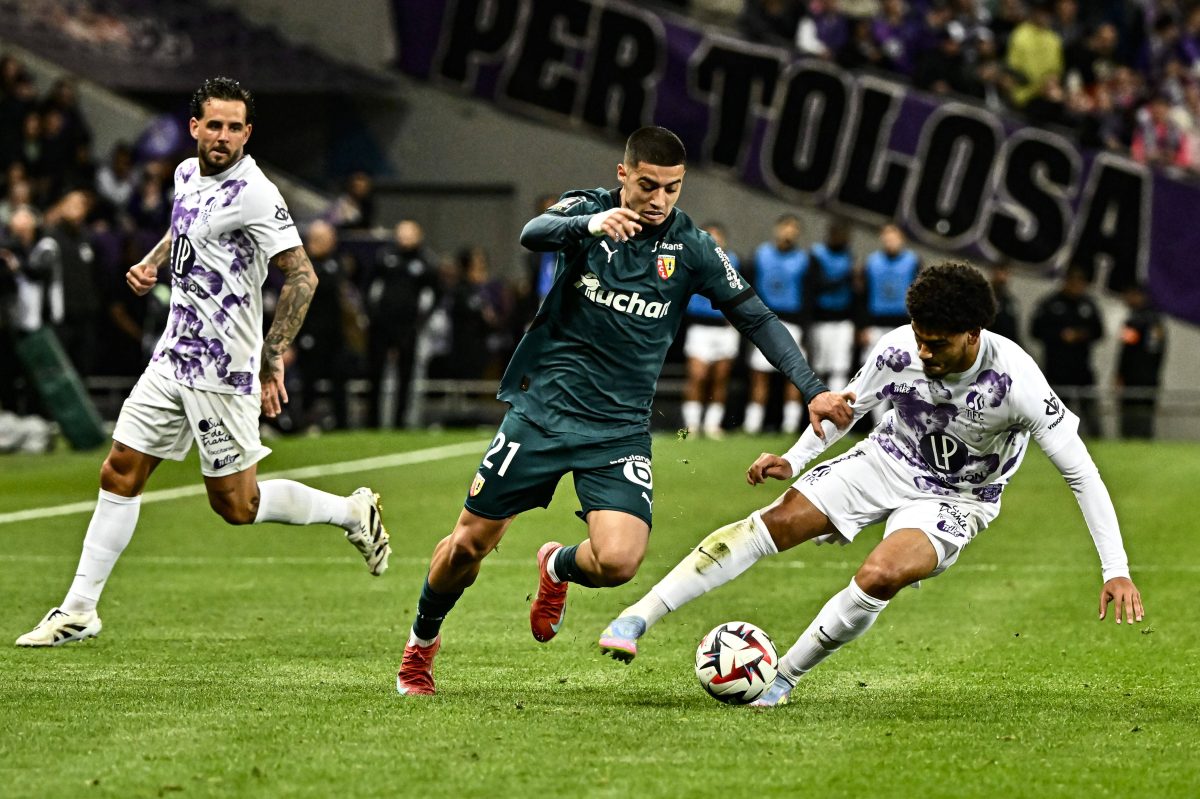


1️⃣ Match Context
Mid-April in Ligue 1 is where games stop being “three points” and start being leverage. RC Lens are chasing European positioning, and at this stage that usually means protecting home points while managing the emotional weight of expectation. Toulouse arrive with a different pressure: stabilising their run-in, taking something—anything—from difficult away trips, and avoiding the spiral that comes when performances are fine but the table refuses to move.
This specific fixture matters because it’s a classic clash of incentives. Lens want controlled dominance and a clean scoreboard. Toulouse can live with long spells without the ball if they can manufacture two or three high-quality transition moments. That asymmetry creates a tense game state: one side carries the initiative, the other carries the “upset pathway.”
There’s also the calendar reality. The deeper we get into spring, the more compact the weeks become—training intensity drops, match prep gets shorter, and teams lean harder on automatisms. That generally benefits the side with the clearer identity and the more repeatable patterns. Lens at home typically fit that profile.
2️⃣ Form & Advanced Metrics
Lens’ recent form tends to look better in the process than in the highlight reel. The numbers indicate they create a steady stream of chances through territorial control—consistent box entries, sustained pressure, and a shot profile that leans toward “repeatable” rather than “miraculous.” They’re not a team that needs wondergoals to win. They win by living in the opponent’s half and grinding you into low-quality defending.
In chance creation terms, Lens’ edge is usually about shot quality through structure, not just shot volume. When their wing-backs step high and the half-spaces are occupied, they force opposing full-backs into impossible decisions: protect the wide lane or compress the inside channel. That’s where their xG tends to come from—cutbacks, second balls, and central shots created off wide-to-inside progression.
Defensively, Lens are generally solid in settled phases, but there’s volatility when the first press is bypassed. That’s the key nuance. Their xGA profile typically improves when they score first (because they can press on their terms), and worsens when they’re chasing (because rest-defence gets stretched and the game opens). Watch their spacing behind the midfield line: if the distances widen, opponents can hit them with verticals into the channels.
Toulouse, by contrast, often look like a team that can “play” but struggle to turn possession into clean expected goals. Their build-up can be neat, yet the final action is inconsistent: shots from suboptimal zones, rushed deliveries, or attacks that end with low-probability attempts. They can create volume without creating threat—an important distinction for betting totals and match result pricing.
Pressing intensity matters here. Lens’ PPDA-style profile typically reflects active pressure in advanced zones: they don’t simply defend space, they try to win it back early. For Toulouse, that means the first two passes out of the back must be clean. If not, they’ll spend long periods pinned. If yes, they can create the exact game Lens hate: transitions into the vacated wide channels.
3️⃣ League Table Snapshot
| Team | Position | Points | Played | GD |
|---|---|---|---|---|
| RC Lens | 6th | 48 | 29 | +10 |
| Toulouse | 13th | 34 | 29 | -6 |
The table suggests two different realities. Lens are in the “European conversation,” where one bad week can erase a month of work. Toulouse are in the “not safe, but not collapsing” band—good enough to compete, not consistent enough to relax. That usually leads to conservative away game plans and a willingness to accept long defensive spells.
4️⃣ Head-to-Head Analysis
Lens–Toulouse meetings often follow a recognisable script: Lens push the pitch upward, Toulouse try to survive the first wave and then counter into the space behind the wing-backs. The important question isn’t who “won last time,” but whether Toulouse can repeatedly access their best attacking route—fast outlets into the channels with runners arriving for the second phase.
If we look deeper, the structural matchup tends to favour Lens when they can keep Toulouse’ first outlet quiet. When Toulouse are forced into longer clearances, Lens’ territorial game becomes self-feeding: win the second ball, re-cycle, and start again. Past results that look close often reflect Toulouse hanging in rather than consistently threatening. That distinction matters for handicaps and for Lens’ clean-sheet probability.
5️⃣ Tactical Breakdown (Core Section)
Who dictates tempo?
Lens want a game played in Toulouse’ half. Expect them to start with intensity: quick ball circulation to the wing-back, then a third-man run into the half-space. Their best matches are ones where the opponent’s midfield line is constantly turning and retreating. Toulouse will try to disrupt that tempo with longer spells of possession—not necessarily to create immediate chances, but to slow Lens’ wave and reduce the number of Lens attacks per match.
Overload zones and the wide-to-inside trap
The key Lens pattern is overload-to-isolate. They’ll overload one side to drag Toulouse across, then switch quickly to attack the far side, aiming for cutbacks or delayed arrivals at the edge of the box. Toulouse’ defensive risk is clear: if their wide midfielder tracks the wing-back, the half-space opens. If they tuck in, Lens get time to deliver from wide. Either way, Lens are engineering decision stress.
Midfield control battle
This match often hinges on Toulouse’ ability to play through midfield rather than around it. If their pivot can receive under pressure and find the forward pass, Toulouse can create transition opportunities with Lens’ rest-defence not set. If not, they’ll be stuck in a loop: forced wide, forced long, and then defending again.
Lens’ pressing triggers are typically obvious: backwards pass into a full-back zone, square ball across the first line, or a receiving body shape facing their own goal. When those triggers appear, Lens compress the pitch aggressively. Toulouse must be brave and clean, or pragmatic and direct. Half-measures get punished.
Transition vulnerability
The best Toulouse moments will come immediately after winning the ball. Lens’ wing-backs push high, and if the ball is turned over with Lens’ midfielders ahead of it, the channels open. Toulouse don’t need many of these moments—just two or three with quality execution. That’s why match totals can be deceptive: a game that feels “controlled” can still produce high xG swings from a handful of breaks.
Set-piece dynamics
In tight Ligue 1 games, set-pieces are often the hidden currency. Lens’ territorial pressure typically inflates their corner count, and that matters against teams who defend deep for long stretches. Toulouse, meanwhile, will value wide free-kicks as a way to bypass open-play pressure. The set-piece edge slightly leans Lens simply because they should live in Toulouse’ third more often.
6️⃣ Odds & Market Evaluation
| Market | Odds | Implied Probability |
|---|---|---|
| RC Lens win | 1.75 | 57.1% |
| Draw | 3.60 | 27.8% |
| Toulouse win | 4.80 | 20.8% |
Those implied probabilities include margin, but the shape is clear: the market prices Lens as a fairly strong home favourite. According to our calculations at betlabel.games, Lens’ win probability lands slightly above the market’s fair line, with the draw fractionally lower and Toulouse’ away win needing a very specific game script (high transition efficiency, or Lens failing to convert territorial dominance).
The edge here is present but not massive. This is more “small mispricing + strong tactical fit” than a screaming inefficiency.
7️⃣ The Hidden Edge (Mandatory Section)
There’s a structural nuance here that markets can be slow to price correctly: the difference between ‘possession resistance’ and ‘transition resistance’.
Toulouse can look reasonably stable when defending deep and compact—especially if the opponent becomes cross-heavy. But against a team like Lens, who create chances through repeated cutback situations and second-phase pressure, that deep block is asked to make too many correct micro-decisions. Over 90 minutes, those small errors accumulate: a late step, a lost runner, a poor clearance that becomes a second shot. That’s how “low event” games quietly become Lens wins.
On the other side, Toulouse’ upset pathway relies on taking their limited transition chances and turning them into high-quality shots. If their recent results have been kept afloat by a couple of high-leverage finishes, the market may overestimate their ability to repeat that efficiency. Finishing in transition is volatile. Creating the transition is the repeatable part; converting it at a high rate usually isn’t.
So the hidden edge is not just “Lens are better.” It’s that Lens’ chance profile is more repeatable across game states, while Toulouse’ requires a sharper-than-average conversion rate to land the punch.
8️⃣ Final Prediction
Main Pick: RC Lens -0.5 (win)
Alternative: RC Lens win & Under 3.5 goals
Risk Level: Medium
The logic is straightforward and rooted in mechanics:
1) Territorial control should belong to Lens. That usually translates into more box entries, more corners, and the kind of repeatable shot quality that wins home games in Ligue 1.
2) Toulouse’ best route is transition efficiency. They can threaten, but they likely need to be clinical with fewer chances—an inherently higher-variance strategy.
3) Market price is reasonable, but slightly light on Lens. If Lens’ dominance converts at an average rate, they should clear the line more often than the implied probability suggests.
No guarantees—Toulouse can absolutely make this uncomfortable if they escape the first press cleanly. But over 90 minutes, the more repeatable model is Lens at home.







Leave a Reply