





1️⃣ Match Context
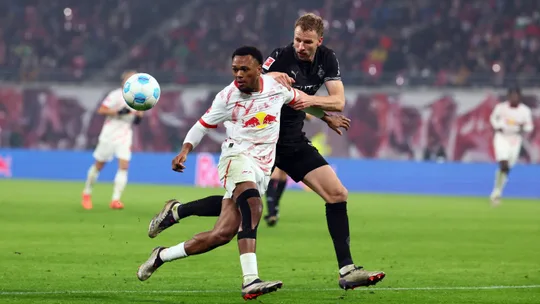
April in the Bundesliga is where “good seasons” get separated from “Champions League seasons.” RB Leipzig are built for the top-four race — high-tempo, high-territory, high shot volume — but that profile also carries an uncomfortable truth: if their finishing runs cold for two weeks, the table can punish them instantly.
Borussia Mönchengladbach arrive in a different psychological lane. Their season is usually judged on whether they can turn quality stretches into points without drifting into late-spring limbo. Away at Leipzig is the kind of fixture that tests belief: you either travel with a clear plan to survive pressure and counter, or you spend 70 minutes defending your box and hoping for a set-piece.
Context matters because this match sits in the league’s pressure window. Leipzig will be expected to win — not just by fans, but by the market. That expectation shapes in-game decisions: earlier risks, more aggressive rest defense, and less patience if the first goal doesn’t come. Gladbach, meanwhile, can play with a cleaner mind-state: compact, opportunistic, and emotionally comfortable as the underdog.
2️⃣ Form & Advanced Metrics
Leipzig’s underlying identity is stable: they want territory, they want verticality, and they want the game played in the opponent’s half. The numbers indicate a side that consistently creates from strong zones — not just “more shots,” but better shots: cutbacks, central entries, and second-phase chances after sustained pressure.
The trade-off is the same one we see from many pressing-heavy teams. When Leipzig commit numbers to lock the opponent in, they can become vulnerable to one clean escape pass that turns into a sprint at their back line. It’s less about “bad defending” and more about structural exposure: the space behind the fullbacks, plus the demand on the holding midfielders to win second balls. Against a counter-capable opponent, that becomes a game-state lever.
Gladbach’s recent performance profile tends to be more volatile. They can produce decent shot volume in matches where they’re allowed to breathe — but under sustained pressure their shot quality drops, and the game becomes about low-percentage wide deliveries rather than central progression. Their xG often spikes in short bursts rather than flowing consistently across 90 minutes. That’s important here: Leipzig are one of the league’s better “oxygen removers,” forcing opponents into rushed clearances and low-control possessions.
Pressing intensity is the key translator. PPDA (passes per defensive action) tells us how quickly a team engages the ball: a lower PPDA means more pressure, earlier. Leipzig’s pressing profile typically forces opponents to play faster than they want, and that affects decision-making more than it affects raw possession. Gladbach, if they want to compete, need a first-phase plan — either a direct outlet that sticks, or a brave build-up structure that can beat the first wave. If they don’t have one, the match tilts into Leipzig territory for long stretches.
Home/away dynamics also matter. Leipzig’s home tempo is usually higher: earlier counterpressing, more set-piece accumulation, more sustained field tilt. Gladbach away performances often hinge on resisting the first 25 minutes. If they can get to halftime level or within one, the second half becomes more playable. If they concede early, Leipzig’s game becomes extremely comfortable: win the ball, attack the box, repeat.
3️⃣ League Table Snapshot
| Team | Position | Points | GD | Last 5 |
|---|---|---|---|---|
| RasenBallsport Leipzig | 4th | 55 | +20 | W-D-W-L-W |
| Borussia Monchengladbach | 10th | 40 | -2 | D-W-L-D-W |
Takeaway: Leipzig’s position reflects a side that lives in the top-four fight on repeatable mechanics: territory, chance creation, and pressure. Gladbach’s mid-table slot usually signals variance — patches of good attacking play, but not enough defensive control to turn it into a consistent points stream.
4️⃣ Head-to-Head Analysis
In this matchup, the pattern tends to be less about historical “form” and more about structural fit. Leipzig often force Gladbach to defend deeper than they prefer, which reduces Gladbach’s best attacking traits: combination play between the lines and controlled entries into the half-spaces.
When Gladbach have hurt Leipzig, it typically comes from exploiting the space Leipzig leave in transition — especially if Leipzig’s counterpress is bypassed with one crisp vertical pass. But those moments are rare if Leipzig dominate field tilt. The underlying logic is simple: the more time Gladbach spend pinned, the more their attacking output becomes sporadic rather than sustainable.
Key angle: past results can mislead here. Even if Gladbach have “kept games close,” the underlying flow often favors Leipzig — more touches in the box, more territory, more sequence pressure. That kind of dominance usually wins over time, even if single-match scorelines occasionally disagree.
5️⃣ Tactical Breakdown (Core Section)
Who dictates tempo?
Leipzig will dictate the rhythm if they establish their pressing triggers early: pressing on the first backward pass, jumping on the fullback receive, and locking the ball near the touchline to create traps. If Gladbach’s first build-up line can’t break that pressure, the game becomes a series of Leipzig waves — exactly what Leipzig want at home.
Where is the overload zone?
Leipzig’s most consistent advantage is in the half-spaces, where their interior runners and wide players can interchange and attack the gap between fullback and center-back. Against a mid-block, this creates two profitable patterns: cutbacks from the byline and late arrivals at the edge of the box after the defense collapses.
Gladbach’s defensive question is uncomfortable: do they protect the box centrally and concede wide territory, or do they step out to stop crosses and open the interior? Leipzig are happy with either — because their shot creation is less about hopeful crossing and more about forcing rotations until the cutback lane appears.
Which flanks are exposed?
Gladbach’s best countering outlet often lives on the wings, where they can isolate a fullback and carry into space. That’s where Leipzig’s rest defense becomes the story. If Leipzig push fullbacks high simultaneously, they invite direct counters into the channels. The safer version is asymmetric: one fullback advanced, the other holding shape, with the holding midfielder ready to cover the first transition pass.
Midfield control battle
This match hinges on second balls. Leipzig compress the pitch and hunt loose touches; Gladbach need their midfield to secure first contact and then find a release pass quickly. If Gladbach’s midfield gets pinned facing their own goal, they’ll struggle to connect to their forwards, and their attacks will become one-pass-and-done.
Pressing resistance & buildup
To beat Leipzig’s pressure you need either bravery (third-man combinations through the center) or clarity (direct ball into a target with runners underneath). Anything indecisive gets punished. Leipzig’s press doesn’t just win the ball — it forces rushed clearances that return possession and create another attack. That’s how field tilt becomes a scoreboard.
Transition vulnerability
The cleanest path for Gladbach is transitional: win a duel, play early into space, attack before Leipzig reset. The problem is opportunity volume. Leipzig don’t allow many clean transitions when their counterpress is functioning. So Gladbach’s few breaks must be high quality — not just running, but running with numbers and a clear final-pass idea.
Set-piece dynamics
In matches where one team dominates territory, set pieces quietly stack up. That favors Leipzig. Corners and wide free kicks don’t need perfect playmaking; they need repetition. Gladbach, if they’re defending deep, must be disciplined — needless fouls and cheap corners are effectively “extra shots” for the favorite.
6️⃣ Odds & Market Evaluation
| Market | Selection | Odds | Implied Probability |
|---|---|---|---|
| 1X2 | RasenBallsport Leipzig | 1.62 | 61.7% |
| 1X2 | Draw | 4.20 | 23.8% |
| 1X2 | Borussia Monchengladbach | 5.40 | 18.5% |
According to our calculations at betlabel.games, Leipzig should be priced slightly shorter than the market’s comfort level in most game states because their chance creation is repeatable at home, and Gladbach’s route to points relies on low-frequency events (clinical transitions, set-piece conversion, or Leipzig finishing waste).
Market read: the edge is not massive on the straight 1X2 if the price is already compressed, but there is room to look for structural angles — particularly handicap ranges or Leipzig team totals — where territory dominance translates more reliably than “win/lose.”
7️⃣ The Hidden Edge (Mandatory Section)
There’s a structural nuance here that markets often underweight: how pressure compounds across halves. Leipzig’s profile is designed to force cumulative defensive work — not just sprinting back, but constant lateral shifting, repeated clearances, repeated set-piece defending. That type of load shows up late, even if the underdog is “doing fine” on the scoreboard.
Gladbach can look stable for 55 minutes and then suddenly concede two big chances in a five-minute spell. That’s not randomness. It’s what happens when your exits stop sticking and your clearances return immediately. If we look deeper, the teams that suffer most in Leipzig away matches are the ones who can’t maintain possession under pressure. They end up defending sequences, not moments.
This is where the market can be slow to adjust because it’s tempted by recent scorelines. A narrow Gladbach win or a close loss elsewhere can inflate perception, but the underlying mechanism in this specific matchup is about territory control and repeat attacks. Leipzig don’t need perfection — they need repetition.
8️⃣ Final Prediction
Main Pick: RasenBallsport Leipzig -1 Asian Handicap
Alternative: RasenBallsport Leipzig Over 1.5 Team Goals
Risk Level: Medium
Why this is the right angle:
- Territory and field tilt should be heavily Leipzig. That typically converts into set pieces, box touches, and sustained xG rather than isolated shots.
- Gladbach’s scoring path is lower volume. Even if they create one or two strong transition moments, it may not be enough across 90 minutes if Leipzig keep them pinned.
- Game-state favors the favorite. If Leipzig score first, the matchup opens into exactly the spaces Leipzig want to attack.
No guarantees — Gladbach can absolutely land a counterpunch. But in a pressure fixture where Leipzig need points and can impose structure at home, the probability logic supports backing Leipzig in a way that still pays if they win by margin rather than merely scrape it.






Leave a Reply