




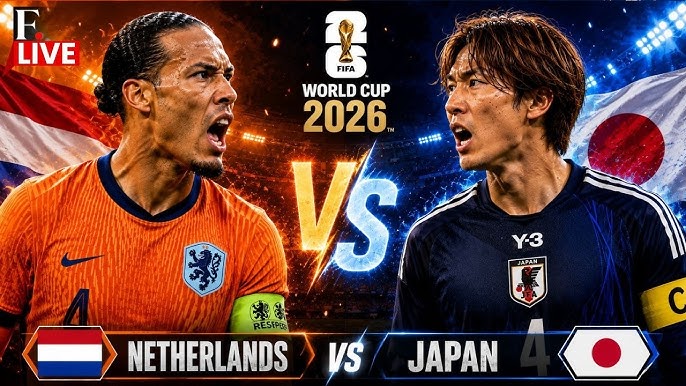


1️⃣ Match Context
World Cup group games don’t always feel like knockouts—until the table compresses and goal difference becomes a weapon. Netherlands vs Japan has that texture. The Dutch arrive with expectation pressure baked in: they’re not here to “compete well”, they’re here to control groups and avoid a brutal Round of 16 path. Japan arrive with a different kind of stress: they’re used to being the “clean underdog”, but this cycle they’ve built a squad that believes it can outplay elite teams for long spells. Belief changes decision-making. It also changes risk tolerance.
Psychologically, the early tournament phase is where reputations inflate prices. The Netherlands are a classic public team—big-name, high-visibility league talent, and a style that reads as dominant when they’re pinning opponents in. Japan are often priced as if they’re merely tidy and hard-working. The gap between perception and actual control metrics is where value sometimes lives.
Context matters beyond vibes. Tournament rhythm creates a subtle constraint: coaches protect legs, reduce sprint load, and manage minutes—especially for wide players and high-intensity midfielders. That can blunt pressing, slow rest-defence reactions, and turn “control” into a possession shell. If this match lands amid schedule congestion, the first adjustment is usually intensity, not shape. And intensity is exactly where this matchup can swing.
2️⃣ Form & Advanced Metrics
The Netherlands’ best football is built on territorial pressure: long possessions, repeated entries into the final third, and a heavy share of touches around the opponent’s box. The numbers indicate they typically create their chances through volume plus sustained zone dominance rather than a handful of ultra-high-value breakaways. That matters, because volume-based chance creation is more stable across match states—especially in tournament football where teams tighten up after going ahead.
But there’s a volatility lever in their defensive profile. When the Dutch commit fullbacks and midfielders high, their rest-defence is asked to win two types of moments: first contacts on long clearances, and second balls in the central lane. In xGA terms, teams like this can look “fine” on average while still allowing occasional premium looks—those clean central shots after a broken press or a failed counter-press. That’s how favourites concede in tournaments: not through being peppered, but through losing one transition and giving up one big chance.
Japan’s recent profile is less about sitting deep and more about controlling the ball with purpose. They often play at a higher tempo than the market expects—quick third-man combinations, fast switches, and vertical passes into half-spaces rather than slow circulation. Their shot profile tends to skew toward cutbacks and central combinations when their wingers pin and their fullbacks underlap. When Japan are on, they don’t just take shots—they manufacture shot quality.
Pressing intensity is the key translation layer here. PPDA (passes allowed per defensive action) is essentially a proxy for how quickly a team jumps on the ball. Lower PPDA usually means more aggressive, higher pressing. The Netherlands can press, but in tournament settings they often choose selective triggers—press on backwards passes, press on heavy touches, otherwise keep the block connected. Japan are more likely to press in coordinated waves, especially if they sense a buildup mismatch. If Japan can force the Dutch into longer build-up sequences under pressure, they can shift the game from “Dutch territory” to “Dutch decision fatigue”.
Home/away splits don’t apply cleanly at neutral World Cup venues, but travel and fan weighting still create micro-edges. The more relevant split is stylistic: the Netherlands are stronger when they lead and can manage territory; Japan are stronger when they can keep the game at 0-0 and build confidence through clean exits. First goal changes the geometry.
3️⃣ League Table Snapshot
| Team | Group Points | GD | Goals For | Goals Against |
|---|---|---|---|---|
| Netherlands | – | – | – | – |
| Japan | – | – | – | – |
Takeaway: Early World Cup markets often behave as if the table is already decided by brand strength. But group dynamics are usually about two things: avoiding an upset and managing goal difference. That’s why a “controlled” 1-0 can be worth more than a chaotic 3-2—coaches feel it, and bettors should price that conservatism in.
4️⃣ Head-to-Head Analysis
Head-to-head history is rarely a direct guide at World Cups because personnel cycles and tactical eras change. The more useful angle is whether the structural matchup tends to repeat: can Japan escape pressure cleanly, and can the Netherlands protect central transitions when their fullbacks are high?
When elite possession sides face Japan, the first 20 minutes often decide the psychological shape. If Japan can play through the first line a few times—especially into midfield on the half-turn—the favourite’s press becomes more cautious. That’s the hidden H2H pattern that matters: not results, but whether Japan can earn respect in buildup. If they can, the game becomes more even than the badge implies.
5️⃣ Tactical Breakdown (Core Section)
Who dictates tempo?
The Netherlands want a game played in the opponent’s half with controlled rest-defence behind it. They’re comfortable turning matches into long sequences: recycle, switch, probe, arrive. Japan want something sharper: fewer passes to reach the box, quicker interchanges, and immediate counter-pressing when they lose it.
If the Dutch midfield can slow Japan’s first touch and force play wide, they’ll dictate rhythm. If Japan’s midfielders can receive between the lines and bounce passes into runners, Japan can pull the Netherlands into a higher-tempo game they don’t always choose in tournaments.
Overload zones and exposed flanks
The Netherlands typically create overloads by pushing a fullback high and letting the winger either hold width or come inside to form triangles. That creates constant 2v1 moments on the flank and opens the cutback lane. Japan’s defensive structure is usually disciplined, but there’s a trade-off: if they collapse to protect the box, they concede territory and invite repeated entries. If they hold the line higher, they risk being played through.
Japan’s best attacking route here is the space behind advanced Dutch fullbacks. Not in a chaotic “kick and run” way—more through quick diagonal balls into the channel and immediate cutbacks before the Dutch centre-backs can set their feet. That’s where shot quality spikes.
Midfield control battle
This match will be decided by who owns the second ball. The Netherlands, when dominant, win clearances, restart attacks, and pin teams in. Japan’s pathway to an upset isn’t just counters—it’s winning those second balls and turning them into structured attacks. If Japan can stop the Dutch from recycling comfortably, Dutch territorial pressure becomes less suffocating and more sterile.
Pressing triggers and buildup resistance
Japan will look for pressing triggers: sideways passes across the Dutch back line, back passes to the goalkeeper, and any heavy touch from a centre-back facing his own goal. The Netherlands’ resistance will depend on calm third-man solutions—dropping a midfielder into the build and using quick one-touch exits into the half-space.
Here’s the nuance: in tournament football, teams often avoid risky central buildup early. If the Netherlands choose safety—more direct switches, more early balls into the channel—Japan’s pressing edge is softened, but the match becomes more transitional. That can help Japan if they’re sharp in those moments.
Transitions and rest-defence
The danger zone for the Netherlands is not volume conceded—it’s quality conceded. One lost duel in midfield, one missed counter-press, and Japan can create a central chance in two passes. For Japan, the danger is defending wave after wave; concentration drops create set-piece concessions and back-post lapses.
Set-pieces
In these matchups, set-pieces often tilt the favourite’s win probability more than open play. The Netherlands tend to generate corners through territory alone. Japan’s defensive organisation is strong, but repeated corner volume tests timing and match focus. If you’re looking for a “small edge” angle, it’s that the Dutch can create cheap xG through dead balls even when open-play chance quality is muted.
6️⃣ Odds & Market Evaluation
| Market | Selection | Odds | Implied Probability |
|---|---|---|---|
| 1X2 | Netherlands | 1.75 | 57.1% |
| 1X2 | Draw | 3.70 | 27.0% |
| 1X2 | Japan | 5.20 | 19.2% |
These implied probabilities are not margin-adjusted, but they frame the story: the market leans heavily Netherlands, prices the draw as a secondary outcome, and treats Japan as a longshot.
According to our calculations at betlabel.games, the matchup is a little tighter than the headline odds suggest. Not because the Netherlands aren’t the better team overall—but because Japan’s structure travels well, and because tournament game states compress variance. A small price inefficiency can appear when the favourite’s “brand dominance” is priced as if it guarantees chance quality. It doesn’t.
7️⃣ The Hidden Edge (Mandatory Section)
The market is generally quick to price attacking talent. It’s slower to price how that talent will be forced to play.
The hidden edge here is game-state friction. Japan are one of the better sides at turning elite opponents into “crossing teams” by protecting central zones and forcing width. That doesn’t eliminate chances, but it changes them: more low-percentage headers, more second-phase shots, fewer clean penalties and cutbacks. If the Netherlands end up creating plenty of shots but from compromised angles, the xG can look healthy while the actual finishing becomes high-variance.
On the other side, Japan’s transition chances tend to be high value when they land. That creates an asymmetry: the Netherlands may dominate territory and still be exposed to a smaller number of more dangerous moments. Bettors often misread that as “Japan got lucky” if they score first. It’s not always luck—it’s a structural byproduct of how the favourite attacks.
Add tournament psychology: if this stays level into the last 25 minutes, the Netherlands will feel the pressure of needing a winner, while Japan will feel the momentum of having survived the storm. Late-game decision quality can flip, and that’s exactly when underdogs steal points.
8️⃣ Final Prediction
Main Pick: Japan +1.0 (Asian Handicap)
Alternative: Under 3.0 Goals (Asian Total)
Risk Level: Medium
Why this works (probability logic):
1) Structural compression: Japan’s ability to protect the middle third can force the Netherlands into wider, lower-quality chance creation—good for staying within one goal.
2) Transition asymmetry: The Netherlands’ attacking posture can concede a small number of high-value Japan chances, which increases draw probability and underdog cover probability.
3) Tournament pacing: World Cup matches often de-intensify, especially if the favourite is ahead or the game is level late. That leans toward tighter scorelines and handicap value.
No guarantees—just a market-aware angle. If the Netherlands score early, the handicap becomes more fragile. But if Japan keep it clean for 25–30 minutes, the price on their resistance tends to look too big.






Leave a Reply