




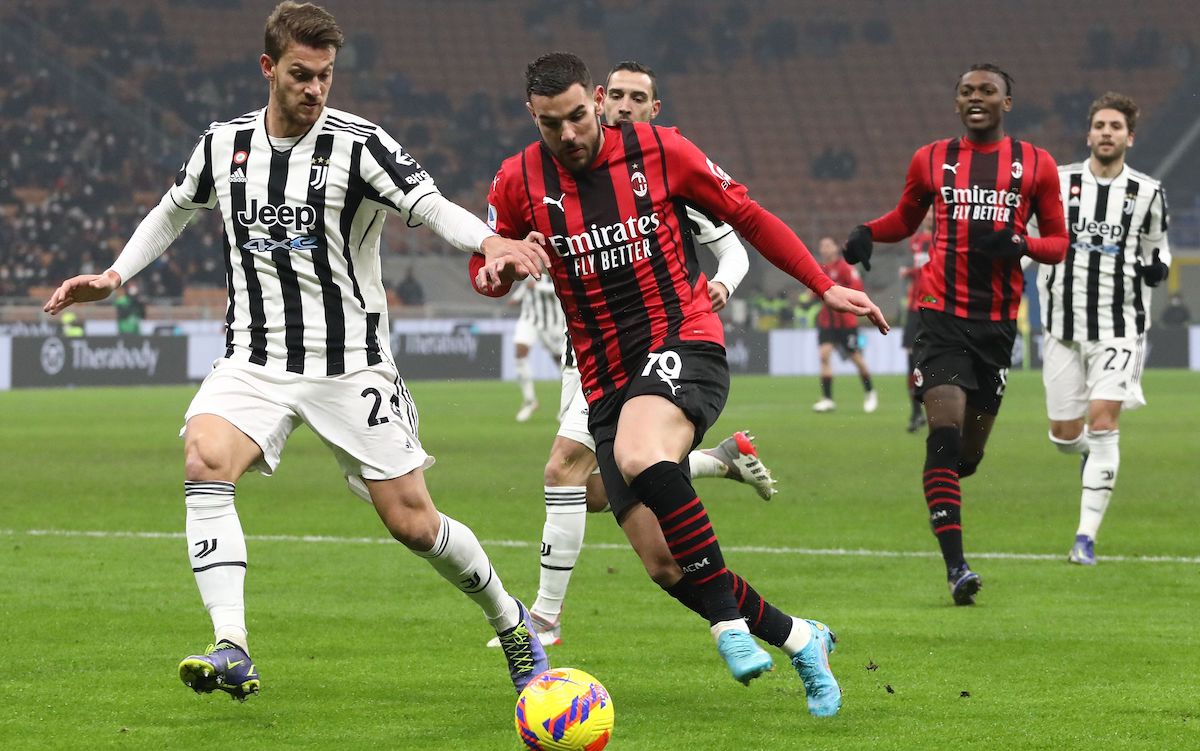


1️⃣ Match Context
This isn’t just Milan vs Juventus. It’s a pressure test in a league where the margins between “Champions League certainty” and “scramble mode” are often one bad week.
Late-April Serie A games carry a particular weight: squads are physically frayed, benches get shorter, and coaches become more conservative because one error can define a season narrative. Milan are playing with the expectation that San Siro should be a top-four machine. Juventus are playing with the obligation that they must be there—no excuses, no stylistic debates.
That psychological balance matters. Milan tend to grow with crowd energy and game state; when they score first, they can turn matches into territory control. Juventus, in contrast, are built to survive uncomfortable phases—compact, patient, and ruthless in transition. In a game with real table gravity, that skill set often travels well.
Add schedule congestion and late-season minute management, and you get a match where the first 30 minutes could be about information-gathering more than chaos. Then the game becomes about who can land the first clean punch.
2️⃣ Form & Advanced Metrics
If we look deeper than recent scorelines, the shape of both teams’ performances is more interesting than the headlines.
Milan’s attacking profile typically leans toward sustained pressure: long stretches in the opponent’s half, wide rotations to create crossing lanes, and a steady stream of shots rather than a handful of elite chances. The numbers indicate a team that can build decent expected goals through volume, but with a recurring issue: too many attempts come from “good-but-not-great” zones unless their half-space combinations click. When Milan are fluent, they access the cutback zone. When they aren’t, it becomes a lot of hopeful finishing from the edges.
Juventus’ attacking profile is usually more selective. Shot volume can look underwhelming, but shot quality is often the story—fewer attempts, more of them coming from transitions, second balls, or set-piece sequences. That creates a different kind of variance: Juventus can look quiet for 60 minutes and still produce the best two chances in the match.
Defensively, the contrast is just as sharp. Milan’s structure tends to invite a risk: full-backs push, midfield spacing stretches, and if the counter-press isn’t instant, opponents can access central lanes quickly. Their xGA profile often swings with game state—when they dominate territory they reduce shots, but the shots they concede can be high value if the first line gets broken.
Juventus are generally more stable in rest-defense, particularly when protecting the middle. Their willingness to drop into a compact block lowers the opponent’s shot quality, but there’s a trade-off: they concede territory and can allow a steady diet of entries into the final third. In pressing terms, Juventus are more situational—less “always on,” more “press on trigger.” Milan are more likely to apply pressure higher and longer. In PPDA language, that usually means Milan push opponents into faster decisions, while Juventus are comfortable letting you have the ball in non-damaging zones.
Tempo is the hidden battleground. Milan prefer a higher pace when they’re confident, because it amplifies their territorial advantage. Juventus prefer controlled phases and quick transitions, because it keeps the match closer to 0-0 logic where one moment decides it.
3️⃣ League Table Snapshot
| Team | Position | Points | GD | Last 5 |
|---|---|---|---|---|
| Milan | TBD | TBD | TBD | TBD |
| Juventus | TBD | TBD | TBD | TBD |
Analytical takeaway: without hard numbers here, the key concept is what these teams usually represent in the table: Milan’s season shape is often about streaks—dominant runs punctuated by frustrating “low block” points drops—while Juventus tend to accumulate points through control and risk management. That difference matters in high-stakes matches: one side is comfortable living in narrow margins, the other often wants the game to open.
4️⃣ Head-to-Head Analysis
Head-to-heads between Milan and Juventus rarely tell a simple “who is better” story. They usually tell a style story.
When Milan have controlled the ball against Juventus in recent cycles, the recurring question has been: can they turn territory into clear central chances, or do they get forced wide into low-efficiency crossing? Juventus are historically comfortable letting opponents have possession as long as the middle is protected, which can make Milan look dominant without actually being dangerous.
On the other side, Juventus’ best moments tend to come from Milan’s aggressive spacing. If Milan’s full-backs are high and the midfield pivot is isolated, Juventus can create immediate “first-pass forward” transitions that bypass the press entirely. If the matchup repeats tactically, the past often aligns with the underlying mechanics: tight games, fewer clean chances than the possession suggests, and decisive moments in transition or set pieces.
5️⃣ Tactical Breakdown (Core Section)
Who dictates tempo?
Milan will attempt to dictate tempo through field tilt—pinning Juventus back with sustained possession and forcing long defensive sequences. The home environment supports that. Juventus, however, don’t need to “win the ball” to win the game; they need to win the moments. Expect Juventus to accept being second-best in territory if it keeps their defensive distances compact.
Overload zones and where the game is won
Milan’s most reliable chance creation comes when they can access the half-spaces and arrive into the box for cutbacks. If Juventus block the middle and force Milan to deliver from wide without dynamic box occupation, Milan’s shot quality drops—even if their shot count rises.
Juventus will look for the opposite: bait Milan forward, then attack the space behind the full-backs. The key structural nuance here is Milan’s rest-defense. If their deeper midfield coverage is late, Juventus can create 3v3 or 3v2 running situations. Those are high-value possessions even if they’re rare.
Midfield control: control vs stability
Milan’s midfield wants to circulate quickly and push the opposition block side-to-side. Juventus’ midfield wants to keep the centre sealed and slow the game. That clash often produces a match where Milan have longer possessions, but Juventus have the clearer “next action” when they win it.
Pressing triggers and buildup resistance
Milan will press higher, especially on back-passes and wide buildup cues. Juventus are typically comfortable going longer when pressured, which can neutralize Milan’s press but also concedes second-ball battles. If Milan win those second balls, Juventus can get pinned for extended spells. If Juventus win them, Milan’s structure can be exposed.
Transition vulnerability
This is where the match pricing often lives. Milan’s attacking commitment can create transition exposure. Juventus are one of the few Serie A sides who can exploit that with discipline—quick release, runners beyond the ball, and enough technical security to turn one break into a shot.
Set pieces
In games like this, set pieces aren’t a footnote. They’re a market factor. Juventus’ pragmatic approach makes dead-ball sequences a genuine lever—especially if open-play shot quality stays low. Milan, meanwhile, need to avoid cheap fouls in wide areas where Juventus can load the box and turn territory into expected threat.
6️⃣ Odds & Market Evaluation
| Market | Selection | Odds | Implied Probability |
|---|---|---|---|
| 1X2 | Milan | 2.45 | 40.82% |
| 1X2 | Draw | 3.10 | 32.26% |
| 1X2 | Juventus | 3.05 | 32.79% |
Market read: these prices describe a near coin-flip with a mild home lean. That makes sense given San Siro influence and Milan’s ability to create territorial dominance.
The betlabel.games team evaluates this closer to a true “three-way split,” with the draw slightly more live than casual bettors often assume in elite Serie A matchups. According to our calculations, the away win is not as long as public perception tends to price it when Milan are at home. The edge isn’t screaming, but it exists where match dynamics produce draw-ish game states.
7️⃣ The Hidden Edge (Mandatory Section)
The market can be slow to price “possession illusion” games correctly.
Milan can dominate the optics—field tilt, territory, touches in the final third—without necessarily generating the kind of close-range shot profile that breaks elite low-to-mid blocks. When that happens, totals markets and match odds can drift toward Milan because viewers remember pressure, not shot quality.
Juventus are one of the best in Italy at turning low-possession games into “high-leverage” games: fewer total shots, but a higher share of big chances via transitions and set pieces. That structural reality increases the draw probability and keeps Juventus live even when they’re second-best on the ball.
There’s also a late-season nuance: as fatigue rises, teams that rely on sustained pressing and long possession phases can lose sharpness in counter-press moments. If Milan’s regain speed drops even slightly, Juventus’ first-pass forward becomes far more dangerous. It’s not always obvious in recent results, but it shows up in the type of chances conceded—fewer shots, better shots.
8️⃣ Final Prediction
Main Pick: Juventus +0.5 (Asian Handicap)
Alternative: Under 2.75 Goals (Asian Total)
Risk Level: Medium
Why this is the play (probability logic):
1) Match state leans draw-ish. Juventus’ compact approach and Milan’s need to turn territory into central chances often compress scorelines.
2) Juventus’ transition profile matches Milan’s main vulnerability. Milan’s aggressive spacing can give Juventus high-value chances even in a low-shot game.
3) Late-season pressure increases conservatism. Coaches protect outcomes. That tends to reduce open-play volatility and favors handicap/unders over pure 1X2 bravado.
No guarantees—Milan can absolutely win if they land an early goal and force Juventus out of their shell. But in a game defined by control vs stability, taking Juventus not to lose is the sharper way to buy into the most likely match script.







Leave a Reply