






1️⃣ Match Context
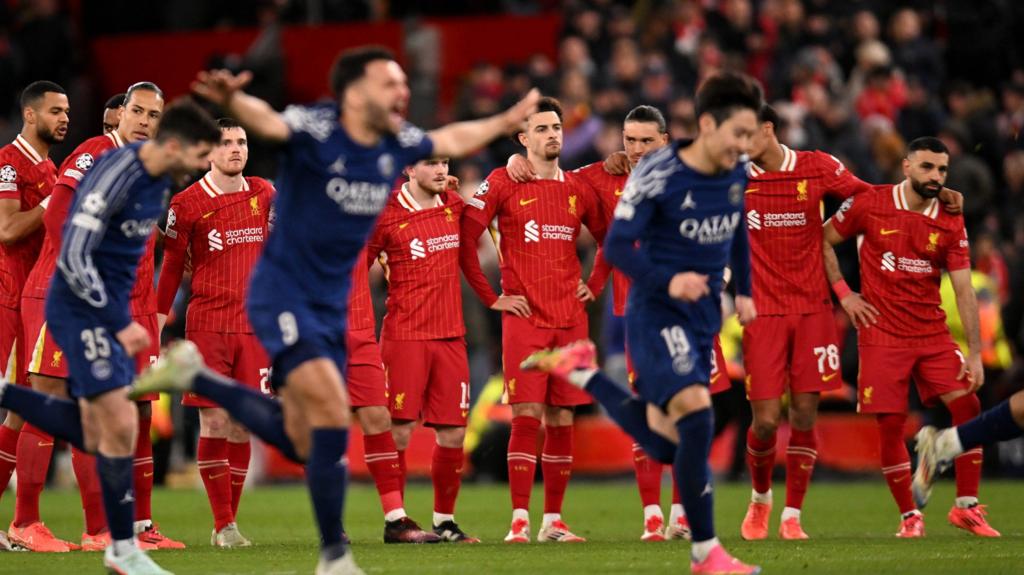
Anfield under European lights rarely needs extra framing, but this one comes with layered pressure. Liverpool and Paris Saint-Germain are not playing for “a good result” — they’re playing for control of the tie, control of the narrative, and the right to dictate the second leg’s game state.
This is the kind of Champions League night where momentum can be misleading. A one-goal swing changes everything: the pressing height, the risk tolerance in build-up, the willingness to commit full-backs, even substitution timing. Liverpool’s emotional energy at home is an asset, but it can also tempt them into playing the game at the wrong speed. PSG’s job is to slow the match without killing their threat.
Schedule load matters here. Both sides typically arrive with domestic title pressure and short recovery windows, and that shows up late: sprint volume drops, counterpress distances widen, and defensive spacing gets sloppier after 60–70 minutes. In a high-level tie, those small physical margins become betting margins.
2️⃣ Form & Advanced Metrics
Start with the shape of each team’s performances rather than the last two scorelines.
Liverpool’s best version is still about territorial control. They tend to tilt the pitch: long spells in the opponent’s half, repeated entries into the final third, and sustained pressure that turns “okay” shots into waves of second balls and cut-backs. The numbers usually reflect that: strong field tilt, high touch volume in the attacking third, and an xG profile built on volume plus a steady diet of central-zone chances generated via quick switches and underlaps.
The risk is what happens behind that pressure. Liverpool’s aggressive rest-defense can look airtight when the counterpress lands. When it doesn’t, opponents don’t need many shots — they need the right shots. This is where xGA can understate danger: a few transition moments can carry disproportionate value because they’re often central, facing the back line, with defenders running toward their own goal.
PSG, meanwhile, are structurally comfortable in either mode. Against elite opposition they often accept slightly less possession, but they don’t accept less control. Their shot quality tends to be higher than their shot volume — fewer attempts, but more of them from premium lanes created by isolations on the wing and fast, vertical combinations through the half-spaces. The key metric translation: PSG don’t need “territory” to create threat; they need timing and spacing.
Pressing intensity is the hinge. Liverpool’s PPDA profile is typically aggressive at home — they press early and often, trying to force rushed decisions and win second balls. PSG can press too, but they’re more selective: their best defensive work is about trapping build-up into predictable lanes and then springing forward. If Liverpool’s first line of build-up resists, PSG will drop and protect the center. If Liverpool get loose in possession, PSG will strike with one pass into space.
Home/away dynamics matter, but not in the simplistic sense. Anfield boosts Liverpool’s tempo and shot volume; it can also inflate volatility. PSG away in Europe often become more efficient: fewer unnecessary touches, more direct access to their match-winners, and a clearer emphasis on game management.
3️⃣ League Table Snapshot
| Team | Domestic Position | Points | GD | Last 5 |
|---|---|---|---|---|
| Liverpool | — | — | — | — |
| Paris Saint-Germain | — | — | — | — |
Takeaway: without locking into exact domestic ranks, the meaningful read is this: both teams tend to arrive in the UCL knockouts with strong baseline performance levels, but their domestic environments shape different habits. Liverpool are conditioned to play at maximum tempo under pressure; PSG are conditioned to break down low blocks and then flip into transition football in Europe. Those habits show up more than “form.”
4️⃣ Head-to-Head Analysis
When these clubs meet, the story is rarely about the badge — it’s about the space. Liverpool will always try to turn the tie into repeated attacking sequences: win the ball, play forward quickly, force PSG’s wide defenders to defend their box. PSG will always look for the release valve: drag Liverpool’s press to one side, then punch through the weak-side half-space with speed.
The recurring pattern in similar matchups is that PSG’s threat spikes when Liverpool’s full-backs are simultaneously high. That’s not a critique — it’s the trade-off Liverpool accept to create overloads. The question is how clean Liverpool’s counterpress is on the night, because that determines whether PSG’s best players receive in stride or receive with a defender already tight.
Psychologically, there’s also a familiar imbalance: Liverpool feed off chaos; PSG often look best when the game becomes slightly clinical. The team that gets the match closer to its preferred “emotional temperature” usually gets the value.
5️⃣ Tactical Breakdown (Core Section)
Who dictates tempo?
Liverpool will attempt to dictate tempo through volume: fast restarts, quick throw-ins, immediate counterpress, and relentless wide-to-central circulation. PSG’s answer is not to match that speed — it’s to puncture it. One clean escape from pressure can calm the stadium and force Liverpool to defend deeper than they want.
Where is the overload zone?
Liverpool’s most dangerous sequences tend to come from the half-spaces: a wide player pins the full-back, an interior runner arrives between lines, and the final ball becomes a cut-back rather than a cross. PSG’s defensive preference is to protect the middle and force play wide. That creates a chess match: Liverpool want cut-backs; PSG want crosses.
If Liverpool can create 2v1s in the wide channel and then access the inside lane, PSG’s box defense gets stretched laterally — exactly what you don’t want against a team that attacks the six-yard box aggressively.
Which flanks are exposed?
PSG’s transitional danger typically lives on the wings. If Liverpool commit both full-backs high, the exposed zones are the channels behind them. This is where PSG’s pace and timing become lethal: not just a run in behind, but a run that forces Liverpool’s center-backs to turn, opening the central lane for the second runner.
The midfield control battle
Midfield is not only about possession here; it’s about access. Liverpool will try to win the ball higher and keep PSG’s midfield facing their own goal. PSG will try to ensure their midfield receives on the half-turn and can connect quickly to the front line. If PSG can consistently play through the first wave, Liverpool’s defensive line will be asked to defend larger spaces — a dangerous ask.
Pressing triggers and build-up resistance
Liverpool’s pressing triggers are predictable but hard to survive: a back-pass to the goalkeeper, a slow lateral pass across the center-backs, a receiving midfielder with his back to play. PSG can resist with third-man combinations and quick wall passes — but that requires perfect spacing and bravery.
The subtle point: PSG don’t need to “beat” the press repeatedly; they only need to beat it a few times with clean exits. Those moments flip the expected territory and create high-value transition shots.
Transition vulnerability
This match will swing on two or three transition moments more than on “who had the ball.” Liverpool’s transition defense is elite when the counterpress is synchronized. But if the front line gets stretched and the midfield line becomes staggered, PSG will find the gap between pressure and protection.
Set-piece dynamics
In a tight European tie, set-pieces are not a side note. Liverpool’s volume of corners and free-kicks at home is usually high because they force blocks and deflections. PSG, conversely, often concede fewer shots but can concede dangerous dead-ball situations when pinned deep. That pushes the variance slightly toward Liverpool in a low-margin game.
6️⃣ Odds & Market Evaluation
| Market | Selection | Odds | Implied Probability |
|---|---|---|---|
| 1X2 | Liverpool | 2.20 | 45.5% |
| 1X2 | Draw | 3.60 | 27.8% |
| 1X2 | PSG | 3.30 | 30.3% |
Those implied probabilities sum above 100% (as expected due to margin). According to our calculations, the betlabel.games team evaluates the true pricing closer to: Liverpool 43%, Draw 27%, PSG 30%. That’s not a screaming edge in the 1X2, but it frames the next step: derivatives.
Where the market often misprices games like this is in totals and protection markets (DNB, Asian lines), because the match can be simultaneously high-quality and low-scoring if both teams respect the transition risk.
7️⃣ The Hidden Edge (Mandatory Section)
There’s a structural nuance here that markets can be slow to price: elite-vs-elite matches often produce fewer “clean” shots than fans expect, but the shots that do happen are extremely valuable.
That creates an illusion. If one team racks up attempts from wide areas, it can look like dominance, but the xG per shot stays modest. Meanwhile, the opponent can have fewer shots yet generate the game’s highest-value chance from one broken press. The market tends to react to volume and territory — not always to shot quality.
For this specific matchup, Liverpool’s home pressure should raise corner count and box entries, but PSG’s transition profile means Liverpool can’t fully commit without consequence. That tension often compresses the game into: long Liverpool spells, then sudden PSG bursts. The second-order effect is important: draw probability rises because both sides have reasons to avoid the one mistake that opens the tie.
If the odds are heavily tilted toward a clear home win narrative, the quieter value can live in “Liverpool not to lose” angles paired with lower goal ranges — not because these teams lack attackers, but because they understand the cost of losing structure.
8️⃣ Final Prediction
Main Pick: Liverpool Draw No Bet (DNB)
Alternative: Under 3.0 Asian Goals
Risk Level: Medium
Why:
1) Game-state logic. Liverpool at Anfield should control territory and set-piece volume, which supports a “not to lose” stance even if PSG land a few high-value counters.
2) Tactical symmetry creates draw equity. Liverpool’s press and PSG’s transition threat naturally check each other, often keeping margins tight and pushing outcomes toward one-goal games.
3) Shot quality over shot volume. Expect phases of pressure without constant big chances; that’s the blueprint for an Under 3.0 profile unless the match breaks early.
No guarantees — but in a tie defined by structure and restraint, protection markets read cleaner than chasing a pure 1X2 headline.






Leave a Reply