




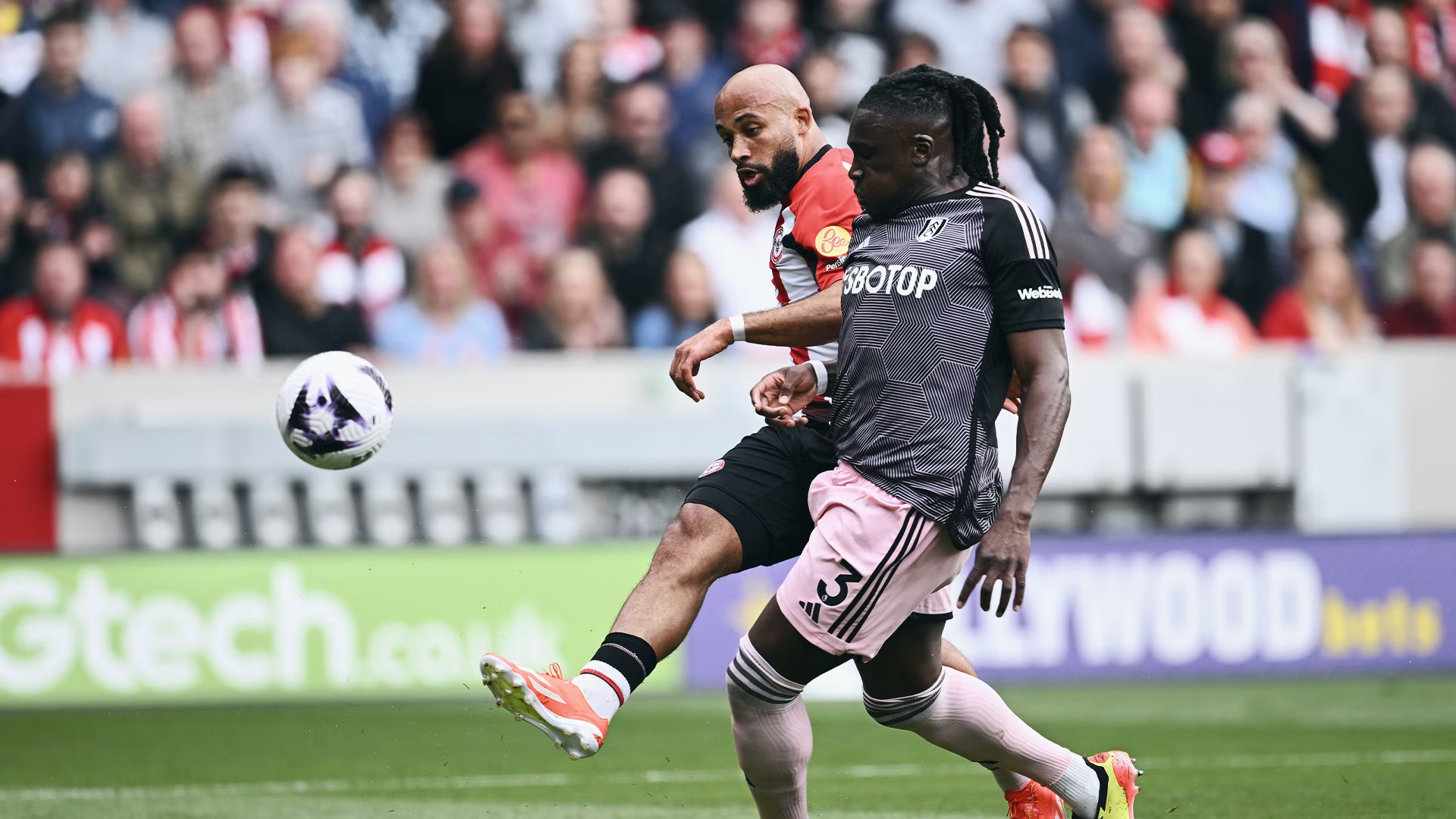


1️⃣ Match Context
This is the kind of Premier League game that rarely makes global headlines but quietly shapes seasons.
Brentford and Fulham arrive in the part of the calendar where every decision is sharpened by consequence: points aren’t just points anymore, they’re oxygen. For Brentford, home fixtures in April carry added weight because their survival/finish targets tend to be built on what they can bank in west London. For Fulham, this is the territory where “solid mid-table” can either become a credible push toward the top-half conversation — or slide into a flat ending with nothing to chase.
Psychologically, it matters that this is a derby with a familiar edge. The crowd will demand front-foot intent from Brentford, while Fulham’s comfort zone is often to quieten games, control rhythm, and let their technical quality tilt the pitch.
There’s also the late-season fatigue dynamic. Legs go first; structure follows. If either side has carried recent knocks or rotated heavily, the first 20 minutes will tell you whether this becomes a high-tempo transition fight or a more positional chess match.
2️⃣ Form & Advanced Metrics
If we look deeper than recent scorelines, the profile clash is clear.
Brentford’s best version is direct-but-organised: they don’t need long spells of sterile possession to create. They build value through vertical progression, early crosses, set-piece pressure, and quick attacks that end in shots rather than “nice territory.” When their chance creation is healthy, the xG tends to be driven by getting the ball into the box quickly and repeatedly — not by endless shot volume from distance.
The volatility comes on the other side of the ball. Brentford can concede sequences where the block becomes stretched, and the central channels open up. That’s when opponents rack up higher-quality looks despite not taking many shots. It’s not always a volume issue; it’s often shot quality conceded — chances allowed from the cutback zone or between the centre-backs.
Fulham, by contrast, tend to look cleaner in the underlying process when they can establish rhythm. Their attacks often build through wide-to-half-space combinations, then arrive at the box with runners rather than hopeful service. The key metric translation: when Fulham are “on,” their xG is less about chaos and more about repeatable patterns — getting to the byline, dragging the back line, then finding a late man around the penalty spot.
Pressing intensity also shapes this matchup. PPDA isn’t just a number here; it’s a description of intent. Brentford’s press can be trigger-based — they jump on specific cues like a slow back-pass or a heavy first touch, aiming to force one mistake that becomes a shot. Fulham’s build-up is usually calmer, but they can be vulnerable if pressed into the touchline and denied the central outlet. If Fulham can break that first wave, they often play in Brentford’s half for long spells.
Home/away splits matter too. Brentford typically look more proactive at home — more crosses, more territory, more set-piece volume. Fulham away can be pragmatic: fewer risks in build-up, more patience, and a willingness to win the game late rather than early.
3️⃣ League Table Snapshot
| Team | Position | Points | Played | GF | GA |
|---|---|---|---|---|---|
| Brentford | 13th | 40 | 32 | 42 | 50 |
| Fulham | 10th | 46 | 32 | 48 | 46 |
Takeaway: the table gap suggests Fulham have been the steadier team across the season, but not necessarily dominant. Brentford’s position reflects inconsistency and defensive leakage more than a lack of attacking tools — the kind of profile that can still win games like this at home if the match becomes chaotic.
4️⃣ Head-to-Head Analysis
This derby tends to follow a familiar script: Fulham try to control phases with calmer possession, Brentford try to make the game sharp — second balls, set pieces, and quick entries into the box.
The tactical repetition is important. When Fulham’s fullbacks get pinned, their build-up becomes narrower and slower, which plays into Brentford’s pressing traps. When Fulham do escape pressure, they often find space behind Brentford’s advanced wide players, turning the game into a sequence of recoveries and emergency defending.
Past results in this fixture can be misleading because the game state swings quickly: an early set-piece goal changes everything. The underlying lesson is structural, not historical: the team that wins the wide zones usually wins the match narrative.
5️⃣ Tactical Breakdown (Core Section)
Who dictates tempo?
Fulham are more comfortable in a medium tempo where they can recycle possession and choose their moments. Brentford are happier when the game speeds up — not reckless, but urgent. Expect Brentford to push for a fast start at home, using crowd energy and direct play to avoid being lulled into Fulham’s rhythm.
Where is the overload zone?
Fulham’s danger often comes from building wide, then attacking the half-space with runners. The key pattern: wide progression to draw out a defender, then a pass inside for a shot or cutback. Brentford must protect the zone just inside their fullbacks — that’s where high-quality chances are created.
Brentford’s overload is different: they look to create crowding around the box, generate second balls, and feed deliveries into high-value areas. They don’t need 65% possession; they need repeated box entries. If Brentford can keep Fulham pinned and win territorial battles, their chance volume rises quickly.
Which flanks are exposed?
There’s a structural nuance here: Brentford’s wide players often commit forward aggressively, which can leave space in the channel behind them. Fulham will try to switch play into those spaces and isolate the recovering fullback. If Fulham can force Brentford’s wide defenders into long sprints toward their own goal, the cutback lane opens.
Midfield control battle
This will be decided by who wins the second ball economy. Brentford thrive when they can turn 50/50s into sustained pressure. Fulham want cleaner possessions and fewer loose phases. If Fulham’s midfield can receive on the half-turn under pressure, they’ll progress through Brentford’s first line and start stacking territory.
Pressing triggers and buildup resistance
Brentford’s press is at its best when it’s coordinated: show the ball to the sideline, lock the receiver, and attack the next touch. Fulham’s response has to be pre-planned: third-man runs, quick wall passes, or direct balls to bypass the trap. If Fulham hesitate, Brentford will create shots from turnovers — and those are typically high-value looks because the defence is disorganised.
Transition vulnerability
The transition battle is where the totals market gets interesting. Brentford’s games can turn into end-to-end sequences when they chase a goal or when their press is broken. Fulham are capable of punishing that with quick, clean attacks. Conversely, Fulham can suffer if they lose the ball in advanced wide areas and Brentford immediately hit the space behind their fullbacks.
Set-piece dynamics
Set pieces remain a Brentford lever. Even if open-play chance creation is patchy, corners and wide free-kicks can keep them “alive” in expected threat. Fulham’s discipline — avoiding cheap fouls and needless corners — is quietly crucial. One lapse, and the game state flips.
6️⃣ Odds & Market Evaluation
| Market | Selection | Odds | Implied Probability |
|---|---|---|---|
| 1X2 | Brentford | 2.55 | 39.2% |
| 1X2 | Draw | 3.35 | 29.9% |
| 1X2 | Fulham | 2.85 | 35.1% |
Market read: pricing leans slightly toward Brentford due to home advantage, but it’s essentially a near-pick’em with a meaningful draw probability. According to our calculations at betlabel.games, the “true” gap between these sides is small, so the edge won’t come from forcing a strong 1X2 stance unless you see a clear tactical tilt.
Where value can appear is in derivative markets: draw protection, or totals if you believe the match becomes transition-heavy rather than controlled.
7️⃣ The Hidden Edge (Mandatory Section)
The market tends to price Brentford-Fulham like a generic mid-table derby: emotion, noise, and a bit of randomness. The hidden edge is that Fulham’s ability to control tempo is often overstated when facing a press that’s comfortable living in the second-ball game.
If Fulham’s build-up gets forced wide early, their possession can become “possession without penetration.” That looks good on television and sometimes even in raw territory stats, but it doesn’t always translate into premium shot quality. Meanwhile, Brentford’s chance profile can spike quickly from two sources that markets sometimes underweight in real time: transition shots after a forced turnover, and set-piece xG.
There’s also a late-season pattern angle: teams that rely on controlled build-up can show a subtle second-half drop-off when legs fade, because the distances between midfield and back line increase. That’s exactly the gap Brentford target with early deliveries and box pressure. If this is level after an hour, the final 30 minutes could tilt toward the side that generates more “mess” in the area — and that tends to be Brentford at home.
8️⃣ Final Prediction
Main Pick: Brentford Draw No Bet (DNB)
Alternative: Both Teams To Score (BTTS) – Yes
Risk Level: Medium
Why this works:
- Matchup logic: Brentford’s press + second-ball game can disrupt Fulham’s preferred rhythm, especially if Fulham are nudged into wide build-up and slower progression.
- Game-state resilience: DNB protects against the derby draw, which is live if Fulham manage tempo and Brentford’s finishing runs hot-and-cold.
- Chance sources: Brentford’s set-piece and transition threat can manufacture high-value moments even without dominance; Fulham’s technical quality is enough to create their own, making BTTS a viable secondary angle.
Bottom line: this looks like a narrow, tactical contest where Brentford’s home mechanisms (pressure, territory spikes, dead-ball threat) slightly outweigh Fulham’s control — but not by enough to ignore draw insurance.







Leave a Reply