




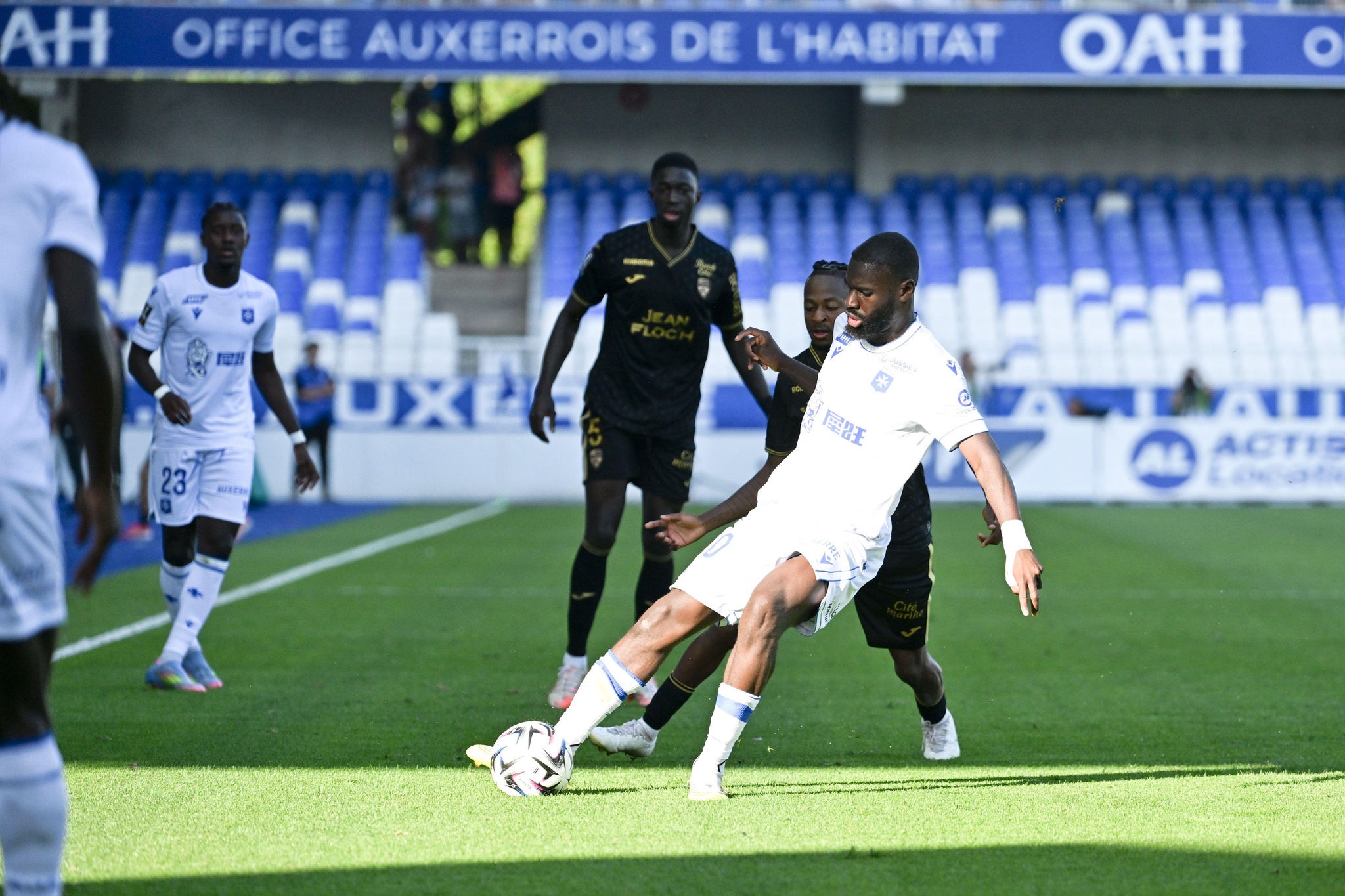


1️⃣ Match Context
April football in Ligue 1 doesn’t need extra narrative — the table creates it on its own. Auxerre vs Nantes is the type of fixture that can quietly swing an entire season: one team trying to turn home momentum into safety and stability, the other attempting to avoid being dragged into a late-spring scrap.
Auxerre’s incentive is obvious. At this stage, a home game against a direct mid-table/low-table rival is not “three points available” — it’s three points that reduce the number of must-win games left. That changes behaviour: a little more risk accepted with the ball, a little more urgency after halftime, and a crowd that gets louder the moment territory starts tilting their way.
Nantes arrive with a different kind of pressure. The psychology isn’t about chasing Europe; it’s about avoiding the anxiety spiral. When a team has been living around the bottom half for months, one bad 15-minute spell can flip a match and a mood. And in this part of the calendar, managers tend to shorten rotations, which makes fatigue patterns and second-half drops more relevant than usual.
2️⃣ Form & Advanced Metrics
This matchup is better understood through how both teams create chances rather than the raw totals.
Auxerre’s recent profile is typically that of a home-leaning side: they look more comfortable turning possession into territory in their own stadium. The key is shot quality. They’re not a pure volume team; their best spells come when they work the ball into the half-spaces and generate cutback situations rather than settling for low-probability shots from distance. When Auxerre get that rhythm, their expected goals trend upward without the game turning chaotic.
The risk is on the other side of the ball. Auxerre can defend competently when set, but they’ve shown a tendency to concede central access after turnovers. That’s not always captured by goals conceded in small samples — it’s a structural issue: if your rest-defence isn’t positioned for the second ball, one clean pass can turn into a high-value shot before your block resets.
Nantes, by contrast, often live on thinner margins. Their chance creation can spike in transition, but it’s less reliable when opponents deny the first forward pass and force them into slower build-up. In those slower possessions, they tend to end up with either early crosses under pressure or shots from non-prime zones — attempts that look “active” on a highlight map but don’t move the xG needle.
Pressing intensity matters here. Nantes generally show a willingness to press in bursts rather than sustain a full-match squeeze. That’s where PPDA interpretation is important: it’s not just about being “high press” or “low block,” it’s about when the pressure arrives. Nantes can look aggressive for 10 minutes, then drop into a mid-block for game management. Against a home side that wants to settle, those swings can either disrupt Auxerre’s rhythm or simply create gaps if the press isn’t supported by the midfield line.
Tempo-wise, expect a match that tries to become a territory battle rather than a track meet. Auxerre benefit from a controlled pace where their positional structure stays intact. Nantes benefit when the game opens — not necessarily through end-to-end chaos, but through quick transitions and second-phase attacks after clearances.
3️⃣ League Table Snapshot
| Team | Position | Points | Goal Difference | Trend |
|---|---|---|---|---|
| Auxerre | — | — | — | Home-leaning, survival-focused |
| Nantes | — | — | — | Margin football, form-sensitive |
Takeaway: even without listing exact ranks here, the dynamic is clear: this is a “six-pointer” by behaviour, not by label. Matches like this are less about brilliance and more about error management, second balls, and emotional control after conceding territory.
4️⃣ Head-to-Head Analysis
Head-to-head history between sides in this band of the table often misleads if you focus on scorelines. The more useful lens is repetition: do the same patterns keep showing up?
Auxerre vs Nantes tends to revolve around whether Auxerre can establish possession higher up without being forced into rushed wide deliveries. Nantes are usually comfortable letting opponents have sterile control, then pouncing when a pass is played into a marked midfielder. If past meetings have shown Nantes creating their best moments off Auxerre’s central turnovers, that’s a structural matchup edge — and it’s repeatable.
But if Auxerre have been able to get their full-backs high and create clean cutbacks, Nantes’ box defending becomes the stress point. Nantes can defend the first cross reasonably well; the problem is the second action — the recycled ball to the edge of the area and the late runner arriving untracked.
5️⃣ Tactical Breakdown (Core Section)
Who dictates tempo?
Auxerre will try to dictate with ball circulation and territory — not endless possession for its own sake, but enough to keep Nantes from getting into transition chains. Nantes’ ideal game is the opposite: accept phases without the ball, then accelerate through the first forward pass and attack the space behind Auxerre’s midfield line.
The first 20 minutes matter. If Auxerre settle into their passing lanes, Nantes risk being pinned and forced into longer clearances. If Nantes disrupt Auxerre early, the match can become choppy — exactly the kind of rhythm that reduces Auxerre’s shot quality and increases variance.
Overload zones and flank exposure
Auxerre’s most valuable attacking work usually comes from half-space entries that pull a centre-back out, then a cutback into the zone between the penalty spot and the edge of the six-yard box. For that to happen, they need wide support to stretch Nantes’ back line. If the Auxerre full-backs push high, the risk is the space behind them.
Nantes’ counter-attacking route is straightforward: win it, play forward early, and attack the channels. This is where Auxerre’s rest-defence becomes the match’s hinge. If Auxerre leave a lone pivot to cover two channels, Nantes will find a runner. If Auxerre keep a centre-back stepping into midfield to protect the first transition pass, they reduce that risk — but may concede territory and invite pressure.
Midfield control battle
The central duel isn’t about “who has more possession.” It’s about who controls the second ball. Nantes will happily concede a short passing sequence if it ends with a pressed cross and a clearance they can contest. Auxerre must win those second-phase recoveries to keep Nantes pinned. If Nantes start winning those duels, the match flips quickly into repeated transition waves.
Pressing triggers and build-up resistance
Nantes’ pressing tends to trigger on sideways passes into the full-back or a back-pass to reset. If Auxerre are clean technically, they can play through and force Nantes to retreat. If Auxerre’s build-up becomes conservative, Nantes can trap them wide, win throw-ins and corners, and create momentum without creating much open-play xG — but momentum still moves prices live.
Transition vulnerability
This is the most important tactical risk. Auxerre’s attacking structure can leave them slightly stretched. Nantes’ best chance profile is likely to come from quick attacks where the shot arrives before Auxerre can compress the box. That doesn’t mean Nantes will rack up volume; it means the shots they do get could be high leverage.
Set-pieces
In fixtures like this, set-pieces are not a side note — they’re a pricing variable. If open play becomes cautious, corners and wide free-kicks carry extra weight. Auxerre at home often generate more sustained pressure, which naturally inflates corner count. Nantes, meanwhile, can be dangerous on second balls after defensive set-pieces — the clearance that drops to a free shooter is a classic late-season swing moment.
6️⃣ Odds & Market Evaluation
| Market | Selection | Odds | Implied Probability |
|---|---|---|---|
| 1X2 | Auxerre | 2.55 | 39.2% |
| 1X2 | Draw | 3.15 | 31.7% |
| 1X2 | Nantes | 2.95 | 33.9% |
The implied probabilities above are unadjusted for bookmaker margin, but they tell the story: the market sees a near coin-flip with Auxerre slightly favoured by home advantage.
According to our calculations at betlabel.games, the game is indeed tight — but the draw is slightly undervalued given the tactical equilibrium: Auxerre’s desire for control vs Nantes’ willingness to wait for transition moments often produces long stretches where neither side gives up clean chances.
Edge rating: marginal, but playable if the price holds.
7️⃣ The Hidden Edge (Mandatory Section)
There’s a structural nuance here that markets can be slow to price: late-season risk management changes shot selection.
Teams under pressure don’t always become more attacking — often they become more cautious in the most important zone: the pass that breaks your rest-defence. Auxerre at home may dominate territory, but if they avoid the central “risk pass” and circulate wide, their possession can look strong while producing only moderate xG. That creates a match state where the favourite looks in control… without actually separating.
Nantes, meanwhile, are built to tolerate that. They can sit in a mid-block, keep the box compact, and wait for one transition or one set-piece sequence to swing the expected goals balance. The market often overreacts to home pressure and crowd narrative, but territory without central penetration is not the same as chance dominance.
If we look deeper, this is also where regression can show up: if Auxerre have been converting at an above-average clip from a small number of high-quality chances at home, that can cool off quickly. And when that cools, the draw becomes a more natural landing point than many bettors want to admit.
8️⃣ Final Prediction
Main Pick: Draw (X)
Alternative: Under 2.5 Goals
Risk Level: Medium
The case is built on structure, not vibes:
- Tempo clash promotes control over chaos: Auxerre want settled possession; Nantes are comfortable waiting. That often suppresses open-play shot volume.
- Chance quality likely concentrated, not constant: Nantes’ best moments are high-leverage transitions, but not necessarily frequent — a classic draw profile.
- Market slightly leans to the home narrative: Auxerre being a mild favourite makes sense, but the price doesn’t fully respect how easily Nantes can turn this into a low-event game.
No guarantees — just probability logic. In a match where both sides have reasons to manage risk, the draw is a live outcome, and the unders angle fits the tactical geometry.







Leave a Reply