




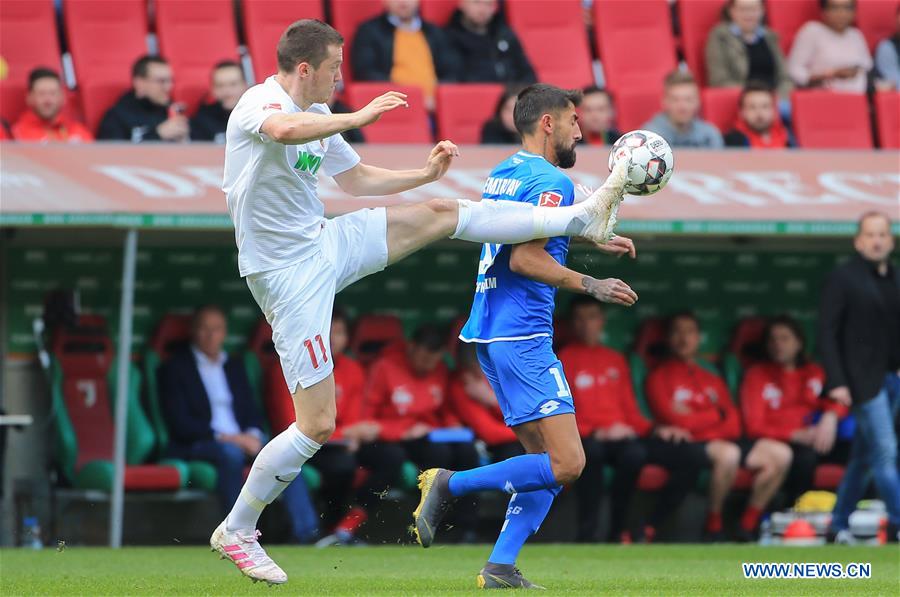


1️⃣ Match Context
Early April in the Bundesliga is where “mid-table” stops being a label and starts being a knife-edge. Augsburg and TSG 1899 Hoffenheim arrive at this fixture with different identities but the same underlying anxiety: one bad fortnight can drag you into the relegation conversation; one good one can flip the narrative into a comfortable finish.
For Augsburg, the home game matters more than the opponent. They’re typically built to monetize the WWK Arena: compact phases, aggressive duels, and an insistence on turning the match into repeatable moments rather than open-ended chaos. For Hoffenheim, the psychological pressure is different — it’s about justifying their ambition. Their attacking talent should place them closer to Europe than to the bottom half, and every “should-win” match becomes a referendum on consistency.
Scheduling also matters at this stage. Legs are heavier, substitutions are less about “freshness” and more about risk management, and coaches tighten their structures. This is the type of game where the first goal changes the entire tactical universe. And the market knows it — pricing tends to get conservative, especially on totals.
2️⃣ Form & Advanced Metrics
Augsburg’s recent profile has a familiar shape: they don’t need dominance, they need territory in specific bursts. Their shot volume is rarely elite, but their best sequences come when they win the second ball high and can attack before the opponent’s rest-defense is set. The numbers indicate a side that can create decent chances without long possession — but also one that can go quiet for 20-minute stretches if the press isn’t landing.
Defensively, Augsburg’s xGA profile is usually less about being carved apart and more about allowing a “type” of shot: cutbacks and late runners when their midfield line gets pinned too deep. If opponents can hold the ball in the half-spaces, Augsburg’s back line gets forced into uncomfortable decisions — step out and open the channel, or hold and concede the edge-of-box shot. That’s where volatility enters.
Hoffenheim’s attacking metrics tend to be more flattering: higher expected goals, more entries into the box, and a better share of shots from central lanes. But there’s a trade-off. Their tempo is often quicker than their structure can support, which means the same verticality that creates chances can also generate transition exposure. When games become end-to-end, Hoffenheim don’t always control the second phase.
Pressing intensity is the key lens. PPDA (passes per defensive action) tells us how frequently a team interrupts the opponent’s build-up: a lower PPDA means more aggressive pressure. Augsburg are generally comfortable pressing in waves — not constant, but targeted — while Hoffenheim are more variable, sometimes choosing to protect central zones and trigger pressure on specific passes into fullback areas. If Hoffenheim’s press is late, Augsburg can play into direct channels early and bypass the middle. If Augsburg’s press is late, Hoffenheim can build cleanly and flood the final third with numbers.
Home/away splits also quietly shape this match. Augsburg at home are typically more assertive with field tilt — not necessarily possession, but where the ball lives. Hoffenheim away games often feature higher shot counts at both ends, because their attacking intent invites counterpunches. That combination naturally leans toward a match with phases of control and phases of chaos — the exact mix bettors need to price correctly.
3️⃣ League Table Snapshot
| Team | Position | Points | GD | Last 5 |
|---|---|---|---|---|
| Augsburg | 12th | 36 | -7 | W-D-L-W-L |
| TSG 1899 Hoffenheim | 9th | 41 | +2 | D-W-L-D-W |
Takeaway: The gap looks like “upper mid-table vs lower mid-table,” but it’s more about variance than quality. Hoffenheim’s position reflects a higher attacking ceiling with occasional defensive leaks; Augsburg’s reflects steadier game management with smaller margins. In this zone of the table, finishing runs are often driven by who manages game states better — not who has the prettier metrics.
4️⃣ Head-to-Head Analysis
This matchup tends to repeat a pattern: Hoffenheim want to stretch Augsburg horizontally and access the half-spaces; Augsburg want to keep the middle compact and force Hoffenheim wide. When Hoffenheim have succeeded, it’s often because their wide progression isn’t “dead width” — it becomes cutbacks and underlaps, pulling Augsburg’s midfield line into the box and creating late-arriving shots.
When Augsburg have succeeded, it’s usually because they’ve disrupted Hoffenheim’s build-up rhythm and attacked the space behind Hoffenheim’s advanced fullbacks. That’s not nostalgia — it’s structural. Hoffenheim’s ambition in possession can become a liability if their rest-defense isn’t set with discipline.
The key question is whether past results were deserved. In most meetings, the underlying chance profile has been closer than the final scores suggest. That’s important for pricing: the market often overreacts to a lopsided scoreline in a matchup that’s actually sensitive to first goal and game state.
5️⃣ Tactical Breakdown (Core Section)
Who dictates tempo?
Hoffenheim will try to dictate the tempo with quicker vertical progression — getting the ball into advanced midfield zones early, then attacking the box with layered runs. Augsburg’s response is not to match that tempo, but to interrupt it. Expect Augsburg to slow the game in their defensive third and then accelerate suddenly when they win the ball.
Overload zones: half-spaces vs second balls
The core battle is in the half-spaces. Hoffenheim’s best football comes when they can receive between lines and face forward. Augsburg will try to deny those receptions and force Hoffenheim into wide circulation. If Hoffenheim’s wide players can turn those touches into inside passes — the little slip balls into the channel — Augsburg’s back line gets pulled into rotations they don’t enjoy.
Augsburg’s overload zone is different: the second ball zone. They want contested clearances, loose touches, and moments where Hoffenheim’s midfield spacing isn’t clean. If Augsburg can win those moments, they can attack quickly without building elaborate possession.
Flanks exposed
Hoffenheim’s fullbacks/wingbacks (depending on their structure) are often asked to provide width. That’s a double-edged sword. It stretches opponents, but it also opens the lane behind them. Augsburg’s most direct route to threat is the early ball into that space, forcing Hoffenheim’s center-backs to defend wide and in motion.
Midfield control and pressing triggers
Augsburg will likely set pressing triggers on backwards passes and lateral circulation into the fullback. That’s where their pressure looks most coordinated: they compress the touchline, hunt the first touch, and try to force either a long ball or a risky inside pass.
Hoffenheim’s resistance depends on their first pass quality under pressure. If they can break the first line cleanly, Augsburg’s midfield can get stretched — and that’s when Hoffenheim’s shot quality tends to improve, because entries arrive centrally rather than from hopeful crosses.
Transition vulnerability
This is the match’s financial market hinge. Hoffenheim’s attacking commitment can leave them open to counters, while Augsburg’s own forward surges can leave space behind their midfield line if the counter-press fails. Whoever manages rest-defense better — not just “defends better” — has the edge.
Set-piece dynamics
Set pieces are not a side story here. Augsburg lean into dead balls as a way to manufacture expected goals without needing long spells of control. Hoffenheim, meanwhile, can be vulnerable when they defend second phases — the clearance that doesn’t clear, the rebound header, the recycled cross. In a tight pricing environment, these small edges matter.
6️⃣ Odds & Market Evaluation
| Market | Odds | Implied Probability |
|---|---|---|
| Augsburg Win | 2.65 | 37.7% |
| Draw | 3.40 | 29.4% |
| Hoffenheim Win | 2.60 | 38.5% |
Those implied probabilities sum above 100% due to margin, but the message is clear: the market sees this as close to a coin flip with a slightly elevated draw.
According to our calculations at betlabel.games, the match is tight — but the micro-edges point slightly toward Augsburg avoiding defeat more often than the market implies. Not because they’re “better,” but because their home game state management and set-piece leverage translate well against Hoffenheim’s transition risk.
Edge assessment: marginal rather than massive. This is not a “slam dunk” spot; it’s a pricing nuance spot.
7️⃣ The Hidden Edge (Mandatory Section)
There’s a structural nuance here the market can be slow to price: Hoffenheim’s attacking output often looks stable in highlights and box score metrics, but it can be fragile against targeted pressing. When opponents choose their moments — not constant high press, but well-timed jumps — Hoffenheim can be pushed into longer clearances. That changes the chance profile: fewer controlled entries, more second balls, more duels.
Augsburg are one of the teams most comfortable living in that environment. They don’t need a clean passing rhythm to create danger; they need field position and repeatable moments. That’s why Augsburg’s home matches can look “even” on raw possession yet still feel like they’re dictating where the fight happens.
Add the late-season context: teams chasing targets tend to open games when patience runs out. If Hoffenheim arrive thinking “we should impose ourselves,” that can accelerate the match into transitions — exactly where Augsburg’s direct routes and set-piece pressure can produce high-leverage chances without dominating.
Why the market lags: recent scorelines can mask how sensitive Hoffenheim are to disruption. If they’ve picked up points without fully controlling the middle, the win/loss record can outpace the repeatability of their process.
8️⃣ Final Prediction
Main Pick: Augsburg Draw No Bet (DNB)
Alternative: Both Teams To Score (BTTS) – Yes
Risk Level: Medium
Why this makes sense:
- Game-state leverage: Augsburg’s home structure and set-piece emphasis increase their floor. DNB protects against the draw in a matchup the market already prices as tight.
- Matchup mechanics: Augsburg’s targeted pressing and second-ball focus can disrupt Hoffenheim’s build-up rhythm and force the game into duels and transitions.
- Transition profile: Hoffenheim’s attacking intent raises their ceiling, but it also raises the probability of conceding a high-leverage counter or second-phase set-piece chance.
No need for hero bets here. This is a spot for disciplined pricing: take the side with the more robust home game plan, and let the match’s natural volatility work in your favor rather than against you.







Leave a Reply