




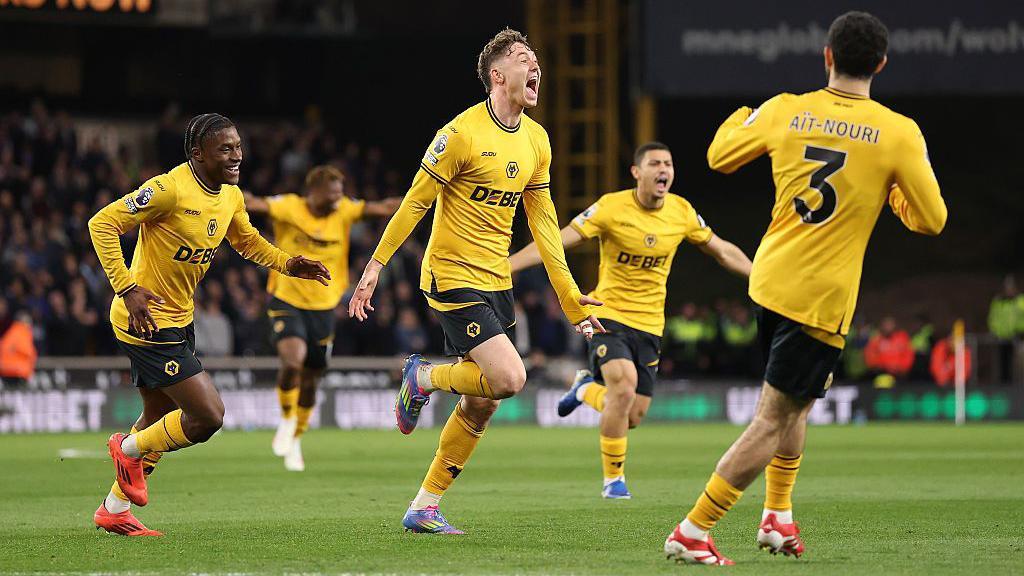


1️⃣ Match Context
West Ham United vs Wolverhampton Wanderers isn’t a glamour fixture on paper, but in April it tends to carry real gravity. This is the part of the calendar where the table stops being “interesting” and starts becoming punishing. One bad week can flip a season’s narrative: mid-table comfort becomes late anxiety, European dreams turn into damage limitation, and every point starts to feel like two.
For West Ham, home games at this stage are often where survival of ambition happens. Their profile under pressure is usually clear: they’ll accept stretches without the ball, but they want the game to be played in chapters — defend, counter, set pieces, repeat. Wolves travel to London knowing exactly what the stakes are in these matches: if you don’t control the rhythm, the stadium and the game state will do it for you.
There’s also the April tax: accumulated minutes, small injuries, and mental fatigue. Teams don’t just drop points because they’re “out of form” — they drop points because their pressing distance shortens, their recovery runs slow, and their decision-making in transition gets half a second late. That half-second decides penalties, red cards, and one-goal games.
2️⃣ Form & Advanced Metrics
West Ham’s performances tend to be deceptively binary. When they’re good, the shot profile is clean: fewer total attempts, but higher leverage chances generated in transition and from second balls. When they’re off, they concede territory early, the midfield line gets stretched, and opponents start accessing central lanes rather than being forced wide.
If we look deeper at the underlying mechanics, the key is how West Ham build (or don’t). When their first pass out is secured, they can get into the opposition half quickly and tilt the pitch through direct progressions rather than long circulation. But against teams that can press in coordinated waves, West Ham can be forced into low-percentage clearances — and that flips the match into a sequence of defensive phases.
Wolves are a different kind of opponent: less about constant dominance, more about structured control. Their better performances come when they keep the ball in zones that matter — not sterile possession, but possession that pins you back. Their shot volume can swing match to match, yet their best moments are built on creating high-quality looks through cutbacks and late arrivals, rather than hopeful wide deliveries.
Pressing intensity matters here, but not as a raw number. PPDA (passes allowed per defensive action) is basically a proxy for how early and how often a team disrupts buildup. A lower PPDA means more frequent pressure high up the pitch. In this matchup, the question isn’t “who presses more,” it’s whose press is more useful. West Ham’s pressure often comes as triggers — backward pass, bad touch, central receive — while Wolves are typically more measured, trying to block access first and then hunt the pass that exposes you.
Tempo is another hinge. West Ham are comfortable in fast games because transitions suit them. Wolves are happier when the match is controlled into a mid-pace rhythm where they can reset shape and deny the first counter. That clash usually decides whether we get a “one big moment” match or a more layered, chance-rich contest.
3️⃣ League Table Snapshot
| Team | Position | Points | GD |
|---|---|---|---|
| West Ham United | — | — | — |
| Wolverhampton Wanderers | — | — | — |
Analytical takeaway: without the live table data, the safest interpretation is structural rather than numerical: both sides typically live in the “variance zone” — good enough to hurt anyone, but often separated by decision quality in the final third. These are the fixtures where underlying performance matters more than recent scorelines, because the margins are tight and the market often leans too heavily on last week’s narrative.
4️⃣ Head-to-Head Analysis
Head-to-heads between these two often show a repeatable pattern: long phases of tactical restraint, then sudden spurts where transitions create the best chances. West Ham generally look for fast vertical exits and set-piece pressure. Wolves try to keep the match from becoming an aerial second-ball contest, because that’s where West Ham’s physicality and box occupation become a weapon.
Psychologically, there’s usually less “bogey team” energy here and more matchup dependency. When Wolves can keep their midfield line connected and stop the early ball into the channels, they reduce West Ham’s best shot quality. When they can’t, the game becomes a series of West Ham attacks that are short but dangerous.
5️⃣ Tactical Breakdown (Core Section)
Who dictates tempo?
West Ham want a segmented match: defend compact, explode forward, win restarts. Wolves want to smooth the edges: longer possessions, fewer chaotic turnovers, and controlled counter-pressing when they lose it. The first 20 minutes matter more than usual — if West Ham land early territory and corners, the game drifts toward their preferred script.
Where is the overload zone?
The critical zone is the half-space just outside West Ham’s midfield line. Wolves’ best chance creation tends to come when they can receive between the lines and then play to the byline for cutbacks — the most valuable chance type in modern Premier League football. West Ham’s defensive shape is often happy to concede wide circulation, but it becomes fragile if the ball enters that interior pocket and forces center-backs to step out.
Which flanks are exposed?
West Ham can leave space behind their fullbacks when they commit forward in phases, especially when chasing field tilt. Wolves’ wide runners and diagonal switches can punish that, but only if the execution is clean. If Wolves’ switches are slow, West Ham will reset into a low block and the threat becomes predictable.
Midfield control battle
This is a match of second balls and spacing discipline. West Ham’s midfielders often play with an eye on protecting central zones first, rather than aggressive stepping. Wolves, meanwhile, try to create triangles that invite pressure and then break it. The side that wins here isn’t necessarily the one with more possession — it’s the one that forces the other into long defensive sequences.
Pressing triggers and buildup resistance
If West Ham struggle, it’s usually because opponents press their first pass out and force rushed clearances. Wolves can do this if they jump on predictable outlets and keep their back line brave enough to hold space. But Wolves must also respect West Ham’s ability to bypass pressure with early vertical balls. One mistimed press and the game flips instantly.
Transition vulnerability
This is where the match can break open. Wolves can be exposed if their advanced midfielders are caught beyond the ball and the counter-press fails. West Ham can be exposed if their attacking phase ends with a turnover and their midfield line is stretched. The higher the pace, the higher the volatility — and the more this becomes a “moments” match rather than a “control” match.
Set-piece dynamics
West Ham’s set pieces are not just a bonus — they’re part of the plan. Against Wolves, the aerial battle inside the box can tilt expected goals without the match looking “dominant.” Wolves have to manage restarts with discipline: no cheap fouls in wide areas, no unnecessary corners conceded, and clean first contacts.
6️⃣ Odds & Market Evaluation
| Market | Selection | Odds | Implied Probability |
|---|---|---|---|
| 1X2 | West Ham | 2.30 | 43.5% |
| 1X2 | Draw | 3.30 | 30.3% |
| 1X2 | Wolves | 3.25 | 30.8% |
Market note: implied probabilities above are raw (1/odds) and will sum above 100% due to bookmaker margin. According to our calculations at betlabel.games, this matchup is closer to a narrow West Ham lean than the market typically prices in when Wolves are perceived as “stable away.” That said, the edge here is marginal rather than huge — and the best angle may not be the outright 1X2.
7️⃣ The Hidden Edge (Mandatory Section)
There’s a structural nuance here: shot quality can swing faster than results in fixtures like this. West Ham can go through spells where the scorelines look fine, but the defensive process is leaking — not in total shots conceded, but in the type of shots conceded: central entries, cutbacks, and second-phase chances after half clearances.
On the other side, Wolves can appear “solid” because they avoid chaotic games, yet their attacking output can be quietly dependent on a narrow set of patterns. If West Ham block the half-space receives and force Wolves into wide crosses without clean box occupation, Wolves’ xG can stall despite decent territory.
This is where the market can be slow to adjust: it often prices these teams on surface-level recent outcomes, while the game-state mechanics (set-piece gravity, transition frequency, and whether a team is being pushed into low-quality wide volume) are what really decide profitability. If West Ham can turn the match into a restart-heavy contest, that’s a value lever the odds don’t always capture properly.
8️⃣ Final Prediction
Main Pick: West Ham United – Draw No Bet
Alternative: Under 3.0 Asian Total
Risk Level: Medium
Why this makes sense:
- Game script: West Ham’s ability to create high-leverage moments through transitions and set pieces fits this matchup, especially at home.
- Control vs chaos: Wolves prefer control, but if West Ham force a broken rhythm (corners, second balls, quick restarts), the edge shifts toward the hosts.
- Pricing logic: the draw is a meaningful outcome in this pairing; DNB keeps exposure aligned with the match’s natural variance while still backing the slight home lean.
No guarantees — but in a game likely decided by a handful of decisive moments, protecting against the draw while leaning home is the cleanest way to express the edge.







Leave a Reply