




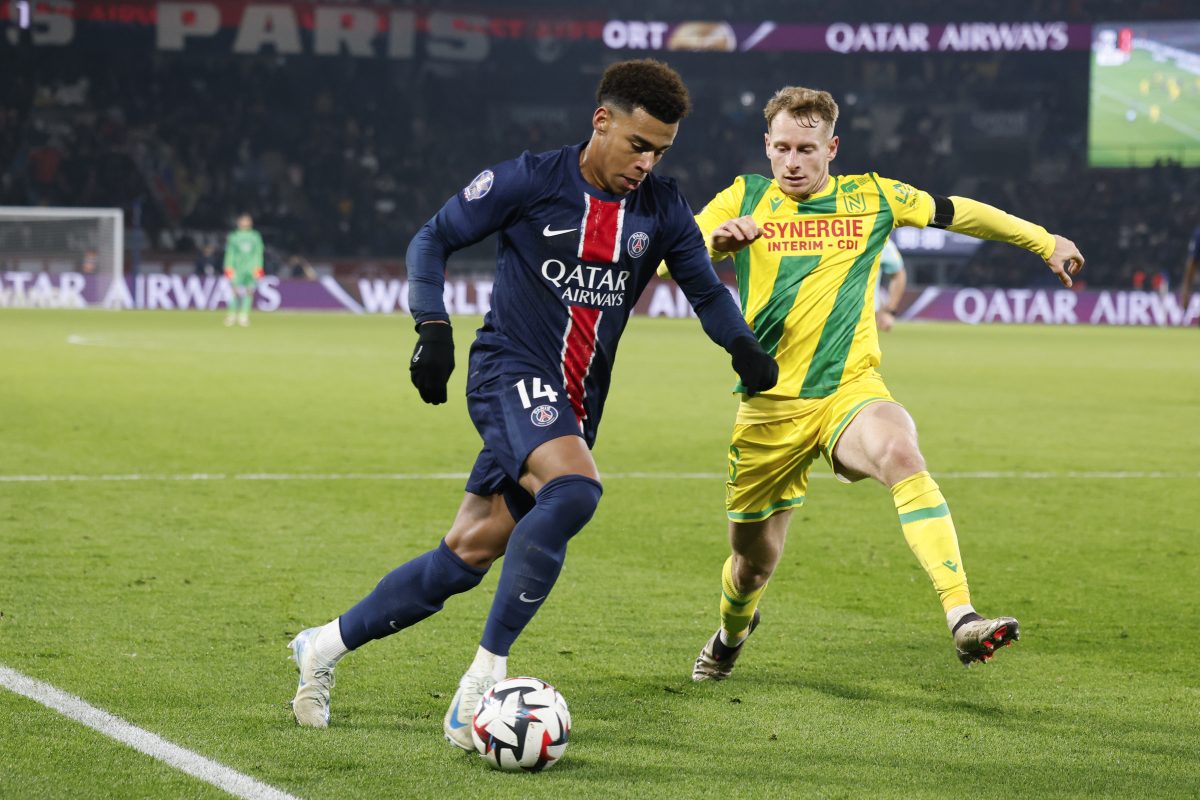


1️⃣ Match Context
This is the part of the season where Ligue 1 games stop being “just another fixture” and start becoming leverage points. Paris Saint-Germain are playing on two fronts: protecting their domestic position while managing energy and risk around the wider spring schedule. Nantes arrive with a very different pressure profile — the kind where a single point can change the mood of a month.
For PSG, the psychological load is subtle but real: when you’re the benchmark, anything below control feels like failure. That often changes in-game decision making — especially once they go ahead. For Nantes, the pressure is louder. They’re typically not judged on dominance, but on survival mechanisms: keeping the game close, extending it into the last 25 minutes, and trying to create one swing moment.
Schedule congestion matters more for PSG than it does for Nantes, but not in the simplistic “fatigue” sense. It’s about risk management: how aggressively they counter-press, whether fullbacks overlap with the same frequency, and whether the front line defends with real intensity or with positional conservation. Those small shifts don’t always show in results — but they show in chance quality conceded.
2️⃣ Form & Advanced Metrics
PSG’s underlying profile is usually built on two pillars: territory control and shot quality. They tend to tilt the pitch through sustained possession in the opponent’s half, then convert that into high-value looks — not just volume from range. The numbers indicate PSG’s best sequences come when they can pin teams with wide rotations and create central cutbacks rather than hopeful crosses.
Nantes, by contrast, typically live in a lower-possession ecosystem. Their attacking output often depends on transitions, set-piece pressure, and opportunistic shots rather than sustained chance creation. That doesn’t mean they can’t hurt you — it means their xG often comes in spikes, not in a steady stream. That creates volatility: if they score first, they can become awkward; if they concede first, their path back is structurally narrow.
Pressing intensity is the key interpretive layer here. PPDA (passes allowed per defensive action) isn’t just a number — it tells you how quickly a team engages the ball after losing shape. PSG can press high and suffocate exits, but in periods of heavy rotation they sometimes press in “waves,” leaving small release valves for opponents. Nantes are more likely to press situationally: triggers near the touchline, backwards passes, or poor body orientation in buildup. The matchup question is whether Nantes can force PSG into rushed circulation and win second balls — because they won’t consistently outplay PSG through positional play.
Home/away dynamics also matter in how the game is likely to be paced. PSG at home tend to generate more sustained pressure and a stronger field tilt — more touches in the final third, more time spent in advantageous zones. Nantes away generally prioritize compactness first, and their attacking sequences are shorter. That usually translates into a game state where PSG accumulate threat while Nantes try to keep shot quality low, even if they can’t keep shot volume low.
3️⃣ League Table Snapshot
| Team | Position | Points | Goal Diff | Games Played |
|---|---|---|---|---|
| Paris Saint-Germain | — | — | — | — |
| Nantes | — | — | — | — |
Takeaway: the table position gap in fixtures like this often reflects more than talent — it reflects repeatability. PSG can produce their game model almost every week. Nantes’ points collection is often more dependent on specific match scripts: staying level at halftime, set-piece success, and avoiding early concessions. That’s consistency versus variance.
4️⃣ Head-to-Head Analysis
The PSG–Nantes matchup has usually been defined by a familiar pattern: PSG monopolize territory, Nantes compress space, and the key battleground becomes the zone just outside the Nantes box — where second balls, loose clearances, and rebound shots decide whether PSG win comfortably or get dragged into frustration.
There’s also a psychological imbalance that tends to show up in shot selection. When PSG don’t score early, they can drift into lower-quality attempts — distance shots and crowded finishing angles — because the opponent’s block invites it. Nantes, when surviving, often treat every defensive action like a mini-reset: clear, breathe, regroup. Past results can flatter or punish either side depending on finishing variance, but structurally this is usually a PSG control game with Nantes trying to steal episodes.
5️⃣ Tactical Breakdown (Core Section)
Tempo ownership: PSG’s ball, Nantes’ clock
PSG will dictate tempo through possession and rest-defense shape — the positioning behind the ball that prevents counters. Nantes’ goal is to dictate the clock: slow the match, disrupt rhythm, and turn it into a sequence of isolated incidents rather than a continuous siege.
Overload zones: half-spaces and cutback lanes
PSG’s most efficient attacking mechanics usually come from manipulating the half-spaces. If they can pull Nantes’ midfield line narrow and then hit the blindside run, they create cutback lanes — the highest-value passing pattern in settled attacks. Nantes will try to deny the central corridor and force PSG wide, effectively “taxing” them into lower xG crossing outcomes.
Where Nantes can hurt PSG: transitions into vacated fullback channels
The structural nuance here is that PSG’s dominance can create its own vulnerability. When fullbacks step high and wide, the space behind them becomes the escape route. Nantes don’t need five perfect passes to threaten — they need one clean outlet into the channel, then a second runner arriving. This is where PSG’s counter-press must be honest, not theatrical. If the first five seconds after losing the ball are half-speed, Nantes can break the pressure line and win territory fast.
Midfield control: PSG’s circulation vs Nantes’ screening
Nantes’ defensive success will depend on their screening discipline: blocking passes into the pivot zone, forcing lateral circulation, and stepping out only when triggers are favorable. PSG, meanwhile, will try to create a “third-man” route — bounce passes and rotations that bypass the screen without risking turnovers. If PSG’s central connections are clean, Nantes’ block will eventually crack. If not, Nantes can turn this into a low-event game longer than the market expects.
Set pieces: Nantes’ most realistic equalizer
In games where open-play shot quality is hard to manufacture, set pieces become Nantes’ leverage point. They’ll be looking for corners, second-phase free kicks, and chaos balls at the back post. PSG’s set-piece defense is usually about organization and first contact; Nantes’ strategy is often about crowding zones and forcing imperfect clearances. A single lapse can flip the entire betting script.
6️⃣ Odds & Market Evaluation
| Market | Selection | Odds | Implied Probability |
|---|---|---|---|
| 1X2 | Paris Saint-Germain | 1.22 | 81.97% |
| 1X2 | Draw | 6.50 | 15.38% |
| 1X2 | Nantes | 13.00 | 7.69% |
Converting odds into probability is the cleanest way to see what the market is really saying: PSG win is priced as close to an inevitability, while the draw is treated as a relatively thin tail event. According to our calculations at betlabel.games, the “fair” PSG win probability is a touch lower than the raw pricing suggests once you account for game-state management, potential rotation, and the inherent low-event nature that Nantes try to engineer.
Market read: the edge here is more about choosing the right angle than trying to beat the 1X2 price head-on. Heavy favorites can be correct and still be poor value.
7️⃣ The Hidden Edge (Mandatory Section)
The market tends to price PSG as if their dominance automatically becomes early goals. But dominance and early scoring aren’t the same thing — especially against low blocks.
If we look deeper, there’s a recurring dynamic in fixtures like this: PSG can accumulate territory and touches in the final third while chance quality stays “good but not decisive.” That’s where xG can look healthy without translating into a comfortable margin. Meanwhile, Nantes’ attacking xG may look modest overall, but their shot quality distribution can be skewed: fewer shots, but a higher share coming from transition moments or set-piece scrambles — situations that are disproportionately dangerous relative to volume.
Another subtle factor: second-half control can soften when a favorite is juggling bigger priorities. PSG don’t need to keep pressing at full throttle at 2–0 or even 1–0 if they feel the game is “managed.” That creates a window where the underdog can win territory and pile up corners. It’s not that PSG collapse — it’s that they economize. Markets are often slow to fully price that behavioral shift, because it’s not a simple form line.
That’s why certain derivatives (like Nantes +2.0 lines, or PSG win but under a certain goal count) can carry more value than the blunt “PSG to win” button.
8️⃣ Final Prediction
Main Pick: Nantes +2.0 (Asian Handicap)
Alternative: Under 3.5 Goals
Risk Level: Medium
Why this makes sense:
- PSG should control territory, but Nantes’ low-block design naturally suppresses blowout frequency by forcing wider, lower-efficiency chance creation.
- Game-state management and potential rotation often reduce PSG’s second-half intensity, which keeps the backdoor open without necessarily threatening the match result.
- Nantes’ most credible threat comes from set pieces and transitions — enough to create resistance, not necessarily enough to win. That profile aligns better with handicap/total positions than with chasing an upset price.
Projected script: PSG win is the most likely outcome, but the best value tends to sit in the margin and tempo markets rather than the headline result.







Leave a Reply