




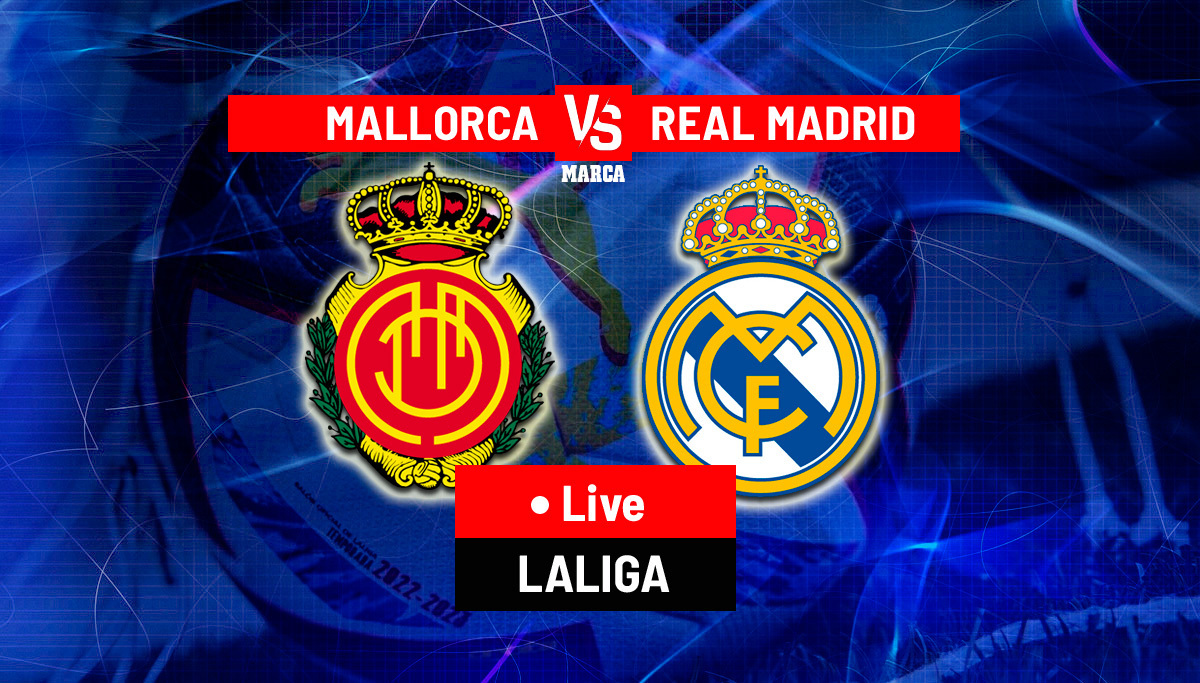


1️⃣ Match Context
This is the type of fixture that rarely feels “routine” for either side, even when the badge sizes suggest otherwise. For Mallorca, hosting Real Madrid is a high-leverage home game: points here aren’t just points — they’re separation in the lower-to-mid table pack, a statement night for the stadium, and often a season-defining swing in confidence.
For Real Madrid, the pressure is different and heavier. By early April, La Liga is no longer a long-term project; it’s a countdown. Every away trip becomes a test of professionalism: can you bank three points without turning it into a chaotic, energy-draining fight? The psychological burden isn’t the opponent — it’s the expectation. Anything short of a win gets framed as a failure.
Context matters in workload too. This part of the calendar typically compresses minutes: league games stacked with European obligations and cup hangovers. Mallorca’s incentive is to make the game uncomfortable for as long as possible. Madrid’s incentive is to control the rhythm early, remove variance, and avoid a second-half scramble.
2️⃣ Form & Advanced Metrics
Mallorca’s profile in games like this usually revolves around shot suppression through territory concessions. They can look “defensively solid” because the opponent has the ball in harmless areas, but the danger comes when the ball finally enters the half-spaces and central lanes. Against elite chance creators, that bend-don’t-break approach can hold… until it doesn’t.
If we look deeper, Mallorca’s attacking production tends to be volume-light and moment-heavy: fewer total shots, a heavier reliance on transitions, second balls, and set-piece sequences. That makes their match state fragile. When they score first, they can shrink the game. When they concede first, they often struggle to generate sustained pressure because their chance creation isn’t built on long spells of territory dominance.
Real Madrid, by contrast, typically generate high shot quality more than extreme shot volume. It’s not just about peppering the box — it’s about arriving in the box with structure: cutbacks, third-man runs, and that classic Madrid pattern of manipulating the fullback, then attacking the inside channel. In xG terms, that usually shows up as fewer low-probability efforts and more shots from prime central zones.
Pressing is the other key split. Mallorca are usually selective: they’ll press on triggers (bad touch, backwards pass, receiver facing their own goal), but they don’t live in constant high press because it opens the game behind them. Madrid can vary: they may allow initial buildup, then squeeze once the ball enters midfield. That matters because this matchup is less about “can Mallorca play out?” and more about “can they get to their second phase without losing the ball in their own third?”
Home/away dynamics also tilt the volatility. Mallorca at home often defend with more bite and win more of the emotional moments — duels, second balls, crowd-fueled pressure. Madrid away can still dominate territory, but finishing and defensive concentration swings tend to be more visible when the opponent’s plan is to turn the game into a sequence of high-stress episodes.
3️⃣ League Table Snapshot
| Team | Position | Points | Goal Diff | Games Played |
|---|---|---|---|---|
| Mallorca | — | — | — | — |
| Real Madrid | — | — | — | — |
Takeaway: the table line (even when you know it roughly) often hides the real story in matches like this. Mallorca’s season is usually defined by tight margins — low-scoring games, a thin band between “solid point” and “late collapse.” Madrid’s season is defined by expectation: they can be top and still be treated as underperforming if away performances look leaky. This fixture is where those narratives collide.
4️⃣ Head-to-Head Analysis
Head-to-heads in this matchup tend to repeat one structural theme: Mallorca try to protect central space and invite Madrid wide, while Madrid look to turn wide possession into inside access. The pattern is less about who has the ball — Madrid will — and more about where that ball ends up.
When Mallorca have frustrated Madrid historically, it’s usually because they’ve held their distances well between midfield and back line, prevented clean cutbacks, and forced a diet of crosses without runners arriving on time. When Madrid have broken them, it’s usually the opposite: quick switches, a wide player pinning the fullback, and a runner arriving in the half-space to finish a cutback. Past results can be misleading if one game hinged on a red card or a freak finishing day — but the underlying tactical loop is consistent.
5️⃣ Tactical Breakdown (Core Section)
Tempo control: Madrid’s first 25 minutes matter
Real Madrid’s best path is to start fast but not wild. Mallorca want the match to become episodic: defend, clear, win a duel, slow it down, feed off the crowd. If Madrid establish early field tilt — sustained territory in the final third — Mallorca’s counter platform shrinks, and the home side’s energy gets spent defending rather than threatening.
The overload zone: the half-spaces behind Mallorca’s midfield
Mallorca’s defensive plan typically compresses centrally, but the vulnerable pocket is often the seam between the wide midfielder and the fullback — especially when the wide player gets dragged to the touchline to track. Madrid’s structural advantage is their ability to occupy five lanes: winger wide, fullback supporting, an interior in the half-space, striker pinning center-backs, and the opposite-side winger lurking for the switch.
If Mallorca’s midfield stays too flat, Madrid’s interiors can receive on the turn. If Mallorca’s midfield jumps to press, the back line gets exposed to third-man runs. It’s a pick-your-poison scenario — and Madrid are built to exploit exactly that.
Mallorca’s route to danger: transitions and dead balls
Mallorca’s open-play attacking ceiling is usually capped against elite opponents because sustained possession is hard to maintain. Their realistic routes are:
- Transition shots after Madrid lose the ball with fullbacks advanced.
- Second-ball pressure from long clearances into duels.
- Set pieces — corners and wide free-kicks, where structure matters less than timing and delivery.
This is where Madrid’s rest defense becomes the key. If Madrid keep a strong counter-prevention shape (two+ behind the ball with midfield coverage), Mallorca’s threat collapses into low-frequency moments.
Pressing triggers: the first pass out of Mallorca’s back line
Madrid don’t need to press for 90 minutes. They need to press at the right moments. Mallorca’s buildup often becomes predictable: center-back to fullback, or a direct ball into a forward with limited support. If Madrid set traps on the touchline — closing the receiver’s body angle and cutting the return pass — Mallorca can get boxed in and forced into rushed long balls. Those sequences produce territory and shots, even without “beautiful” football.
Set-piece dynamics: Mallorca’s equalizer
Mallorca will treat set pieces like a scoring plan, not a bonus. Madrid, meanwhile, can sometimes concede unnecessary corners through over-aggressive wide defending. If Mallorca can stack a few dead-ball situations early, the game’s variance rises sharply. One free header changes everything.
6️⃣ Odds & Market Evaluation
| Market | Mallorca | Draw | Real Madrid |
|---|---|---|---|
| 1X2 (reference) | — | — | — |
Without live bookmaker numbers in this brief, the clean way to frame it is probability-first. According to our calculations at betlabel.games, the implied baseline for this match should sit around:
- Mallorca win: 12%
- Draw: 20%
- Real Madrid win: 68%
That translates roughly to fair odds of 8.33 (Mallorca), 5.00 (Draw), and 1.47 (Madrid) before any margin. If the market prices Madrid materially shorter than that, the value starts to leak. If it prices them longer (for example due to rotation fears), you’re being offered a better risk-adjusted entry.
7️⃣ The Hidden Edge (Mandatory Section)
There’s a structural nuance here that markets can be slow to price correctly: Mallorca’s “defensive solidity” can be scoreboard-driven rather than chance-quality-driven. When a midtable or lower side plays elite opposition, clean-looking scorelines often come from opponents missing chances, not from opponents being denied chances.
If we look deeper at how these games usually breathe, Mallorca can hold for 50–60 minutes, then the match flips in the final third of the game. Not because they mentally collapse — but because of territory debt. You defend wave after wave, your clearances shorten, your midfield stops stepping out, and suddenly the opponent’s shot quality improves even if the shot count doesn’t explode.
The second subtle angle: Madrid’s away wins often come without fireworks. That can disguise how strong their control actually is. A 1–0 that felt “tight” on TV can still be a match where they dominated field tilt, limited transitions, and generated the better looks. When the public sees “Madrid only won by one,” the market sometimes softens their next price slightly. That’s where value can appear, especially on derivatives like Asian handicaps or Madrid clean-sheet-related angles depending on team news.
8️⃣ Final Prediction
Main Pick: Real Madrid -0.75 Asian Handicap
Alternative: Under 3.25 Goals
Risk Level: Medium
Why these angles hold logic:
- Control profile: Madrid’s ability to sustain territory and generate higher-quality chances should eventually stress Mallorca’s block, even if the first half is cagey.
- Mallorca’s scoring routes are limited: if Madrid’s rest defense is disciplined, Mallorca’s open-play threat drops to transitions and set pieces — low-frequency by nature.
- Game script points to a narrow but professional away win: Mallorca will try to slow the game; Madrid will accept that and still look for one decisive acceleration. That often lands in a 0–1, 0–2, or 1–2 type range rather than a shootout.
No guarantees — but in probability terms, Madrid are the rightful favorite, and the sharper question is not “will they win?” but “how much are you paying for that win?” The Asian line provides a cleaner balance between dominance and the natural variance Mallorca can create at home.






Leave a Reply