




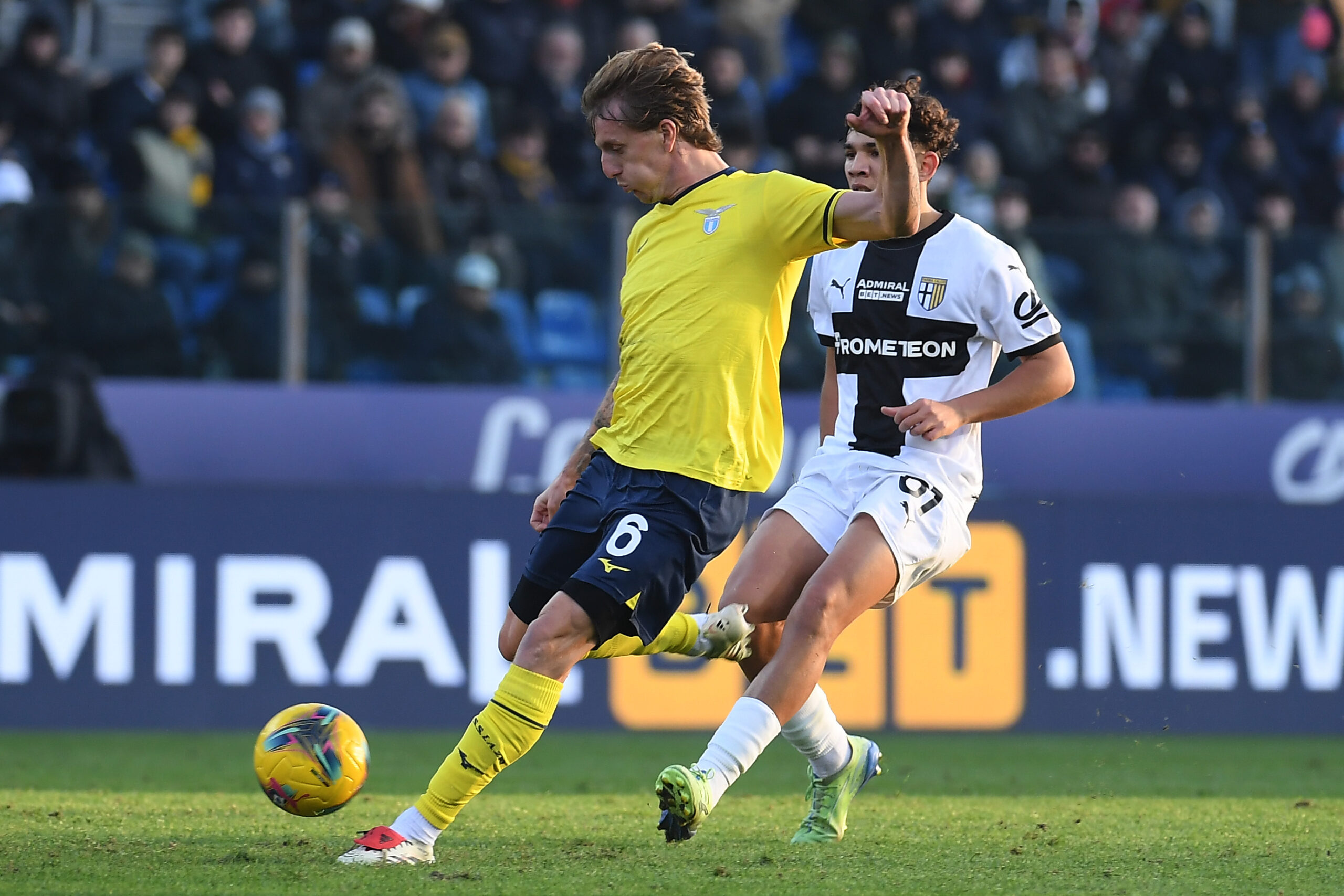


1️⃣ Match Context
Friday night in Rome is rarely a “just get through it” fixture, and this one lands at an awkward point of the season. Lazio are in the part of the calendar where every dropped point changes the geometry of the run-in: European places are decided less by headline form and more by how reliably you win the games you’re priced to win.
Parma arrive with a different pressure. Their incentive isn’t glamour, it’s oxygen: points that keep the bottom-half anxiety away and reduce the number of “must not lose” weekends left on the schedule. That psychological tilt matters. Lazio will be asked to break a team that can live with long spells without the ball. Parma will be asked to survive territory and still carry enough threat to make Lazio defend honestly.
There’s also a scheduling edge hiding in plain sight. Lazio’s game model tends to be more possession-heavy and structured; when legs go, the pressing coordination and rest-defense spacing are the first things to fray. Parma’s game is often simpler—compact block, direct exits—which can be easier to reproduce on short rest. This is the type of matchup where the favorite can look in control and still feel uncomfortable if the first goal doesn’t arrive early.
2️⃣ Form & Advanced Metrics
Lazio’s recent performances have largely matched the profile you expect from a side fighting for Europe: solid chance volume, consistent territory control, and a defensive floor that usually prevents the match from turning into chaos. If we look deeper, the key is shot quality distribution. Lazio tend to manufacture a healthy share of attempts from the half-spaces and central lanes—good for repeatable xG—rather than living off low-probability wide shots.
The trade-off is what happens when they lose the ball. Lazio’s risk is not “they concede loads of shots”; it’s that the shots they concede can be more valuable if the midfield line is bypassed and the center-backs are forced to defend while retreating. That’s where expected goals against can become spiky even in matches they dominate.
Parma’s underlying profile is more situational. They’re comfortable conceding territory and letting the opponent have sterile possession, but they rely on two things to keep games alive: limiting central access and forcing shots from poorer angles. When Parma are at their best, opponents rack up touches around the box without translating them into clean looks from the penalty spot zone. When Parma are at their worst, the block gets pulled laterally and the cutback lane opens—exactly the kind of chance profile Lazio want.
Pressing intensity is a separator here. Lazio typically press in more organized waves—PPDA-wise, they’re closer to a proactive mid-to-high press than a passive low block. That doesn’t mean full-throttle gegenpressing every minute; it means they try to win the ball in zones that allow immediate re-attack. Parma are more selective: their press triggers tend to be backwards passes, heavy touches, or predictable wide build-up. The mismatch is that Lazio can pin Parma in, but Parma can also bait Lazio into committing numbers and then attack the space behind the fullbacks.
Tempo patterns matter for betting angles. Lazio are a “territory first, chance second” side—periods of control can be long, and goal timing often depends on whether the opponent’s block cracks. Parma’s matches can look slow until one transitional moment flips the state. That makes totals markets sensitive: a quiet first half doesn’t always mean a quiet match, but it often means Parma are getting their preferred script.
3️⃣ League Table Snapshot
| Team | Position | Points | GF | GA | Goal Diff |
|---|---|---|---|---|---|
| Lazio | — | — | — | — | — |
| Parma | — | — | — | — | — |
Takeaway: without the live table data embedded here, the matchup still reads as a classic “top-half structure vs survival pragmatism” game. In these fixtures, league position often understates the real story: Lazio’s points ceiling is linked to breaking low blocks efficiently; Parma’s points ceiling is linked to keeping match states narrow and stealing moments. That’s why performance metrics—and not just results—matter for pricing.
4️⃣ Head-to-Head Analysis
Head-to-head history in this pairing tends to be less about a psychological curse and more about stylistic repetition. Lazio generally see a familiar picture: opponent defending deep, asking Lazio to find the final pass, and hoping to counter into the spaces Lazio’s fullbacks vacate.
The important question is whether previous meetings were decided by sustainable dynamics or by finishing noise. If Lazio dominated field tilt and box entries but the scoreline stayed tight, that’s not automatically “Parma have their number”; it can be one-game variance around conversion. Conversely, if Parma repeatedly created high-value counters—few shots, big chances—that’s a structural matchup issue, not luck.
5️⃣ Tactical Breakdown (Core Section)
Who dictates tempo?
Lazio should. At home, they’re built to control territory through patient circulation and positional occupation between the lines. The key will be avoiding sterile possession: Parma will happily let Lazio pass in front of them if the ball never enters the zone between fullback and center-back, or the seam between midfield and defense.
The overload zone
Expect Lazio to search for overloads in the half-spaces—especially the channel where an interior midfielder can receive on the turn and play into the box. Parma’s compactness usually collapses the middle; the counter-move is to stretch them horizontally, then attack the cutback lane. If Lazio get their wide player to the byline with support underneath, Parma’s defensive line has to choose: protect the six-yard box or step to the cutback. That second choice is where xG spikes.
Which flanks are exposed?
Parma’s best route to goal is often into the space Lazio leave during sustained pressure. If Lazio’s fullbacks both push high, the rest-defense becomes a two-plus-one problem: two center-backs and a single pivot trying to control large distances. Parma don’t need 10-shot volume to hurt you; they need one clean exit pass, one carry, one runner beyond the ball.
Midfield control battle
This match will be decided by Lazio’s ability to keep a stable “second ball” platform. When Lazio lose duels in midfield, the game becomes transitional and Parma’s probability rises. When Lazio win those duels, Parma’s attacks become long clearances and low-quality shots. Territory control is not enough; rest-defense spacing is the real insurance policy.
Pressing triggers and buildup resistance
Lazio will likely press Parma’s early build with clear triggers: lateral passes across the back line, or a receiver facing his own goal. Parma’s resistance won’t be about playing through pressure with combinations; it’ll be about choosing the right moments to go long and competing for the second phase. Lazio’s center-backs must be aggressive stepping in front to stop counters before they start.
Transition vulnerability
If Parma score first, the match texture changes dramatically. Lazio will push higher, riskier, and Parma’s best minutes will come after recoveries. That’s why pre-match bets should be anchored in expected control, but live bettors should watch the first 15 minutes for signs that Lazio’s rest-defense is loose—gaps between midfield and defense, and too many Parma carries into open grass.
Set-piece dynamics
Games like this often swing on dead balls. Lazio’s territorial edge typically means more corners and free-kicks in the attacking third. Parma’s priority will be avoiding cheap fouls near the box; if they concede a steady diet of set pieces, they’re effectively handing Lazio a secondary chance creation stream that doesn’t require breaking the block.
6️⃣ Odds & Market Evaluation
| Market | Selection | Odds | Implied Probability |
|---|---|---|---|
| 1X2 | Lazio | 1.72 | 58.1% |
| 1X2 | Draw | 3.70 | 27.0% |
| 1X2 | Parma | 5.40 | 18.5% |
Those implied probabilities sum above 100% because the bookmaker margin is embedded. According to our calculations at betlabel.games, Lazio’s win probability is slightly higher than the typical market anchor in this kind of fixture, but not by enough to call it a free hit. The more interesting angle is often derivative: how Lazio win, and whether Parma can stay within one goal for long enough to keep the total suppressed.
Market read: edge looks marginal-to-moderate on Lazio-related positions, stronger if you can structure it to reduce draw exposure (DNB) or align with game-state (Lazio to win in a lower-scoring script).
7️⃣ The Hidden Edge (Mandatory Section)
There’s a structural nuance here: low-block matches can make favorites look worse than they are. Lazio can post strong territorial numbers—field tilt, box touches, corners—yet the scoreboard stays stubborn because the opponent blocks central shots and forces low-quality attempts. That often triggers a narrative that Lazio are “struggling,” when it’s really just variance in conversion and the natural friction of breaking a compact block.
On the other side, Parma can look “competitive” in recent results by surviving these scripts, but the underlying risk is accumulation: if you concede enough entries and set pieces, the dam tends to break eventually. Markets are sometimes slow to adjust because recent scorelines flatter the underdog’s defensive resilience, while ignoring that the chance quality conceded is creeping upward—especially via cutbacks and second balls.
Watch for a second-half pattern too. Teams defending deep for long spells often show a late drop in duel success and clearance quality. That’s not always priced in pre-match, but it matters for split markets (second-half goals, late goal lines) and for Lazio’s ability to turn dominance into a result.
8️⃣ Final Prediction
Main Pick: Lazio – Draw No Bet (DNB)
Alternative: Lazio to Win & Under 3.5 Goals
Risk Level: Medium
Why this makes sense:
- Territory and chance generation lean Lazio, and home control should pin Parma into long defensive phases.
- Parma’s threat is transitional rather than sustained; DNB protects against the specific scenario where Lazio dominate but get hit once and the game tightens into a draw.
- Game texture points toward a controlled scoreline unless an early goal forces openness—making the win + under angle viable at the right price.
No guarantees—just probability logic. If Lazio’s rest-defense stays connected and they avoid gifting counters, the match should tilt their way over 90 minutes.







Leave a Reply