





1️⃣ Match Context
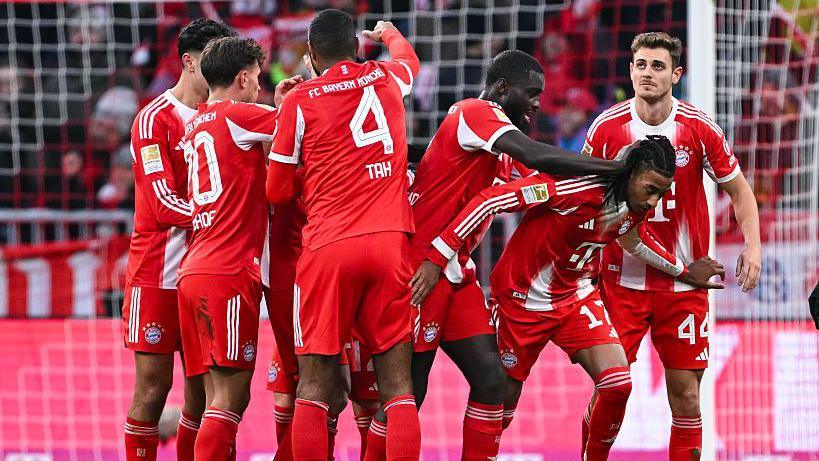
Early April in the Bundesliga is where “nice seasons” turn into defining ones. Freiburg arrive with the familiar pressure of the European chase: close enough to taste it, but with a margin thin enough that one bad weekend can flip the narrative. Bayern Munich, meanwhile, don’t really play for “top four” drama — their pressure is different. It’s the weight of expectation, the title race math, and the reality that every dropped point gets interpreted as crisis management.
This fixture also lands in a part of the calendar where squads start to creak. Freiburg’s intensity-based approach is harder to sustain when legs are heavy, and Bayern’s schedule often carries external load — Europe, cup obligations, plus the internal stress of rotation politics. The psychological edge is obvious: Freiburg are the hunters, Bayern the hunted. But that dynamic can cut both ways. Freiburg can play with aggression and clarity; Bayern can play with control and, if they score first, suffocate the game state.
Momentum matters here, but not in the lazy “wins and losses” sense. What matters is whether Freiburg can still impose their preferred rhythm — compact, vertical, opportunistic — against a Bayern side that increasingly punishes teams not just with talent, but with territory and tempo management.
2️⃣ Form & Advanced Metrics
If we look deeper than the last few scorelines, Freiburg’s profile tends to be more about shot quality management than shot dominance. They rarely drown opponents in volume; they try to keep the game in a narrow corridor where transitions and set pieces create their best moments. When it works, opponents take shots from low-probability areas, Freiburg stay connected between the lines, and the match becomes a sequence of controllable phases rather than open trade.
The problem with facing Bayern is that Bayern don’t need chaos to create high-quality chances. Their attacking xG is usually built on repeatable patterns: isolations out wide that turn into cutbacks, late runs from midfield, and short combinations that pull a block just far enough to open the central lane. Against many teams, Bayern’s shot volume is high. Against well-organised mid-blocks, the volume can flatten — but the shot quality often stays elite because their entries into the box are cleaner.
Pressing intensity is the other swing factor. PPDA (passes allowed per defensive action) is essentially a measure of how quickly you disrupt the opponent’s build-up. Freiburg’s best performances typically come when they can press in coordinated bursts, forcing hurried clearances and second-ball battles. Bayern, however, are built to resist that: press-baiting rotations, technical security under pressure, and the ability to change tempo in two passes. When Freiburg’s press is late by half a second, Bayern turn it into a platform for territory.
Home/away splits add nuance. Freiburg at home can tilt the field early — their crowd and their timing often create a 15–20 minute spell of territorial push. But Bayern are comfortable absorbing that initial wave. The key data translation is simple: Freiburg’s attack can look “fine” on paper, but against an opponent that reduces transition frequency, their chance creation becomes more dependent on set pieces and rare direct sequences. Bayern don’t eliminate those chances entirely — they just reduce how many you get.
Defensively, Freiburg’s vulnerability is usually not pure disorganisation, but the moments when the wide zones get stretched and the half-spaces open. Bayern live in those half-spaces. That’s where volatility enters the game state.
3️⃣ League Table Snapshot
| Team | Position | Points | GF | GA | Goal Diff |
|---|---|---|---|---|---|
| Freiburg | — | — | — | — | — |
| Bayern Munich | — | — | — | — | — |
Takeaway: without exact table numbers embedded here, the structural reading still holds: Freiburg’s season is typically defined by competitive consistency at home and narrower margins away, while Bayern’s position is usually a reflection of territorial dominance and depth. The key question isn’t “who is better” — it’s whether Freiburg can force a match type that compresses Bayern’s advantage.
4️⃣ Head-to-Head Analysis
Head-to-heads between these two often tell the same tactical story even when the scorelines change. Freiburg’s better moments tend to come when they deny central progression, keep Bayern outside, and turn the match into repeated wing-to-wing circulation without clean access to cutbacks. When Bayern win comfortably, it’s usually because they break that shell early — either through a half-space combination that forces Freiburg’s midfield to collapse, or through wide overloads that drag full-backs into constant 1v2 defending.
Psychologically, Bayern typically approach Freiburg with respect rather than complacency. Freiburg are one of the Bundesliga sides who can punish laziness in rest defence. That often makes Bayern slightly more conservative with their full-back positioning — but once Bayern establish stable possession, the pressure becomes cumulative. Past meetings generally align with the underlying mechanics: Bayern’s ability to sustain territory eventually creates the “one big chance” that breaks the match open.
5️⃣ Tactical Breakdown (Core Section)
Who dictates tempo?
Bayern are the natural tempo-setters because of their build-up security and ability to reset attacks. Freiburg’s best route is to disrupt rhythm rather than match it: deny short restarts, contest second balls, and keep Bayern’s midfield facing their own goal. If Freiburg allow Bayern to play at a comfortable possession cadence, the game becomes an exercise in resistance — and resistance usually cracks.
Overload zones and where the game tilts
The overload zone is Bayern’s favourite: the half-spaces just outside the box. Freiburg’s midfield line must decide whether to protect the centre and concede wide deliveries, or step out to stop the half-space receiver and risk opening the channel behind. Bayern’s wide players and advanced midfielders are designed to punish indecision. The most dangerous Bayern sequences here aren’t crosses; they’re cutbacks after the defensive line has been moved laterally.
Which flanks are exposed?
Freiburg’s full-backs can be exposed when their wingers are pinned deep. Bayern’s positional play often forces this: keep Freiburg’s wide midfielder occupied, then isolate the full-back with an overlap/underlap choice. Freiburg will likely try to protect the flanks by keeping the back line compact and asking the near-side midfielder to shuttle. The risk is that those shuttles create fatigue and late-arriving gaps — especially after the hour mark.
Midfield control: the real battle
This match isn’t decided by “who has more possession.” It’s decided by who wins the second phase: after the first press is beaten, can Freiburg re-form the block and stop Bayern from turning? Bayern’s midfielders are excellent at receiving on the half-turn. Freiburg need their pivots to be aggressive without getting bypassed. If Freiburg’s midfield gets stretched into a vertical line, Bayern will attack the space between pivot and centre-back relentlessly.
Pressing triggers and build-up resistance
Freiburg’s pressing triggers tend to be wide passes and backward touches. But Bayern are less vulnerable to those triggers because they can play through pressure with short triangles — or simply go long with precision to bypass the trap. Freiburg’s most effective press may not be “high.” It may be a mid-press that invites Bayern forward, then snaps shut in the central lane to win turnovers where a transition actually matters.
Transition vulnerability and rest defence
Freiburg’s best chances will come from the moments Bayern lose structure after committing numbers. The question: can Freiburg create those moments often enough? Bayern’s rest defence — the shape they hold behind the ball — is usually strong, but not flawless. If Bayern’s full-backs both advance and the nearest midfielder is late covering, Freiburg can spring into the channels. The issue is repeatability. Freiburg might only get 3–5 real transition looks. They need at least one to be a high-quality chance.
Set pieces
Set pieces are Freiburg’s equaliser in matches like this. Even when open-play chance creation is limited, they can generate high-leverage moments through corners and wide free kicks. Bayern’s set-piece defending is often more about concentration than structure — and concentration is exactly what gets tested when you’ve had 70% possession and feel in control. One lapse, one free header, and the market’s “expected script” gets torn up.
6️⃣ Odds & Market Evaluation
| Market | Odds | Implied Probability |
|---|---|---|
| Freiburg Win | 5.00 | 20.0% |
| Draw | 4.10 | 24.4% |
| Bayern Win | 1.62 | 61.7% |
Those implied probabilities sum above 100% because of bookmaker margin. According to our calculations at betlabel.games, a fair read of the matchup puts Bayern closer to the high-50s rather than the low-60s in win probability, with the draw slightly underappreciated because Freiburg’s structure can slow the game and reduce total shot volume.
Market note: the edge here is not screaming. It’s a “small inefficiency” situation — the kind you play selectively, with an eye on price and stake discipline.
7️⃣ The Hidden Edge (Mandatory Section)
There’s a structural nuance here the market often prices too aggressively: Freiburg’s ability to make elite opponents look sterile for long stretches. That doesn’t mean Freiburg are better. It means the match can spend a lot of time in low-event phases, where the favourite’s win probability is high but the path to that win is narrow.
This is where draw equity lives. If Bayern don’t score in the first hour, the final 30 minutes become less about dominance and more about impatience, set-piece risk, and transition management. Freiburg are comfortable playing a match that feels “stuck.” Bayern are comfortable too — but they become more open when they chase the second goal or force a breakthrough.
Add schedule reality: Bayern’s rotation patterns can slightly blunt their pressing and counterpress cohesion, and that’s exactly what Freiburg want. Not because Freiburg will dominate possession — but because one broken counterpress can turn into their best chance of the match. The market tends to price Bayern as if their control is constant across 90 minutes. In reality, the control can be lopsided: heavy early control, then a more chaotic final third if the scoreline stays tight.
Hidden edge summary: Freiburg’s “keep-it-tight” structure inflates draw probability more than public perception usually admits, especially if Bayern’s early chance conversion doesn’t arrive.
8️⃣ Final Prediction
Main Pick: Freiburg +1.5 (Asian Handicap)
Alternative: Under 3.5 Goals
Risk Level: Medium
Why this works (probability logic):
1) Match type compression. Freiburg’s default plan is designed to reduce high-quality shot volume and keep the game in a controllable state. That supports a narrower scoreline range than the raw talent gap implies.
2) Draw equity via low-event phases. Bayern can dominate territory without immediately generating clear looks if Freiburg protect the half-spaces well. The longer it stays level, the more valuable the handicap and the under become.
3) Set-piece leverage. Freiburg don’t need many open-play chances to score once. A single dead-ball moment can flip the handicap outcome and force Bayern into a less efficient attacking mode.
No guarantees. Bayern are Bayern — if they score early, the whole game opens and Freiburg’s protection mechanisms weaken. But at the right price, the value is on Freiburg keeping this within a goal more often than the market comfortably assumes.






Leave a Reply