




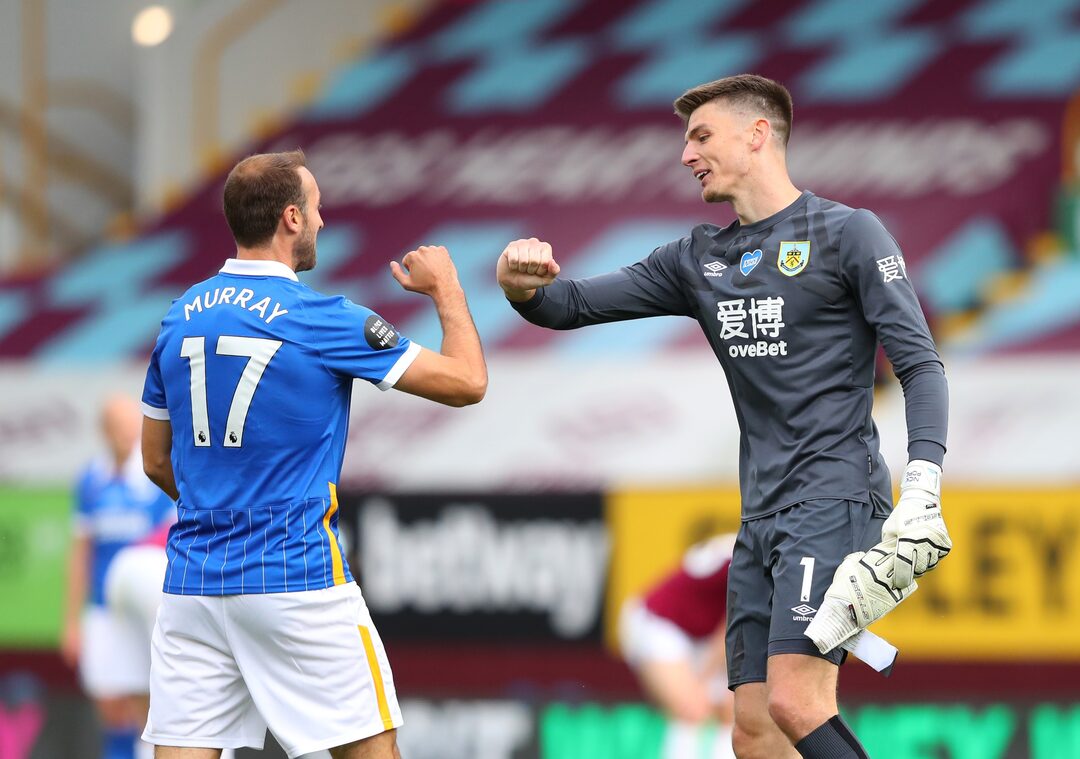


1️⃣ Match Context
Burnley vs Brighton & Hove Albion lands in that part of the season where every point carries a different weight depending on who you are.
For Burnley, this type of fixture is usually about survival economics: banking home points, protecting goal difference, and managing emotion. The crowd expects front-foot intent, but the match reality is often more conservative — especially if the table is tight and a single mistake can turn a “good point” into a spiraling loss.
Brighton arrive with a different pressure. Their baseline is control — possession, territory, repeatable chance creation — and their season narrative typically swings on whether that control converts into enough wins. Away matches against compact, transition-minded sides can feel like psychological traps: lots of ball, not enough margin. And with late-season fatigue, the difference between dominance and vulnerability can be a few lost duels in midfield.
Schedule context matters too. By April, legs are heavier, substitution patterns change, and you see more second-half swing. Brighton’s style demands coordinated pressing and constant spacing discipline — both tend to erode under congestion. Burnley, meanwhile, can play with a simpler emotional script: defend the box well, fight for territory, and turn moments into points.
2️⃣ Form & Advanced Metrics
Burnley’s recent profile is usually defined by low-margin football. They can look stable for long stretches, but the underlying volatility comes from shot quality allowed rather than shot volume alone. When Burnley are forced deep, the danger isn’t conceding 18 shots — it’s conceding fewer shots that are closer to goal, especially cutbacks and second balls around the penalty spot. That’s where matches tilt suddenly.
In attack, Burnley’s chance creation tends to be more situational than continuous. If they can win field position and earn a rhythm of set pieces and wide deliveries, they can stack “good enough” looks. But when they’re pinned and chasing the game, shot quality often drops: more rushed attempts, more bodies between ball and goal, and fewer central entries.
Brighton’s numbers generally tell a cleaner story. They are built to generate steady expected goals through territory and structure, not just hot finishing. Their best spells come when they tilt the pitch: sustained pressure, second-phase recoveries, and repeat entries into the half-spaces. Shot volume is part of it, but the real edge is shot location — the ability to turn possession into chances from the inside channels rather than hopeful perimeter efforts.
Pressing intensity is a key lens here. Brighton typically defend higher and recover the ball earlier, meaning opponents spend more time clearing than building. When their PPDA rises (less pressing, more passive), you often see a chain reaction: slower counterpress, longer defensive sequences, and more direct threats conceded in transition. Burnley don’t need to build intricate attacks to exploit that — they just need the first pass after recovery to be clean.
Home/away dynamics also matter. Burnley at home tend to show more verticality and earlier crossing decisions; Brighton away tend to manage risk more, sometimes sacrificing shot volume to avoid being countered. That trade-off can keep Brighton safe, but it can also drag matches into a low-scoring coin-flip if they don’t land the first goal.
3️⃣ League Table Snapshot
| Team | Position | Points | Played | GD |
|---|---|---|---|---|
| Burnley | — | — | — | — |
| Brighton & Hove Albion | — | — | — | — |
Takeaway: without the live table data embedded here, the strategic truth still holds: Burnley’s points tend to reflect how well they control variance at home, while Brighton’s position often reflects whether their territorial advantage is translating into enough decisive wins. One side lives in tight games; the other tries to avoid them.
4️⃣ Head-to-Head Analysis
When these two meet, the recurring pattern is less about historical scorelines and more about Brighton’s ability to turn possession into penalty-area access against Burnley’s compact defending. Brighton’s best versions don’t just “have the ball” — they occupy the half-spaces, force fullbacks into difficult decisions, and create cutback chances that collapse low blocks.
Burnley’s path in this matchup is usually to interrupt rhythm. That means contesting second balls, forcing Brighton wide, and making the game uncomfortable in transition moments. If Brighton’s rest-defense (the structure behind the ball) is even slightly loose, Burnley can manufacture a few high-leverage attacks without needing many total possessions.
Psychologically, this kind of fixture can also create imbalance: Brighton can feel like they’re “supposed to win” because they look better in the flow, while Burnley can play with the freedom of the underdog. In betting terms, that’s where the market sometimes misreads control as certainty.
5️⃣ Tactical Breakdown (Core Section)
Who dictates tempo?
Brighton will try to dictate. Their natural game is to slow opponents down with ball circulation, then accelerate through the inside lanes. Burnley’s priority is the opposite: keep sequences short, avoid being dragged into long defensive shifts, and break the rhythm with direct play and fouls in safe zones.
Where is the overload zone?
The key battleground is the wide-to-half-space corridor. Brighton typically build to pull a winger and fullback high, then slip a pass into the half-space for a third-man run or a cutback setup. Burnley’s defensive success depends on whether their wide midfielder tracks that interior run, or whether the fullback gets isolated.
If Burnley overprotect the wings, they open the inside. If they overprotect the inside, Brighton’s wide players can deliver cutbacks from the byline. It’s a pick-your-poison structure — and it usually comes down to timing and distances between Burnley’s back line and midfield line.
Midfield control battle
Burnley don’t necessarily need to “win” midfield on possession; they need to win it on first contacts and second balls. Brighton’s midfield wants clean receptions. Burnley’s midfield wants chaos: bump the receiver, force the touch backward, and make Brighton restart. That’s how you reduce Brighton’s chance quality without having to chase the ball endlessly.
Pressing triggers and buildup resistance
Brighton’s pressing triggers often show when Burnley play into the fullback under pressure or take a heavy first touch in their own half. If Brighton can force Burnley long, they can keep the game in Burnley territory and rack up sustained pressure. But if Burnley can bypass that first wave with direct balls into channels, Brighton’s back line is asked to defend running toward their own goal — never ideal.
Transition vulnerability
This is where the match can flip. Brighton’s structure commits bodies to create overloads. If their counterpress is sharp, Burnley won’t escape. If it isn’t, Burnley can get to the edge of the box in two passes. Brighton’s risk is not conceding many attacks — it’s conceding a few very clean ones.
Set pieces
Set pieces are Burnley’s most reliable method to manufacture value. Even without huge open-play shot volume, repeated corners and wide free kicks raise their scoring probability and can also force Brighton to defend with a slightly deeper line, reducing Brighton’s ability to counterpress high. If Burnley can win 6–8 dead-ball deliveries in advanced zones, the game state changes.
6️⃣ Odds & Market Evaluation
| Market | Burnley | Draw | Brighton |
|---|---|---|---|
| 1X2 (Indicative) | 3.60 | 3.35 | 2.05 |
Those indicative prices translate to implied probabilities of roughly:
- Burnley: 1/3.60 ≈ 27.8%
- Draw: 1/3.35 ≈ 29.9%
- Brighton: 1/2.05 ≈ 48.8%
After accounting for overround, the market is basically saying: Brighton are the likeliest outcome, but not dominant; the draw is very live; and Burnley have a meaningful home puncher’s chance.
The betlabel.games team evaluates this type of matchup through game-state dynamics. Brighton can earn control and territory, but Burnley’s set-piece and transition pathways keep the underdog probability from collapsing. That’s why spread and totals markets often hold cleaner value than the raw 1X2 here.
7️⃣ The Hidden Edge (Mandatory Section)
There’s a structural nuance here that markets can be slow to price: Brighton’s “control” doesn’t always translate into separation away from home, especially against teams that are happy to defend low and gamble on second phases.
Brighton can dominate field tilt and still end up in a one-goal game because their chance profile becomes repetitive — lots of entries, fewer truly open shots. When that happens, the match becomes sensitive to two things:
- Set-piece variance (Burnley can score without “outplaying” Brighton).
- Second-half drop-offs (pressing and counterpressing intensity often fades, creating cleaner transition windows).
If Brighton’s recent results have been positive, the market can shade them a little too short, assuming the same control will cash again. But if we look deeper, away dominance can be more about territory than finishing, and those are not identical. Burnley don’t need to be better for 90 minutes; they need to be better for three sequences.
8️⃣ Final Prediction
Main Pick: Brighton & Hove Albion – Draw No Bet
Alternative: Under 3.0 Asian Total
Risk Level: Medium
Why these angles hold up:
- Brighton’s territorial edge is real, and over 90 minutes they should spend more time in the attacking half, which raises their baseline chance creation even if it’s not explosive.
- Burnley’s threat is high-leverage, not high-volume. That keeps the draw in play and makes DNB a cleaner expression than straight away win.
- Game-state logic leans under: Brighton prefer control over chaos, Burnley defend deep for long spells, and the match can easily become a slow grind unless an early goal breaks it open.
No certainties here. But in a matchup where one side is likelier to control the ball and the other is built to survive and strike, the value is usually found in protecting against the draw and respecting the low-scoring pathways.







Leave a Reply