




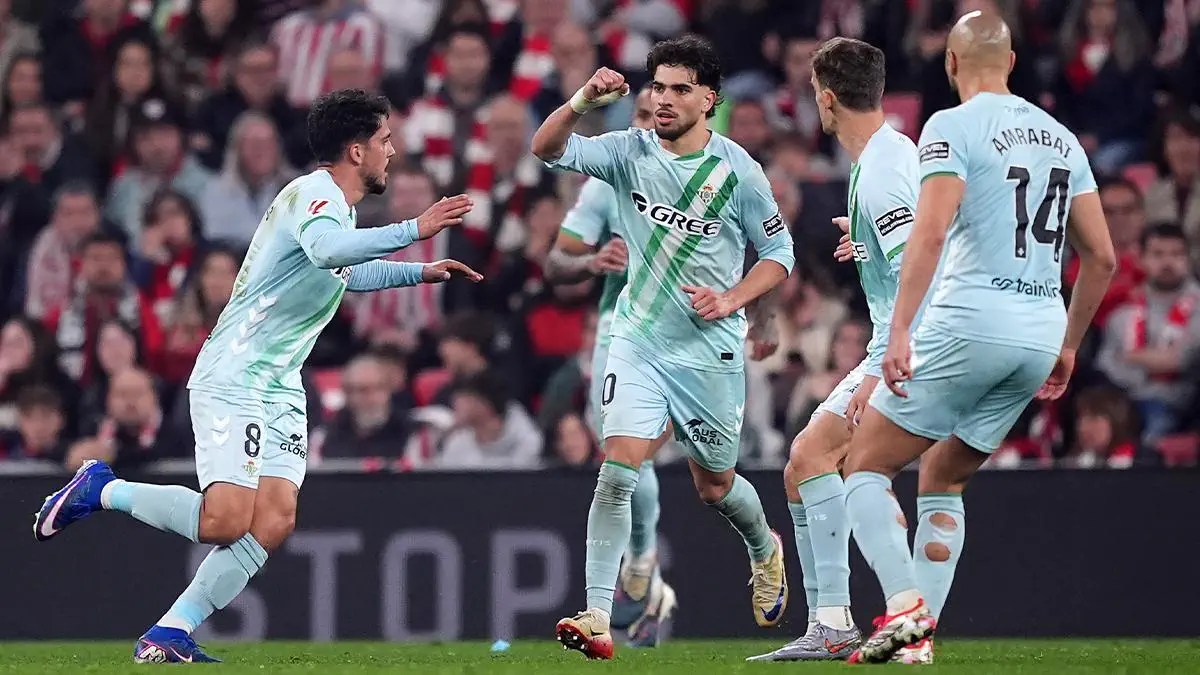


1️⃣ Match Context
This is the Europa League phase where “nice performance” stops being a concept. Braga at home in a knockout-style European night is usually about urgency and volume: quick restarts, aggressive wing play, and turning the stadium into a tempo amplifier. Betis arrive with a different pressure profile — less emotional, more managerial. They’re built to control spells, slow the game down, and turn opponents’ impatience into transitions and set-piece leverage.
What’s really at stake isn’t just a result, but control of the tie’s narrative. Braga want to leave the first leg with advantage before any away-leg variance kicks in. Betis, structurally, are happy with a game state that stays alive — a draw with away goals no longer being a factor in UEFA competitions means the incentive is simply to avoid damage while keeping the return leg playable.
There’s also the calendar reality. Both teams are typically juggling domestic demands around this stage. The sharper edge often comes from which side can keep intensity for 70+ minutes without turning their press into a set of gaps. That’s the psychological pressure point: not who starts fast, but who stays coherent once the game becomes stretched.
2️⃣ Form & Advanced Metrics
Braga’s underlying profile tends to read like a proactive team: healthy shot volume, decent territory control, and a willingness to commit numbers forward. The numbers indicate their chance creation is often repeatable — built off wide progression and second-phase attacks rather than low-probability wonder shots. When Braga are “on,” they live in the final third and rack up box entries.
The issue is what they allow when their first press is bypassed. Braga can concede high-value chances in central lanes, especially when their fullbacks are high and the midfield has to defend big spaces. In xG terms, that’s the difference between conceding harmless shots and conceding shots from the penalty spot zone. It creates volatility: even games they dominate territorially can swing on two Betis transitions.
Real Betis, by contrast, are usually less about raw shot count and more about shot quality and game management. They’ll often accept periods without the ball if it means the opponent’s possessions are sterile — wide circulation, low-quality crosses, and limited access to the “golden” central corridor. Their best spells come when they can string controlled sequences through midfield, forcing the opponent to chase, then exploiting the moment the press loses shape.
Pressing intensity matters here. Braga can press high, but the key is whether that press is connected. PPDA (passes per defensive action) isn’t just a number — it’s a proxy for how quickly a team tries to win the ball back. Braga’s better European performances are usually driven by an active press that creates second balls near the box. Betis are comfortable being pressed if their buildup has clean outlets; if not, they will go longer and contest second balls, trying to reset the match rhythm.
Home/away dynamics also shape this. Braga at home often play with higher pace and more verticality. Betis away can be more pragmatic, prioritizing compactness and limiting turnovers in central areas. That points to a match where Braga’s attacking volume is likely, but Betis’ chances may be fewer and cleaner.
3️⃣ League Table Snapshot
| Team | Domestic Position* | Points* | Goal Diff* |
|---|---|---|---|
| Braga | — | — | — |
| Real Betis | — | — | — |
Takeaway: domestic table position often misleads in Europe because it blends rotation, schedule priorities, and stylistic mismatch. What matters more is whether a team’s process travels. Braga’s aggression tends to travel less cleanly, while Betis’ compact control often translates better away — but can become passive if they concede territory too cheaply.
*Note: Table placeholders are shown because confirmed domestic standings for the exact matchweek are not provided in the match brief. The tactical/market read below is built on performance mechanics rather than league ranking optics.
4️⃣ Head-to-Head Analysis
Head-to-head in this matchup archetype often follows a recognizable pattern: Braga try to make the game about energy — early pressure, wide overloads, and sustained territory. Betis typically try to turn it into a technical match with controlled phases, drawing Braga’s midfield out and then attacking the space behind the first line.
If we look deeper, the key question is whether past results (when these styles collide) aligned with underlying dynamics. When Braga have “won the game” but not the scoreline, it’s usually because their shot volume didn’t translate into high-quality chances — too many attacks ending in wide deliveries with low conversion probability. Betis’ comfort zone is exactly that: allow volume, deny central quality.
5️⃣ Tactical Breakdown (Core Section)
Who dictates tempo?
Braga will try to dictate the emotional tempo; Betis will try to dictate the structural tempo. That difference matters. Braga’s best path is to make Betis defend repeated waves and force errors in the first two touches of Betis’ buildup. Betis’ best path is to survive the first 20 minutes without conceding set-piece pressure and then start controlling midfield zones through calmer possession.
The overload zone: Braga’s wide progression vs Betis’ corridor denial
Expect Braga to build through the flanks, trying to create 2v1s and 3v2s around the wide channels. Their chance creation often comes from reaching the byline or forcing half-clearances that become second shots. The risk is predictability: if Betis’ back line holds its box shape and the midfield protects Zone 14 (the central area just outside the box), Braga’s territory can become low-value territory.
Betis will likely prioritize narrowing the space between the lines. They don’t need to “win” the ball high; they need to stop Braga from accessing central cutbacks. If Braga’s attacks become cross-heavy, the defensive math favors Betis.
Midfield control battle: second balls and pressing triggers
This match can swing on second balls. Braga pressing high creates chaos — but chaos is only useful if they can recover loose balls in the attacking half. If Betis can win a few key second balls and break the first wave, Braga’s defensive shape can look thin because their fullbacks are often advanced. That’s where Betis’ most dangerous moments arrive: not long possessions, but the first progressive pass after a regain.
Watch the pressing triggers: Braga will jump on back passes and lateral passes into fullbacks. Betis will try to bait that jump, then play through or over it. If Braga’s midfield steps too aggressively, the space behind them becomes a runway.
Transition vulnerability: the game-state trap
The structural nuance here is game state. If Braga score first, they can keep the match in front of them and continue attacking without desperation. If they don’t score during their early dominance phase, the urgency can increase, and that’s when their rest-defense can start to fracture. Betis are comfortable waiting for that moment — a slightly rushed pass, a heavy touch, a counter where Braga have only two defenders set.
Set pieces: the quiet leverage
European ties frequently tilt on set pieces because open-play shot quality tightens. Braga’s volume approach tends to earn corners and free kicks. Betis, meanwhile, often treat set pieces as a control tool — a way to slow momentum and create one or two “designed” high-xG looks. If the match stays tight, dead balls gain weight.
6️⃣ Odds & Market Evaluation
| Market | Odds | Implied Probability |
|---|---|---|
| Braga Win | 2.45 | 40.8% |
| Draw | 3.25 | 30.8% |
| Real Betis Win | 2.95 | 33.9% |
Those implied probabilities sum above 100% because of bookmaker margin. Stripping that away, the market is essentially saying: Braga are a small home favorite, but not dominant. According to our calculations at betlabel.games, this matchup prices closer to a true coin-flip with draw equity — and the slight edge sits with Braga’s home tempo, not with a massive quality gap.
Market read: the inefficiency is marginal, not massive. The sharper angle isn’t necessarily in 1X2 — it’s in derivatives that reflect the match texture (risk management from Betis, territory from Braga, and a game that can stay tight for long stretches).
7️⃣ The Hidden Edge (Mandatory Section)
The market can be slow to price one specific pattern in games like this: territory dominance that doesn’t translate into clean chances still creates set-piece and second-phase xG. Braga don’t need to “solve” Betis in open play for 90 minutes to generate enough expected threat; they need repeated final-third entries that stack corners, free kicks, and recycled attacks.
On the other side, Betis’ controlled approach can look strong on the eye even when it’s slightly passive. If they sit too deep, they reduce their own shot volume and rely on converting a smaller number of higher-quality breaks. That’s fine — until finishing variance swings. A single missed big chance can make their whole plan look toothless.
There’s also a second-half nuance: teams that defend compactly away in Europe often show a measurable drop in ball progression late on, especially if they’ve spent long spells without sustained possession. That’s when Braga’s home pressure can feel heavier, even if the overall “quality” of play hasn’t changed.
8️⃣ Final Prediction
Main Pick: Braga Draw No Bet (DNB)
Alternative: Under 3.0 Asian Total Goals
Risk Level: Medium
Why these angles hold up:
- Game-state logic: Betis are built to keep the tie alive, which increases draw equity. DNB protects the most likely “Betis success” outcome (a draw) while keeping exposure to Braga’s home push.
- Chance profile: Braga should generate more volume and territory, even if Betis deny central access. That typically supports “Braga not to lose” more than “Braga must win.”
- Match texture: first-leg European ties often start controlled and tighten after the opening phase. That leans toward a lower-scoring band unless an early goal breaks the structure.
No guarantees here — just probability logic. Braga have the home edge and the volume advantage. Betis have the structure to survive it. The bet is choosing the side of the match that’s most repeatable: Braga applying pressure, but with respect for the draw.






Leave a Reply