





1️⃣ Match Context
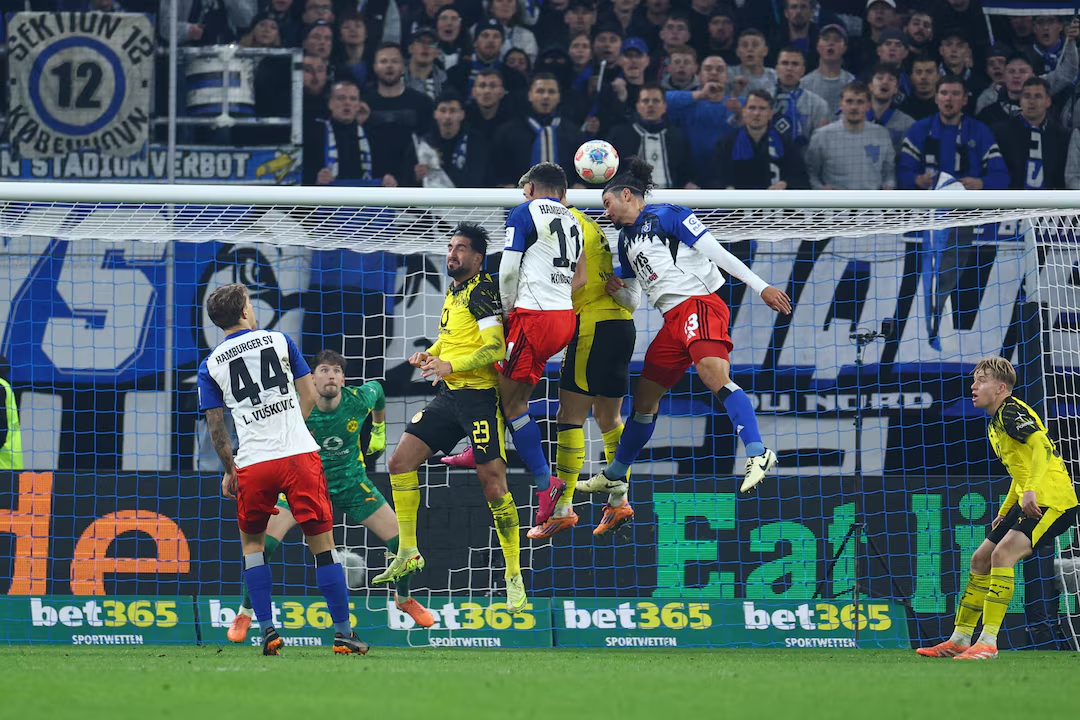
This is the kind of Bundesliga fixture that looks routine on paper—until you zoom in on the incentives. Borussia Dortmund at home, chasing outcome-based goals (title race, top-four security, or simply keeping distance from a chasing pack). Hamburger, usually entering these trips with survival math in their heads: every point away from home is a small win, but chasing three points too early can become a self-inflicted loss.
The psychological pressure is asymmetric. Dortmund feel they “should” win, which can tighten decision-making when the first goal doesn’t come. Hamburger arrive with freer shoulders but a clear fear: concede early, and the game state turns into a wave machine.
There’s also the calendar factor. Late March often compresses squads with cup spillover and international minutes. Dortmund’s depth typically absorbs that better, but rotation can dull pressing cohesion—especially in the first half. Hamburger’s edge, if they have one, is to make this feel scrappy and slow, then punish impatience.
2️⃣ Form & Advanced Metrics
Dortmund’s recent profile (in games like this) is defined by territory dominance rather than pure chaos. They tend to produce high field tilt—sustained possession in the attacking third—and their shot map usually skews central with cutbacks and second-phase entries rather than low-quality perimeter volume. That matters because it keeps their xG “honest”: they don’t need 20 shots if the chances are coming from the right zones.
The trade-off is transitional exposure. When Dortmund commit both fullbacks high and the double-pivot splits to circulate, the space behind the first counter-press can be big. The numbers indicate that when opponents break pressure, they often reach Dortmund’s box in fewer passes than you’d expect for a possession-heavy side. That’s not constant vulnerability—it’s a volatility lever that underdogs live for.
Hamburger’s underlying form typically reads like a newly-promoted or lower-table side: their attacking output is often patchy, but it spikes when the game becomes open. Their shot volume is rarely elite; their shot quality depends on how many transition moments they can manufacture. If they’re forced into long settled attacks, their chance creation tends to flatten into wide deliveries and speculative efforts.
Pressing intensity is where the stylistic clash becomes real. Dortmund’s PPDA profile is usually aggressive: they want the ball back quickly, high up the pitch. But pressing isn’t just effort—it’s spacing. If Dortmund rotate or carry fatigue, their press can become “half-press,” which is the worst version: it opens lanes without actually winning the ball. Hamburger don’t need to outplay Dortmund; they need to bait that half-press, clip a vertical pass, and attack the space behind.
Home/away dynamics also matter. Dortmund at home tend to start faster—higher pace, more early box entries. Hamburger away games often begin with conservative territory control: deeper block, fewer numbers ahead of the ball, and a reliance on set-pieces or isolated counters. That creates an obvious game-state question: if Dortmund score first, this can turn one-way. If they don’t, the nerves start creeping in and the underdog grows into it.
3️⃣ League Table Snapshot
| Team | Position | Points | Goal Diff | Trend |
|---|---|---|---|---|
| Borussia Dortmund | — | — | — | — |
| Hamburger | — | — | — | — |
Takeaway: even without the exact numbers, the structural read is familiar: Dortmund’s position is usually powered by repeatable chance creation and territorial control, while Hamburger’s survival profile often includes higher variance—results swinging on conversion and defensive resilience. In betting terms, that means Dortmund’s baseline is stronger, but the upset pathway is clear if the first goal doesn’t arrive.
4️⃣ Head-to-Head Analysis
Head-to-heads between elite possession/press sides and compact underdogs often repeat tactically, even when coaches change. Dortmund tend to dominate territory and force the opponent into long spells without the ball. The question becomes whether Hamburger can consistently escape pressure with enough quality to create genuine counters rather than “relief clearances.”
If we look deeper at these matchups historically, the pattern is usually less about finishing and more about access. When Dortmund create repeated cutback situations—arriving at the byline and pulling the ball to the penalty spot—Hamburger’s block gets stretched laterally and the game breaks. When Dortmund are kept in front of the block, shots come from wider angles, and the underdog stays alive longer than the market expects.
Psychologically, the longer it stays level, the more the burden shifts to the favorite. That’s where crowd energy can become double-edged: it fuels momentum, but it also amplifies frustration.
5️⃣ Tactical Breakdown (Core Section)
Who dictates tempo?
Dortmund will try to set a high-tempo rhythm: quick restarts, early switches, and forcing Hamburger to defend facing their own goal. Hamburger’s first objective is the opposite—slow the game, extend defensive phases, and reduce the number of high-speed attacking sequences Dortmund can chain together.
Overload zones and where the game is won
The key zone is the half-space just outside Hamburger’s box. Dortmund’s best attacks usually come when they pin the fullback with a winger, then slide a midfielder or fullback into the channel for a cutback or low cross. Hamburger will likely defend in a narrow 4-4-2/4-5-1 shape, trying to remove central access and invite wide possession.
That sets up a classic chess problem: Dortmund can have width and crosses, or they can have central access—but earning both at the same time requires clean rotations and a well-timed third-man run. If Dortmund’s spacing is slightly off, Hamburger’s block can look “solid” without actually being dominant.
Midfield control and pressing triggers
Dortmund’s press is usually triggered by backward passes and lateral circulation in the opponent’s first line. Hamburger should expect traps near the touchline: Dortmund will try to force play wide, then jump aggressively. The counter to that is simple in theory and hard in practice: a calm first touch, a vertical bounce pass, and immediate depth behind Dortmund’s midfield.
Hamburger don’t need long possessions. They need two or three clean connections to reach the space behind Dortmund’s advanced fullbacks. If they can create even a handful of 3v3 or 3v2 running situations, their xG per shot rises sharply.
Transition vulnerability
This is the underdog’s window. Dortmund’s attacking structure often leaves them exposed to direct counters if the counter-press is bypassed. The first duel after Dortmund lose the ball is critical: if Hamburger win it cleanly and play forward immediately, they can manufacture high-value shots without needing sustained control.
Conversely, if Dortmund’s counter-press is sharp, Hamburger’s attacks collapse into low-value clearances, and the game becomes a siege.
Set-pieces
Set-pieces are not decoration here; they’re leverage. Hamburger’s best “equalizer” is dead-ball volume—corners, wide free-kicks, long throws. Dortmund will want to avoid cheap fouls in wide areas and avoid second balls at the edge of the box. If Hamburger can keep the game within one goal, set-piece variance becomes a real factor late on.
6️⃣ Odds & Market Evaluation
| Market | Selection | Odds | Implied Probability |
|---|---|---|---|
| 1X2 | Borussia Dortmund | 1.40 | 71.4% |
| 1X2 | Draw | 5.00 | 20.0% |
| 1X2 | Hamburger | 7.50 | 13.3% |
Note: odds are indicative for preview purposes; always compare multiple books and adjust for margin.
According to our calculations at betlabel.games, Dortmund’s true win probability sits closer to the high-60s rather than the low-70s in a matchup like this, mainly because the underdog’s counter pathway is real and Dortmund can carry small press-cohesion drop-offs around this part of the season. That doesn’t automatically make Hamburger “value” on the moneyline—underdogs can be correctly priced and still lose most of the time. It does suggest the favorite price can be a touch too short.
Market read: the edge looks more plausible in derivative markets (handicaps/totals) than in a straight upset call.
7️⃣ The Hidden Edge (Mandatory Section)
There’s a structural nuance here that markets can be slow to price: favorites like Dortmund can dominate the first 60 minutes and still be vulnerable late if the match stays tight. The reason isn’t just “pressure.” It’s tactical physics.
When Dortmund chase the first goal against a deep block, their attacking rest-defense often becomes thinner: fullbacks stay higher for longer, midfielders take more aggressive positions between lines, and the spacing behind the ball stretches. That increases attacking threat—but it also increases the cost of any turnover. If the game is 0-0 or 1-0 entering the last half hour, Hamburger’s expected threat per possession can rise even if their overall chance creation has been low.
This is where regression logic can appear in-game. Dortmund may be “due” a second goal based on territory, but the underdog’s best chance of scoring might actually come later, not earlier, because the game state forces Dortmund into more risk.
That dynamic often makes a pre-match total tricky: you can have long sterile spells, then a sudden late swing. The market tends to anchor to Dortmund dominance and assumes a smooth win. The hidden edge is that the match can be controlled and still produce late volatility.
8️⃣ Final Prediction
Main Pick: Hamburger +1.5 (Asian Handicap)
Alternative: Under 3.5 Goals
Risk Level: Medium
Why this makes sense:
- Dortmund should control territory, but deep-block matches don’t always convert into multi-goal margins unless the first goal comes early.
- Hamburger’s path is narrow but real: survive the early wave, hit transitions, and lean on set-pieces to keep the scoreline within range.
- Game-state volatility is more likely late, which supports handicap/totals logic over a short favorite price on the moneyline.
No guarantees—just probability. Dortmund are rightly favored, but the better betting question is not “will they win?” It’s “will they win comfortably?”






Leave a Reply