
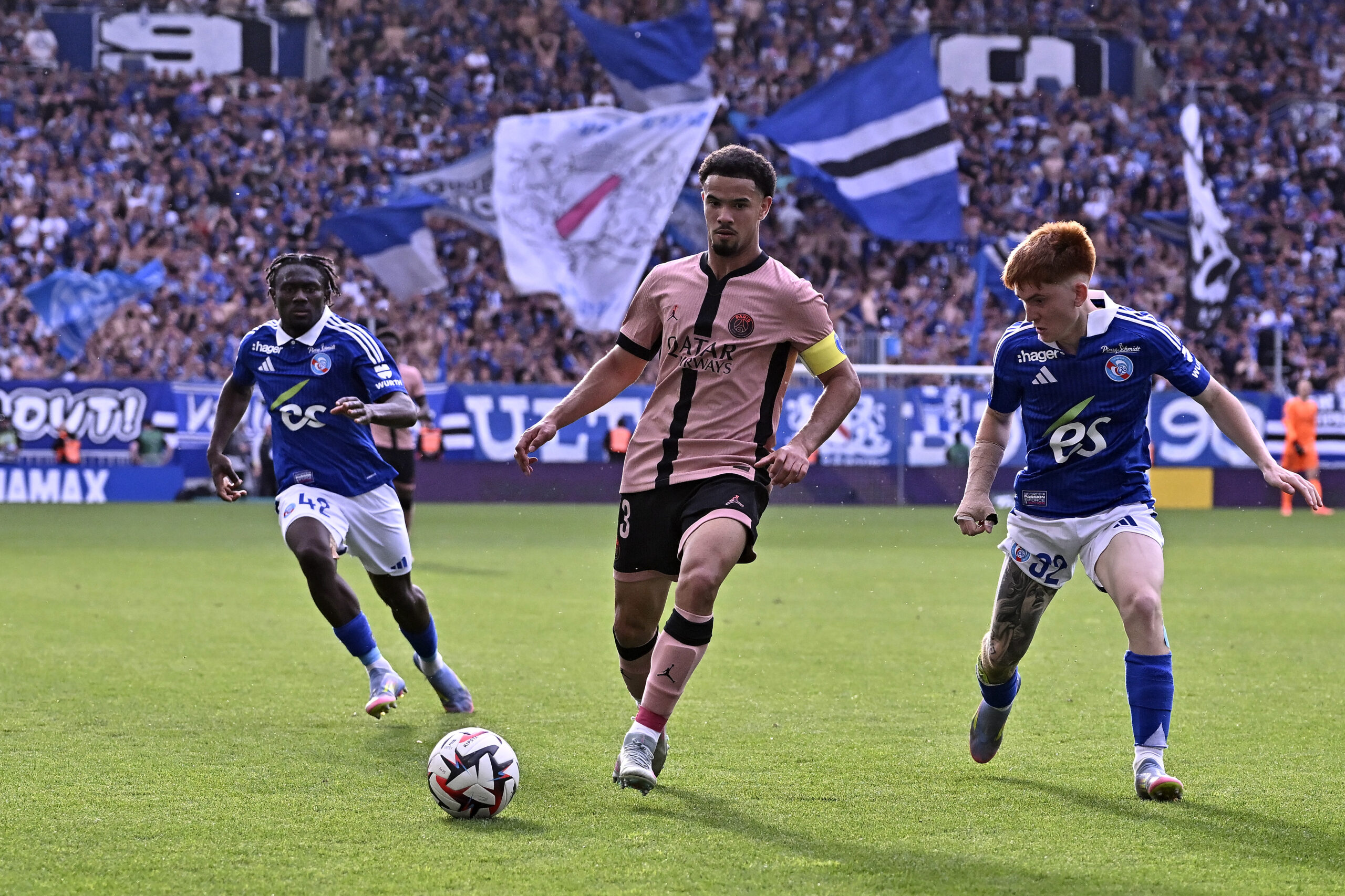


1️⃣ Match Context
Strasbourg vs Paris rarely needs extra framing, but this one has it anyway. Mid-March in Ligue 1 is where the table stops being “interesting” and starts being definitive: Europe chasers can’t afford blank weeks, and title contenders can’t afford mood swings. The stakes are asymmetrical, which is exactly why these fixtures often turn into market puzzles.
For Strasbourg, the narrative is survival-plus — the kind of season where a top-half push is tempting, but one bad month can drag you into the scrap. Hosting Paris is both an opportunity (one-point outcomes move you up fast in clustered mid-table) and a psychological trap (teams can play the opponent, not the game plan).
For Paris, the pressure is different. It’s not just about three points; it’s about control. They’re judged on dominance, not margins, and this period of the calendar usually comes with schedule congestion: European commitments, rotation decisions, and the constant risk of a flat performance away from home. This match matters because it sits in that uncomfortable zone where Paris can’t go full throttle, but also can’t give away points.
2️⃣ Form & Advanced Metrics
The surface form in a game like this can mislead because both teams can produce similar results through very different mechanisms. If we look deeper, the underlying profiles tend to diverge sharply in three areas: shot quality, territory, and defensive access.
Paris’ attack is typically built on repeatable pressure. They don’t just shoot a lot; they manufacture shots that come after the defense has already been stretched — the difference between low-value “permission” shots and high-value chances from the middle of the box. That usually shows up in their xG not as a spike game-to-game, but as a steady baseline. When Paris are “off,” it’s rarely because they can’t get into the final third; it’s because they turn dominance into sterile possession, with too many attacks ending wide or too early.
Strasbourg’s attacking profile is usually more state-dependent. At home, they tend to play with more front-foot intent — quicker vertical entries, earlier crosses, and a higher pace in the first 25 minutes. The trade-off is volatility. When their shot volume rises, it often comes with lower average shot quality, because they’re shooting before Paris’ block is properly disorganized. That’s a real thing: you can win territory and still lose chance value.
Defensively, this matchup is normally decided by access. Paris want repeated entries into the half-spaces and central channels; Strasbourg want to force them wide and protect the “golden zone” around the penalty spot. The numbers indicate Strasbourg can defend stretches well, but they can also allow sequences where opponents take multiple shots from similar zones — not catastrophic individually, but cumulative pressure.
On pressing: PPDA matters here not as a bragging metric, but as a description of how quickly a team engages. Paris generally press to compress the game and keep the opponent pinned. Strasbourg’s press is more situational — they’ll jump on triggers (back pass, poor first touch, sideways build) but they won’t chase for 90 minutes. That creates a key dynamic: if Strasbourg press and miss, Paris are suddenly running at an exposed midfield line. If Strasbourg sit too deep, Paris can camp in the final third and grind the xG upward.
3️⃣ League Table Snapshot
| Team | Position | Points | Played | GF | GA | Goal Diff |
|---|---|---|---|---|---|---|
| Strasbourg | 10th | 36 | 25 | 33 | 31 | +2 |
| Paris | 1st | 59 | 25 | 55 | 23 | +32 |
The positions reflect more than quality — they reflect repeatability. Paris’ table edge is usually built on low-variance control: fewer “bad” games, fewer stretches where the opponent can flip the script. Strasbourg’s spot suggests a team that can compete with most of the league, but whose ceiling is often limited by finishing streaks and game-state dependence. They’re not fragile. They’re just less scalable.
4️⃣ Head-to-Head Analysis
Head-to-head should never be treated as destiny, but it can reveal structural patterns. Against Paris, Strasbourg’s best spells typically come when they can keep the game in a mid-block, then break into space before Paris reset. When Strasbourg have tried to go toe-to-toe in high pressing for long periods, it tends to become an invitation for Paris to play through them and create high-quality looks on the second wave.
Psychologically, there’s often an imbalance too: Paris can absorb a mediocre first half because they trust their volume. Strasbourg, when they don’t score during their early energy window, can start protecting the scoreline that doesn’t exist. That’s not mentality talk — it’s a tactical shift you can see in field tilt: the possession map starts drifting toward their own box.
5️⃣ Tactical Breakdown (Core Section)
Who dictates tempo?
Paris will try to dictate tempo by owning territory rather than just possession. The key is their counterpress: lose the ball, win it back in five seconds, restart in the same zone. That’s how they keep opponents from breathing. Strasbourg’s priority is to break that loop. If they can connect two or three passes after recovery and force Paris to turn and run, the match changes complexion.
Overload zones and the critical channels
Paris’ most damaging work often comes from the half-spaces — not traditional wing play, not central congestion, but that awkward channel where fullbacks and centre-backs argue about responsibility. Strasbourg’s defensive structure has to be clean here: the near-side midfielder must track runners, and the far-side winger can’t stay high for the counter at the expense of back-post coverage.
Strasbourg’s best attacking route is usually the space Paris leave during their fullback advancement. If Strasbourg can isolate a wide runner against a backpedaling defender, they can generate cutbacks — and cutbacks are the one chance type that can compete with Paris’ defensive numbers because they arrive before the block is set.
Midfield control: the real battleground
The match will likely be decided by whether Strasbourg can keep a midfielder available behind Paris’ first press line. When Paris’ press works, it forces long clearances, which become immediate turnovers, which become sustained pressure. Strasbourg need a “release valve” — one player who can receive under pressure and play forward quickly. Without that, it’s waves.
Pressing triggers and buildup resistance
Expect Paris to press hardest on Strasbourg’s first touch in wide build-up and on any back pass toward the goalkeeper. Strasbourg can counter this with direct third-man combinations: bounce passes into midfield, then immediate vertical into the channel. It’s not about building beautifully; it’s about building safely.
Transition vulnerability
There’s a structural nuance here: Paris’ dominance can create their own risk. If they commit numbers and lose the ball in the half-space, the first pass out becomes a transition chance. Strasbourg don’t need many of those — one or two good breaks can generate their entire xG for the match. That’s why Strasbourg’s counter decision-making matters more than their possession sequences.
Set-pieces
This is Strasbourg’s most realistic equalizer. Against a superior territorial team, dead balls are the stable source of high-leverage moments. The key isn’t just winning corners; it’s winning corners when Paris are set to defend — not when Strasbourg are chasing and Paris can counter off the clearance. If Strasbourg are smart, they’ll slow restarts, load the near post, and attack second balls rather than chasing a perfect first contact.
6️⃣ Odds & Market Evaluation
| Market | Selection | Odds | Implied Probability | betlabel.games Est. Probability |
|---|---|---|---|---|
| 1X2 | Strasbourg | 6.50 | 15.4% | 16% |
| 1X2 | Draw | 4.30 | 23.3% | 24% |
| 1X2 | Paris | 1.52 | 65.8% | 60% |
Those implied probabilities don’t sum to 100% because the bookmaker margin is built in. After adjusting for overround, the market is still clearly saying: Paris win most of the time, and anything else is a smaller slice.
According to our calculations, Paris are priced a touch short. Not dramatically — this isn’t a giant misprice — but enough to matter if you’re searching for value rather than a “most likely” outcome. The market is paying you as if Paris’ control automatically converts into clean away wins. Strasbourg at home, with set-piece leverage and transition routes, slightly increases the draw frequency.
7️⃣ The Hidden Edge (Mandatory Section)
The hidden edge is not “Strasbourg are at home.” Everyone knows that. The angle is how game state interacts with Paris’ away profile.
Paris can dominate and still keep the opponent alive if their shot mix skews wide. When their attacks become cross-heavy without clean penalty-spot access, they create volume but not necessarily separation. That’s when underdogs stay in the match long enough for set-pieces and one transition to matter.
There’s also a scheduling nuance the market can be slow to price: Paris often rotate around European weeks, and rotation doesn’t always reduce overall quality — but it can reduce automatisms. Pressing coordination, counterpress distances, and final-third timing are the first things to dull when the lineup changes. Strasbourg don’t need Paris to be bad. They just need Paris to be 5% less sharp in the moments that convert pressure into goals.
Finally, Strasbourg’s “variance profile” is useful here. They’re not a team that needs sustained possession to score; they can manufacture a goal from one good wide break or a second ball. That tends to increase the value of draw-protection bets more than outright upset plays.
8️⃣ Final Prediction
Main Pick:
Strasbourg +1.25 (Asian Handicap)
Alternative:
Paris win & Under 4.0 goals (same-game angle)
Risk Level:
Medium
The logic is straightforward:
1) Market price implies a very smooth Paris win probability, but Strasbourg’s home state and set-piece leverage increase the chances of a one-goal game.
2) Tactically, Strasbourg have realistic scoring routes without needing control — transitions into the space behind advanced fullbacks and set-piece second balls.
3) Paris are still the superior territory team, which is exactly why taking Strasbourg outright is thinner than taking a handicap that benefits from draw and narrow-loss outcomes.
No guarantees. But in value terms, the handicap better matches the likely match texture: Paris on top, Strasbourg dangerous in moments, and the margin not automatically exploding.



Leave a Reply