


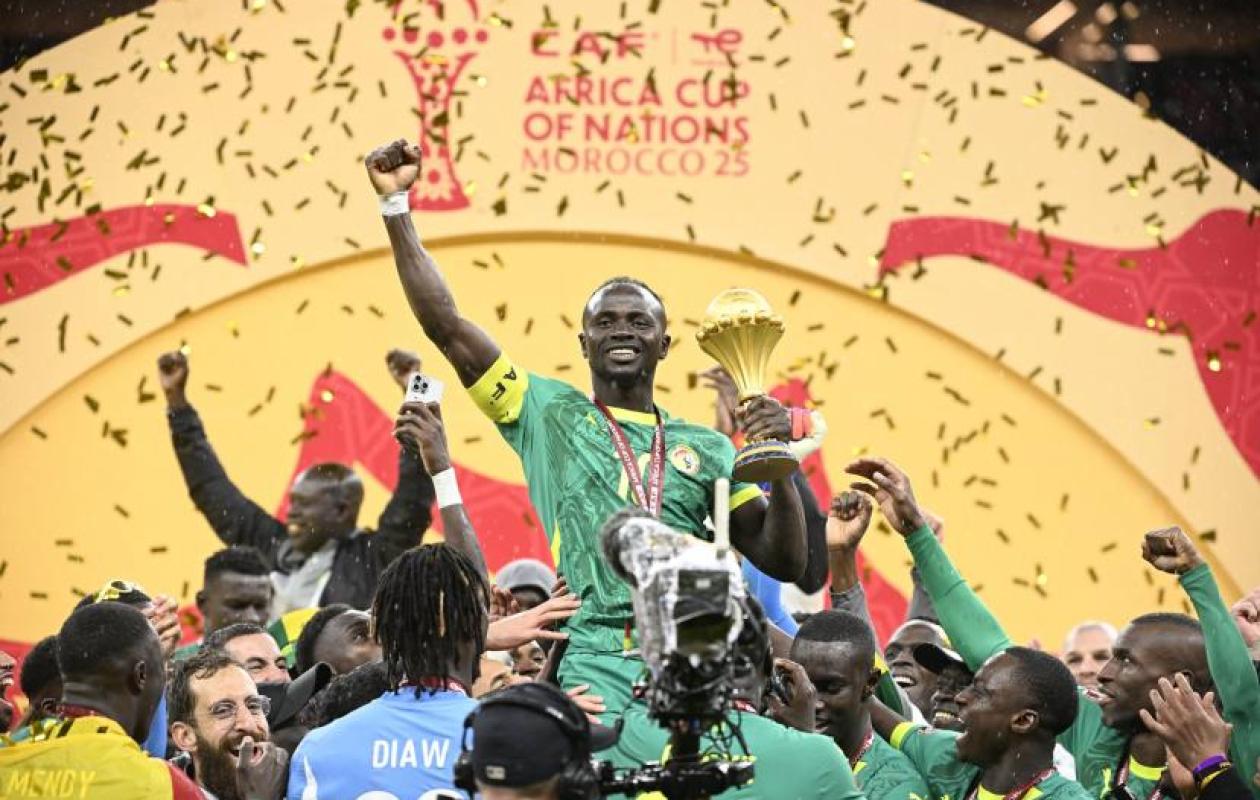


1️⃣ Match Context
Friendlies are only “meaningless” for teams with nothing to learn. Senegal and Peru arrive here with very different incentives, and that’s what shapes the edge.
Senegal are in the phase where performance standards are non-negotiable. Their core group is mature, their athletic ceiling is high, and there’s constant internal competition for spots. In this type of window, minutes are currency — and the tempo usually reflects it. They don’t coast; they audition.
Peru’s context is more delicate. They’ve spent long stretches in recent cycles looking structurally coherent but creatively thin, often relying on game management and set-piece swings rather than sustained chance creation. A friendly against a physically intense African side is a stress test: can they build through pressure without turning the match into a clearance-and-counter exercise?
Psychological pressure is asymmetric. Senegal carry expectation and depth. Peru carry the pressure of proving their attacking mechanisms can function against a team that wins duels and compresses space quickly. Add typical international-window fatigue and limited training time, and this becomes a matchup where clarity of automatisms matters more than raw talent.
2️⃣ Form & Advanced Metrics
Senegal’s underlying profile tends to travel well because it’s built on repeatable traits: athletic coverage, strong rest-defense (how they protect themselves behind the ball), and a willingness to press in defined moments rather than chase blindly. When they’re good, it’s not just shot volume — it’s shot quality created through territory and second balls. They often turn opponent exits into short possessions, then attack before the defensive block is set. That’s where high-value chances live.
In expected-goals terms, Senegal’s best performances usually come when their chance creation is centralized: cutbacks, penalty-area entries, and second-phase attacks after initial pressure. They can still cross, but it’s not “hopeful crossing” football — it’s wide delivery after pinning you and forcing your line to face its own goal.
Peru, by contrast, have often been a lower-pace side in international football. That doesn’t automatically mean “bad.” It can mean control via caution. But the trade-off is that when they fall behind, their path back can be slow and predictable. Their shot profile has commonly leaned toward lower-probability attempts unless they can manufacture set-piece sequences or transitional moments. Against top-physicality teams, that can lead to long stretches with decent possession numbers but thin expected threat.
Pressing tells a story here. When a team’s PPDA is low, it means they allow fewer passes before making defensive actions — they press more intensely and earlier. Senegal typically show a more aggressive pressing identity than Peru. In a friendly, that matters because build-up patterns are the first thing that breaks under “not-quite-synced” conditions. A half-second delay on a passing lane becomes a turnover; a turnover becomes a big chance. That’s how friendlies tilt.
Home/away splits also matter in spirit even on neutral-ish settings. Senegal’s game travels because it’s less dependent on crowd rhythm and more dependent on physical and structural habits. Peru’s controlled style is more sensitive to opponent intensity: if you can’t establish your preferred tempo, you end up defending deeper than planned and your field tilt (share of final-third territory) collapses.
3️⃣ League Table Snapshot
This is a national-team friendly, so there is no league table. But we can still frame “table dynamics” as competitive hierarchy: one side is structurally built to impose, the other is built to manage.
| Team | Competitive Identity | Typical Match State Preference | Primary Risk |
|---|---|---|---|
| Senegal | Front-foot, athletic press + direct verticality | Lead early, control space, punish transitions | Over-commitment can open counter lanes |
| Peru | Lower-tempo control, compact defending | Keep it level, grow into the match, set-piece leverage | Chance creation can be too thin when trailing |
Takeaway: This isn’t about “who is better” in the abstract. It’s about which identity survives limited preparation time. In friendlies, the more repeatable physical/pressing framework often wins the territory battle.
4️⃣ Head-to-Head Analysis
Head-to-head history between nations is usually a weak predictor because squads rotate and contexts change. The useful lens isn’t old scorelines — it’s whether the matchup archetype repeats.
Senegal vs Peru is a classic contrast: a side that wants to compress the pitch and accelerate the game, against a side that wants to slow it down and play through lines. When this archetype appears, the key variable is Peru’s ability to play out without gifting short-field transitions. If they can’t, the match becomes less “friendly chess” and more “territory siege.”
What tends to persist in these matchups is psychological: once Peru are forced into long defensive spells, their attacking structure is too far away to connect quickly. Senegal can then recycle pressure and farm set-pieces and second balls.
5️⃣ Tactical Breakdown (Core Section)
Who dictates tempo?
Senegal are the natural tempo-setters because they can dictate without monopolizing possession. They’re comfortable letting you have the ball in harmless zones, then springing pressing triggers when the pass goes square or the receiving player’s body shape closes.
Peru’s best route is to make the game boring on purpose: longer possessions, fewer vertical gambles, and a compact rest shape to prevent counters. But the risk is obvious — “boring” becomes “pinned.”
Overload zones and where the game will tilt
Senegal’s threat often scales with field tilt. The more they lock Peru in, the more they can attack the half-spaces: that channel between fullback and center-back where cutbacks and low crosses create premium shots. Expect Senegal to target that corridor with runners arriving late rather than only early crosses.
Peru will likely try to protect the middle first, forcing Senegal wide. That sounds fine until you remember what repeated wide pressure creates: corners, throw-ins high up, and second-phase attacks. Friendlies frequently hinge on those “non-events” turning into one big moment.
Midfield control: press resistance vs ball security
This is the hinge point. If Peru can receive on the half-turn and connect through midfield, Senegal’s press becomes less potent and the match opens into transitions — which Peru may actually welcome if they can isolate Senegal’s back line with direct runs.
If they can’t, Peru’s midfield gets forced into back-to-goal receptions and emergency clearances. That’s where Senegal’s athletic profile shows: they win the second ball, reset pressure, and Peru defend again. Over 90 minutes, that’s a stamina tax.
Transition vulnerability
Senegal’s aggression can leave space behind fullbacks when the counterpress fails. Peru’s clearest attacking lane is early diagonals into the channels and quick third-man runs before Senegal’s rest-defense settles. If Peru score here, it’s likely from their first or second clean transition — not from building 20-pass sequences.
But Peru must take care: forcing transitions by playing risky central passes is exactly what Senegal want. The safer way is to draw pressure wide, then switch quickly — easier said than done with international-window chemistry.
Set-piece dynamics
Senegal usually carry a tangible edge on dead balls: height, timing, and second-ball hunger. Peru can defend set-pieces well structurally, but repeated waves create cumulative danger — especially if fatigue sets in and marking discipline slips. In a friendly, set-piece focus can be inconsistent, which ironically benefits the more physically dominant side.
6️⃣ Odds & Market Evaluation
| Market | Selection | Odds | Implied Probability |
|---|---|---|---|
| 1X2 | Senegal | 2.05 | 48.8% |
| 1X2 | Draw | 3.20 | 31.3% |
| 1X2 | Peru | 3.90 | 25.6% |
Note: implied probabilities exceed 100% due to bookmaker margin.
According to our calculations at betlabel.games, Senegal deserve to be a touch shorter than the typical market in this type of stylistic clash. The reason isn’t “name value” — it’s repeatability: pressing/territory profiles tend to carry across squad rotation better than possession choreography.
Value read: edge is marginal-to-real on Senegal in protection markets (DNB / -0.25), stronger than on a pure 1X2 where the draw tax is always present in friendlies.
7️⃣ The Hidden Edge (Mandatory Section)
There’s a structural nuance here the market often underprices in friendlies: who benefits from chaos when cohesion is low.
International windows reduce training time, and that hits build-up teams harder than press/transition teams. Peru’s best football requires synchronized spacing: the right distances for combination play, the correct angles to break pressure, and timing of third-man runs. When that’s even slightly off, their shot quality drops and they end up taking the kinds of attempts that look “active” but don’t move xG.
Senegal, meanwhile, can create danger from simpler mechanisms: win the duel, win the second ball, attack the box early, repeat. That’s not crude — it’s efficient. And it’s exactly the kind of edge that grows late in matches when legs go and substitutes disrupt rhythm.
Another subtle point: scorelines can lie in friendlies. A 0–0 doesn’t always mean balance; it often means one side couldn’t convert pressure. If Senegal have been generating territory and box entries without finishing, that’s not a reason to fade them — it’s a reason to expect regression toward goals, especially against a team that may concede set-piece volume.
8️⃣ Final Prediction
Main Pick: Senegal – Draw No Bet (DNB)
Alternative: Senegal -0.25 (Asian Handicap) or Senegal to win (small stake) if price holds above 2.00
Risk Level: Medium
Why this works:
- Tempo control without possession: Senegal’s press/territory profile is more robust in a friendly setting than Peru’s build-up dependence.
- Shot quality pathway: Senegal are more likely to reach cutback zones and second-phase chances; Peru’s attack can drift toward low-value efforts if pinned.
- Set-piece and fatigue leverage: repeated wide pressure tends to generate dead balls, and Senegal’s physical advantage usually scales as the match wears on.
No guarantees — friendlies can flatten intensity. But in probability terms, the safer angle is to back the side whose game survives imperfect cohesion, with protection against the draw.



Leave a Reply