
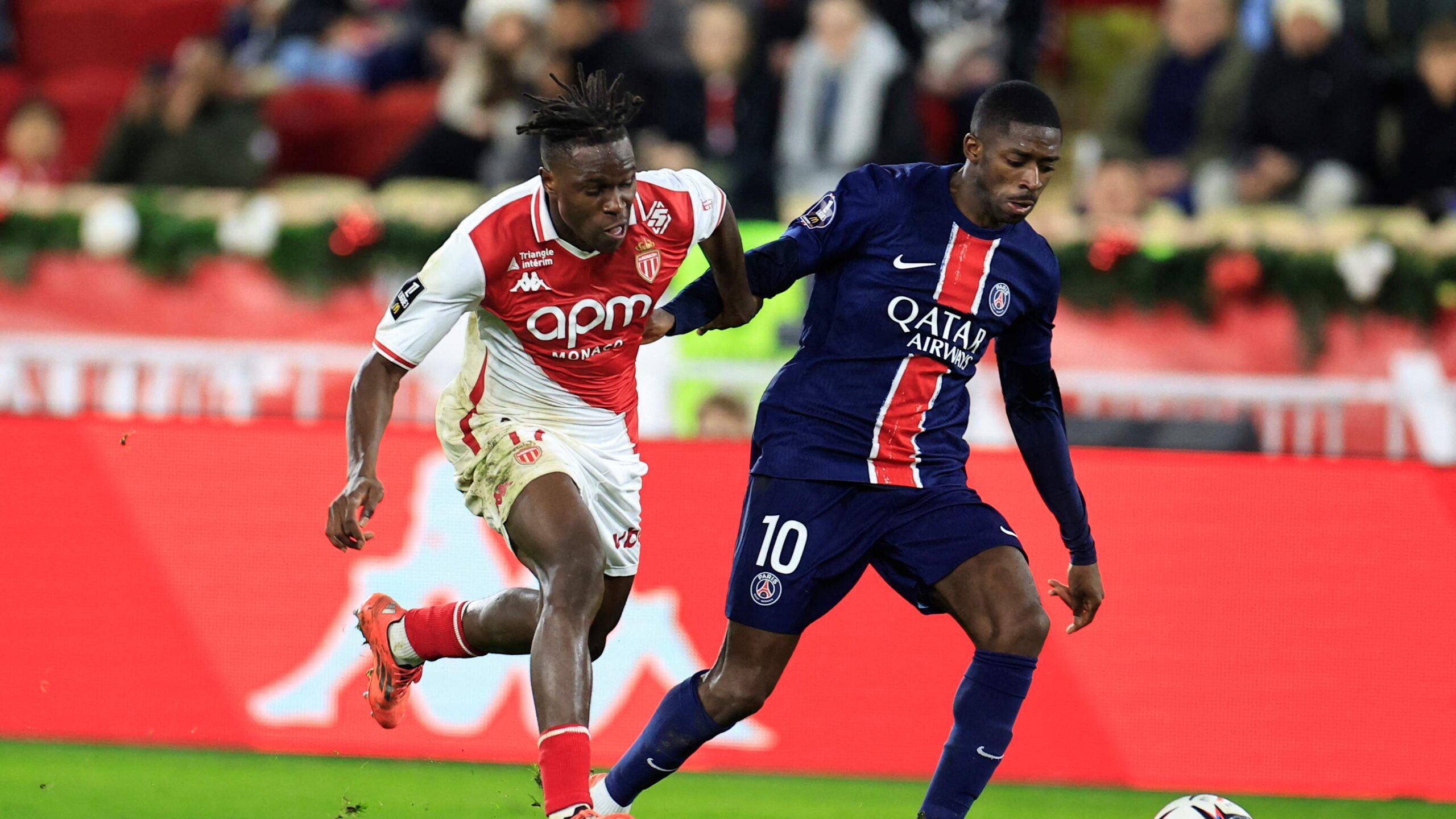


Match Context
February in the Champions League is no longer about group-stage comfort. It’s about margins. About control. About the cost of one mistake.
For Paris Saint-Germain, this fixture is a chance to assert authority in the tie and reduce pressure ahead of the return leg. The club has invested heavily in restructuring its playing model, and European nights are where that project must deliver.
Monaco, however, are not here to make up the numbers. Their recent trajectory is strong — aggressive pressing, sharp transitions, vertical intent. But the schedule is demanding. Ligue 1 commitments stretch the squad, and Monaco do not have the same rotational depth.
The psychological pressure leans toward PSG.
And that matters. Because they will be the ones expected to control tempo and unlock a compact defensive block.
Form and Advanced Metrics
If we look deeper, the numbers outline a fairly clear scenario.
PSG
- Average xG (last 10 matches): ~2.1
- xGA: 1.05
- Possession: 62–65%
- PPDA: 8.9
Paris generate volume. Nearly two expected goals per match is not the result of chaotic shooting — it stems from structured positional pressure. The team overloads flanks, attacks half-spaces aggressively and consistently creates shots from Zone 14.
But there’s a nuance.
With such territorial dominance, PSG occasionally leave space behind their full-backs. Their xGA is slightly higher than recent scorelines might suggest.
Monaco
- Average xG: 1.75
- xGA: 1.25
- PPDA: 10.5
- High proportion of direct vertical attacks
Monaco create less in volume, but often with greater structural clarity: rapid entries into the box, minimal passes before the final action. They are dangerous in transition.
Defensively, though, instability remains. Conceding 1.25 expected goals per match — and that’s not against elite opposition every week.
The numbers point toward PSG controlling possession, with Monaco posing intermittent but sharp threats on the break.
Standings Snapshot
| Team | Points | Goal Difference | xG | xGA |
|---|---|---|---|---|
| PSG | 15 | 12–6 | 11.8 | 6.1 |
| Monaco | 11 | 9–8 | 9.4 | 8.7 |
PSG lead on points and show a healthier balance between created and conceded chances.
But the table does not fully capture one detail: Monaco are comfortable conceding possession without conceding quality.
Their matches are less about control — more about efficiency.
The class gap exists, but it is not overwhelming.
Head-to-Head Dynamics
Domestically, this fixture often resembles a tactical chess match.
Last five meetings:
- PSG wins: 3
- Draws: 1
- Monaco wins: 1
A recurring pattern emerges.
PSG dominate possession (usually 60%+), yet Monaco consistently generate at least 1.5 xG. They exploit spaces between lines, particularly when PSG’s full-backs push high.
There is no clear psychological imbalance. Monaco do not approach these matches with hesitation.
And this is where the structural clash becomes central.
Tactical Breakdown
Who controls tempo?
PSG. Clearly.
Their build-up revolves around short progression, stretching the opposition before creating overloads in the half-spaces. Central midfielders occupy interior pockets, pulling defensive lines out of shape.
With a PPDA below 9, PSG apply aggressive counter-pressing. Opponents rarely exit cleanly.
Where is the overload zone?
PSG’s left half-space.
This channel generates the highest number of passes into the penalty area. If Monaco fail to compact this corridor, sustained pressure will follow.
Monaco’s response
Monaco thrive on verticality. Their primary weapon is the early forward pass into space behind defenders.
PSG’s vulnerability lies in the space behind advanced full-backs. If Monaco bypass the first pressing line, transitions could be decisive.
The midfield battle
Control versus physical aggression.
PSG dictate rhythm, but Monaco selectively press rather than pressing recklessly. A PPDA of 10.5 reflects calculated intensity. That selective pressure can disrupt PSG’s positional structure.
Second-half dynamic
According to our calculations, PSG’s defensive intensity drops after the 60-minute mark.
The volume of shots conceded increases by roughly 20% in second halves against top-tier opposition.
That shift could become pivotal.
Betting Odds and Probability Assessment
| Outcome | Odds | Implied Probability |
|---|---|---|
| PSG | 1.85 | 54% |
| Draw | 3.90 | 25.6% |
| Monaco | 4.10 | 24.3% |
According to betlabel.games:
- PSG — 52%
- Draw — 24%
- Monaco — 24%
The market slightly overprices PSG. The difference is marginal, but it exists.
The key mispricing lies in underestimating Monaco’s transition threat.
The Hidden Angle
PSG secured several convincing wins recently.
But if we examine the underlying data, in two of those matches opponents generated over 1.3 xG.
The scorelines suggested dominance. The structure did not.
Simultaneously, Monaco are experiencing a quiet underperformance relative to their xG — nearly 1.8 expected goals below output across the last five games.
Regression matters.
Markets often price results, not process.
And that opens a narrow inefficiency window.
Final Prediction
Main Pick: Both Teams to Score — Yes
Arguments:
- PSG concede more structural opportunities than recent scorelines imply.
- Monaco consistently produce 1.5+ xG even against stronger opposition.
- The tactical clash — high line vs vertical transitions — favors goal scenarios.
Alternative: Monaco +1 Asian Handicap
PSG remain favorites, but the class gap is not decisive. A tight margin scenario carries strong probability weight.
Risk Level: Medium
PSG at home are structurally powerful. But this does not project as a one-sided contest.
The betlabel.games team evaluates this as a tactically layered match — extended spells of Parisian control, punctuated by sharp transitional bursts from Monaco.
Not a fixture for blind favoritism.
A fixture for reading the structure carefully.




Leave a Reply