


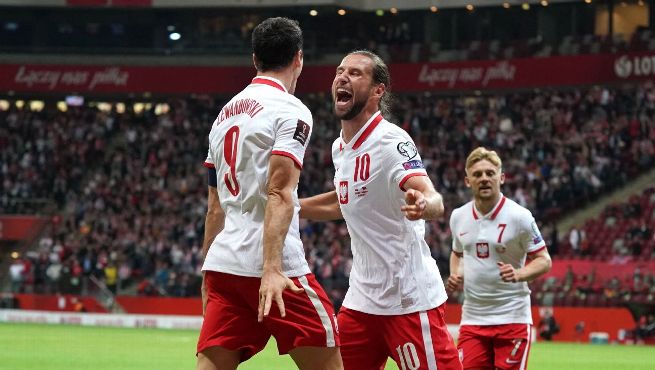


1️⃣ Match Context
World Cup qualifying is where good teams get nervous and organised teams get points. Poland vs Albania sits in that exact zone: a fixture where Poland are expected to win, but the game-state pressure is asymmetric. For Poland, anything short of three points feels like a setback in a group campaign that’s usually decided by a handful of “banker” home matches. For Albania, this is the kind of away night where a draw is functionally a win — and they’ll structure the entire match around making it feel uncomfortable.
That psychological gap matters. Poland will likely have more of the ball, more territory, and more expectation to create. Albania can play with a cleaner emotional script: stay compact, steal transitions, make set pieces count, and turn the crowd restless if Poland’s early pressure doesn’t convert into goals.
There’s also the calendar factor typical of international windows. Teams have limited training time, which tends to favour sides with stable defensive habits over sides that rely on fluid attacking combinations. In qualifiers, cohesion often beats talent in isolated stretches — and that’s why the first goal (or lack of it) shapes the entire betting story.
2️⃣ Form & Advanced Metrics
Poland’s baseline profile in competitive matches tends to be territory-positive but not always chance-efficient. They can accumulate possession and entries, yet the shot quality can swing depending on whether they create central access or settle for lower-value shots from wider lanes. When Poland’s attack becomes too wing-to-box without midfield presence between the lines, they generate volume without the kind of close-range attempts that truly break a low block.
Defensively, Poland are generally stable in their own box but can be transition-exposed when their fullbacks push and the midfield spacing stretches. That shows up less as constant chance concession and more as a few high-leverage moments — the kind that inflate volatility. In qualifiers, volatility is the enemy of favourites.
Albania, meanwhile, are usually comfortable being out-possessed. Their attacking output can look modest on raw shot counts, but the better versions of Albania produce decent shot quality off two patterns: fast counters into the channels and set-piece second balls. They don’t need 12 shots to score; they need three good moments and an opponent who overcommits.
If we look deeper at pressing behaviour, Poland typically press in waves rather than constant high pressure — more situational triggers than relentless chasing. Albania’s approach is often the inverse: a mid-block that compresses central space, with occasional jumps on poor touches or backward passes. In PPDA terms (passes allowed per defensive action), that usually reads as Albania allowing circulation in harmless zones but becoming aggressive once the ball enters their pressing trap areas. Translation: they’re willing to let you have it, but not where it hurts.
Home/away splits matter here. Poland at home tends to control territory and field tilt (share of final-third possession and attacks), but the key question is whether that tilt becomes clear chances or just pressure without payoff. Albania away games often look “quiet” until they suddenly aren’t — one counter, one free kick, and the match becomes a negotiation.
3️⃣ League Table Snapshot
| Team | Played | W | D | L | GF | GA | Pts |
|---|---|---|---|---|---|---|---|
| Poland | – | – | – | – | – | – | – |
| Albania | – | – | – | – | – | – | – |
Takeaway: Early-qualifying table reads can be misleading because variance is extreme — one set-piece goal can swing entire match outcomes. What matters more is the structural matchup: Poland will likely be the “chance creator,” Albania the “game-state manipulator.” The market often prices the former too confidently when the latter has a clear plan to reduce shot quality.
4️⃣ Head-to-Head Analysis
Poland vs Albania has often been less about fireworks and more about control vs resistance. The recurring theme in these types of matchups is whether Poland can turn dominance into central, high-quality chances rather than predictable crossing sequences. Albania’s best H2H performances tend to come when they deny central lanes, force play outside, and keep their box protected with numbers.
Psychologically, that creates a repeating loop: Poland increase tempo, Albania drop a little deeper, and the match becomes about patience — and refereeing tolerance — as frustration grows. When Poland score first, the match opens. When they don’t, Albania’s confidence grows and their transitions become sharper.
5️⃣ Tactical Breakdown (Core Section)
Who dictates tempo?
Poland should dictate the ball, but Albania will try to dictate the pace. That’s the key distinction. Expect Poland to circulate through the back line and look for progressive passes into the half-spaces; Albania’s aim will be to slow the match into a sequence of set plays, throw-ins, and controlled restarts.
Where is the overload zone?
The game likely tilts toward Poland’s wide overloads: fullback support, winger isolation, and third-man runs to the byline. Albania will accept wide deliveries if they can control the box. This is where shot quality becomes decisive: crosses are only “pressure” if they create near-post runs, cutbacks, and second-phase shots from central zones.
If Poland’s best chances come from cutbacks, Poland are in a strong position. If their best chances come from floated crosses against set defenders, Albania’s plan is working.
Midfield control battle
Albania’s compactness typically targets the space between Poland’s midfield and forward line. Poland need a midfielder (or a dropping forward) to receive on the half-turn and force Albania’s block to collapse inward. Without that, the ball cycles side-to-side and Albania’s distances stay intact.
Pressing triggers & buildup resistance
Albania won’t press high for long stretches, but they can press smart. Expect them to jump when Poland play into a fullback facing their own goal or when a central midfielder receives with closed body shape. Poland’s buildup must be clean — forced turnovers in the middle third are Albania’s fastest route to a high-value shot.
Transition vulnerability
This is Albania’s biggest offensive lever. When Poland commit numbers and push fullbacks high, the space behind them becomes a runway. Albania don’t need sustained possession to hurt you; they need one well-timed release pass into the channel and support arriving late at the top of the box.
Set-piece dynamics
Qualifiers often turn on dead balls. Poland’s territorial dominance usually increases their set-piece volume — corners, wide free kicks, long throws. Albania, however, are comfortable defending deep and can be dangerous on their own set pieces, especially if Poland concede cheap fouls in transition. This matchup has a natural set-piece emphasis, which generally pulls games toward lower totals and tighter margins.
6️⃣ Odds & Market Evaluation
| Market | Odds | Implied Probability |
|---|---|---|
| Poland win | 1.65 | 60.6% |
| Draw | 3.70 | 27.0% |
| Albania win | 5.80 | 17.2% |
Note: Implied probabilities above are raw (not margin-adjusted). The true market book will sum above 100%.
The betlabel.games team evaluates this match closer to a Poland win in the mid-50s rather than low-60s. That’s not an anti-Poland stance — it’s a recognition of qualifier dynamics: low blocks reduce shot quality, and a single Albania transition can flip the expected points distribution.
Value check: Poland are rightly favourites, but the straight home win price looks a touch short if you expect Albania’s structure to drag the game into a narrow margin. Edges here are more likely to live in derivatives (Asian lines, totals) than the 1X2.
7️⃣ The Hidden Edge (Mandatory Section)
There’s a structural nuance here the market can be slow to price: Poland’s territorial control doesn’t automatically scale into elite shot quality against compact opponents. In qualifiers, that’s the entire trap. You can dominate field tilt and still trade at roughly even “big chance” count if you can’t access the six-yard box and the penalty spot.
Albania’s defensive approach tends to produce a specific kind of match: fewer open-play shots conceded, but a reliance on defending repeated wide deliveries and second phases. That creates two betting-relevant consequences:
1) Goal timing skews later. If Poland don’t score early, the match can become a second-half grind where variance rises — more set pieces, more desperation shots, more transition risk.
2) The draw becomes “sticky.” Even if Poland lead territory, the game-state can remain one goal away from a draw for long periods. That increases the value of draw-protected positions against the favourite (or unders if priced generously).
The market often reacts to Poland’s name value and home advantage. The slower adjustment is to Albania’s ability to suppress central chance quality and turn the game into a low-event contest.
8️⃣ Final Prediction
Main Pick: Albania +1.25 (Asian Handicap)
Alternative: Under 2.5 goals
Risk Level: Medium
Why this makes sense:
1) Match state likely stays tight. Poland should control territory, but Albania’s compact block is built to reduce high-value central shots, keeping scorelines within one goal for long stretches.
2) Albania’s transition threat creates leverage. Even limited counters can generate one major chance, which is enough to protect an underdog handicap and keep the draw live.
3) Set-piece heavy games compress variance. More dead-ball sequences and fewer open-play breakaways usually favour unders and underdog cover lines rather than a comfortable favourite win.
Poland can absolutely win this — they have the stronger squad and the home script. But at current pricing, the cleaner betting angle is respecting how qualifiers actually play: compact, tense, and decided by moments, not dominance.




Leave a Reply