




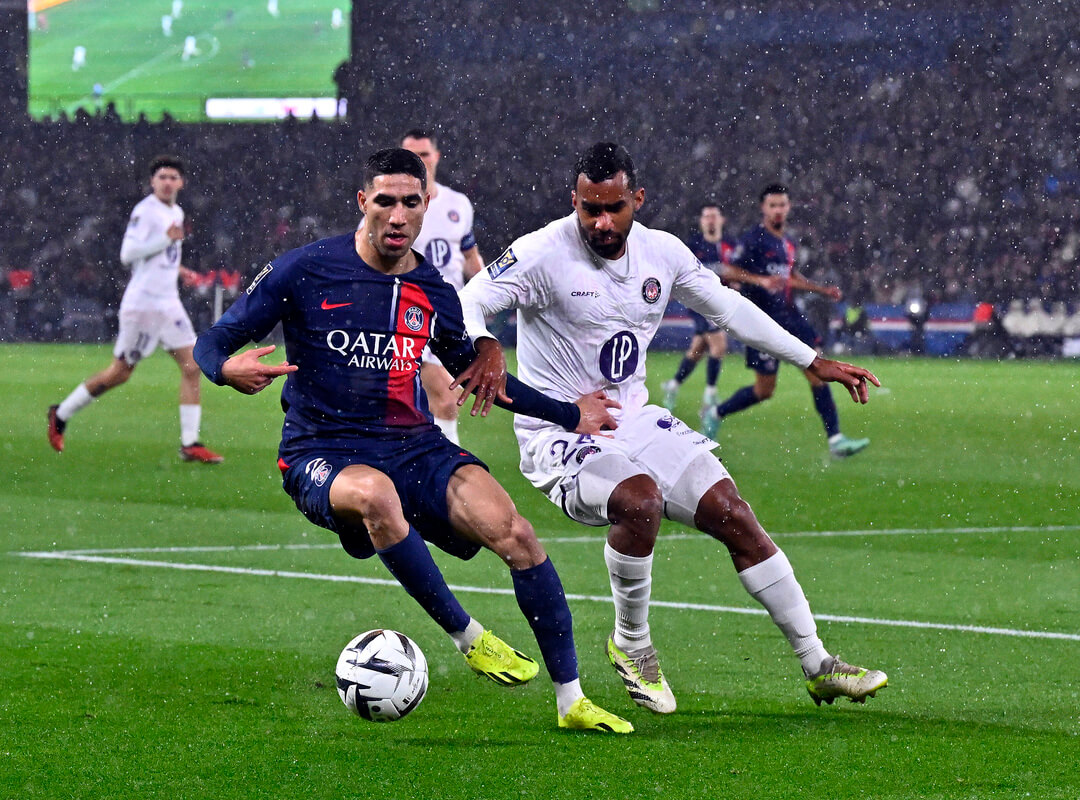


1️⃣ Match Context
Paris Saint-Germain don’t get “routine” home dates in April — not with the title race tightening, European commitments in the background, and every opponent treating a trip to Paris like a season-defining event. This PSG vs Toulouse spot lands in the part of the calendar where the league table starts to feel heavy: points aren’t just points anymore, they’re leverage.
For PSG, the pressure is asymmetric. They’re expected to dominate territory, shots, and the scoreboard — and anything less becomes a headline. That psychological tax matters when you’re juggling minutes, managing intensity, and trying to win without opening transition doors.
Toulouse arrive with a very different mindset: survive the early storm, grow into the game, and make PSG defend. If they can keep the match within one goal into the final half-hour, the dynamic shifts. That’s the core context here — PSG must impose structure early; Toulouse just need the game to stay alive long enough to become uncomfortable.
2️⃣ Form & Advanced Metrics
The numbers indicate PSG continue to win the territory battle in most Ligue 1 fixtures: high field tilt, long spells in the attacking half, and a shot profile built on sustained pressure rather than coin-flip counterattacks. They create high-quality chances because their possession isn’t sterile — it tends to end in cutbacks, central-zone touches, and second-ball sequences around the box.
But there’s a structural nuance here. PSG’s dominance can come with volatility when their rest-defense isn’t clean. When fullbacks are high and the midfield line gets stretched, opponents don’t need many possessions to generate “real” chances — the kind that spike xG quickly because they arrive in space, centrally, with runners. So PSG can look in control, yet still concede the most dangerous shot in the match.
Toulouse, meanwhile, generally profile as a side that can live without the ball but don’t want to be pinned for 90 minutes. When they’re at their best, they mix mid-block discipline with selective pressing triggers — jumping on sideways passes, forcing play wide, and trying to make the opponent’s buildup predictable. In xG terms that often shows up as: fewer shots conceded overall, but an ongoing risk of conceding high-value shots when the block breaks and the central lane opens.
Pressing intensity (PPDA) is the key translation point. PSG at home typically press higher and earlier, not necessarily to win the ball instantly, but to keep the opponent from exiting cleanly and to recycle attacks quickly. Toulouse are more likely to choose moments — press in waves, then drop. That usually lowers their defensive volume, but it also means if PSG break the first pressure line, the second line has to defend longer, and fatigue becomes a factor.
Home/away is the separator. PSG’s pace and chance volume usually lift at Parc des Princes: more final-third entries, more box touches, and more set-piece pressure. Toulouse away fixtures tend to become a survival exercise — not always chaotic, but often one-way in territory. The risk for bettors is that “one-way territory” doesn’t always equal “comfortable margin.” If Toulouse can keep shot quality down and avoid cheap set pieces, the game state can stay deceptively tight.
3️⃣ League Table Snapshot
| Team | Position | Points | Played | Goal Diff |
|---|---|---|---|---|
| Paris Saint-Germain | 1st | — | — | — |
| Toulouse | — | — | — | — |
Takeaway: PSG’s table position reflects repeatable control — territory, volume, and squad depth. Toulouse’s positioning typically reflects variance management: staying competitive through structure, then stealing points when matches fall into their preferred tempo. This is a classic “control vs resistance” fixture — and those can be trickier than they look in price.
4️⃣ Head-to-Head Analysis
Head-to-head meetings between a dominant-possession giant and a compact, tactically organized mid-table side often repeat the same pattern: PSG monopolise the ball, Toulouse defend their box, and the match outcome hinges on whether PSG convert the first clear chance or whether Toulouse can force PSG into impatient shot selection.
The key is whether past results align with the underlying dynamics. In many of these matchups, the scoreline can flatter the winner: one early goal collapses the defensive plan, then the game becomes a wave. Conversely, if it stays 0–0 deep into the first half, the underdog’s confidence rises, and PSG’s shot quality can dip into low-probability territory.
What tends to persist is structure: PSG’s superiority in box entries and second balls; Toulouse’s reliance on clean clearances, disciplined central coverage, and opportunistic transitions into the channels.
5️⃣ Tactical Breakdown (Core Section)
Where PSG will try to win it
PSG’s most reliable path here is to overload the half-spaces and force Toulouse’s midfield line to make impossible choices. Expect PSG to build with patience, then accelerate through quick combinations around the edge of the box. The goal is simple: move Toulouse laterally until a central gap appears for a cutback or a late runner.
Watch the tempo changes. PSG are at their best when they alternate slow circulation with sudden vertical punches — a third-man run, a one-touch wall pass, or a disguised reverse ball. That’s how you turn field tilt into shot quality.
How Toulouse can make it ugly
Toulouse’s best defensive version is a compact mid-block that denies central progression and forces PSG wide. The trade-off is obvious: you allow crosses and wide deliveries, but you protect the high-xG zone. If Toulouse can keep PSG to the outside and defend cutbacks, they can reduce the “big chance” count even while conceding territorial dominance.
In possession, Toulouse don’t need to be expansive — they need to be clean. A few controlled exits matter more than long spells. If they can connect the first pass out of pressure and hit the channels, they can test PSG’s rest-defense and force PSG’s midfield to run backwards. That’s where the match can flip from siege to transitional risk.
The midfield control battle
This game is less about “who has more of the ball” and more about who controls the spaces behind the ball. PSG’s midfield will try to lock Toulouse in by winning second balls and counterpressing immediately after losses. Toulouse will try to create a release valve — either a direct outlet or a rotation that opens a passing lane under pressure.
Pressing triggers will decide Toulouse’s survival time: if PSG can force rushed clearances, Toulouse will defend 70–75% territory. If Toulouse can beat the first press even occasionally, PSG’s defensive line has to retreat, and the home side’s attack loses its suffocating rhythm.
Set pieces and the “quiet” leverage
Against elite sides, set pieces often become the underdog’s best equaliser — and also their biggest risk. Toulouse must avoid cheap fouls and corners conceded through panic defending. For PSG, sustained pressure tends to generate dead-ball volume, and dead balls tend to generate scoreline separation even when open-play finishing is average.
6️⃣ Odds & Market Evaluation
| Market | Selection | Odds | Implied Probability |
|---|---|---|---|
| 1X2 | PSG | 1.25 | 80.0% |
| 1X2 | Draw | 6.00 | 16.7% |
| 1X2 | Toulouse | 11.00 | 9.1% |
Those implied probabilities don’t sum to 100% because the market bakes in margin. According to our calculations at betlabel.games, PSG are rightful favourites, but the value question isn’t “will PSG win?” — it’s “how often does PSG win by enough, and how often does Toulouse keep the game within one swing?”
Market read: straight PSG is often priced close to its ceiling in fixtures like this. Edges usually live in derivative markets: handicaps, team totals, or game-state angles (first half vs full time). The inefficiency is typically marginal rather than massive — but marginal edges are exactly what long-term bettors live on.
7️⃣ The Hidden Edge (Mandatory Section)
The market can be slow to adjust to one specific dynamic: PSG’s ability to dominate without necessarily producing peak shot quality for 90 minutes. When opponents defend the central lane well, PSG’s possession can inflate public confidence while the chance quality stays merely “good,” not “decisive.” That creates a gap between territory narratives and margin outcomes.
If we look deeper, Toulouse’s path to covering a handicap isn’t about creating lots of chances — it’s about suppressing PSG’s best ones. A well-drilled block can force PSG into more shots from wider or more crowded angles. The shot count looks scary. The xG per shot is what matters.
The second layer: schedule-driven intensity management. PSG in spring often operate with an eye on the next match, especially if European fixtures are nearby. That doesn’t mean they won’t win — it means the second half can become more about control than escalation. This is where the market can overpay for big-margin expectations.
8️⃣ Final Prediction
Main Pick: Toulouse +2.0 Asian Handicap
Alternative: Under 3.5 Goals
Risk Level: Medium
Why these angles:
1) Matchup logic: Toulouse’s most realistic plan is to protect central zones and concede wide territory. That tends to reduce PSG’s highest-value chances and keeps the scoreline closer than the possession map suggests.
2) Market pricing: PSG 1X2 prices often leave little room for value. Handicaps and totals capture the more nuanced question — not “PSG or not,” but “how many?”
3) Game-state probability: If Toulouse survive the first 25–30 minutes without conceding, the match typically shifts toward control and risk management from PSG rather than relentless margin-chasing. That supports both a handicap cover and an under lean.
No guarantees — but the probability logic points toward Toulouse staying competitive on the scoreboard even if they lose the territory battle heavily.







Leave a Reply