
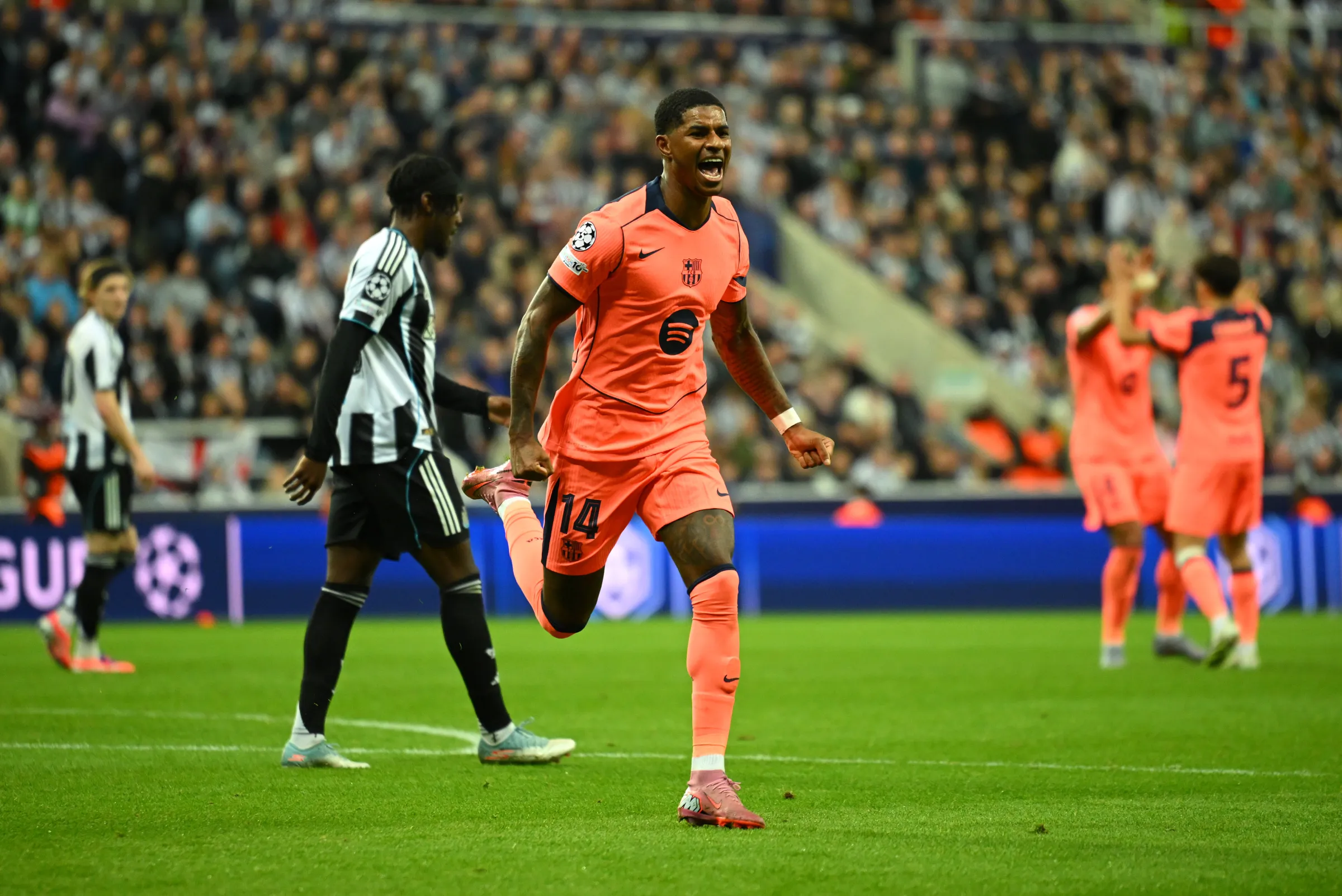


1️⃣ Match Context
Champions League nights don’t need extra narrative, but this one has it anyway. Newcastle United hosting Barcelona is a clash between two identities that both come with pressure: Newcastle’s high-energy, crowd-fuelled intensity versus Barcelona’s expectation of control and progression.
What’s at stake is more than a single result. At this stage of the tournament, the tie often becomes a referendum on game management. Newcastle’s upside is obvious—St James’ Park can drag matches into chaos, and chaos is where underdogs turn “inferior” into “dangerous.” Barcelona’s pressure is different: they’re judged on dominance, not just outcomes. A narrow win that looks shaky still creates noise. A draw that feels like a loss can distort decision-making in the return leg.
There’s also the physical context. Newcastle’s style is typically built on repeated high-intensity actions—press, sprint, counter-press, attack second balls. Barcelona’s style asks you to defend without the ball for long stretches and then explode in transitions when the structure finally cracks. In Champions League football, fatigue isn’t only about minutes; it’s about the type of minutes. This matchup naturally tests which team can impose its preferred rhythm for longer.
2️⃣ Form & Advanced Metrics
The numbers indicate a stylistic contrast that tends to define the price. Newcastle’s best performances usually show up in two places: the speed of their attacks (quick entries after regains) and the volume of shots generated from sustained pressure phases. When they’re right, they tilt the pitch—long spells in the opposition half—and convert territorial dominance into repeated box entries rather than speculative distance shooting.
But there’s a trade-off. Newcastle’s defensive volatility tends to rise when their press becomes disjointed. PPDA (passes per defensive action) is useful here because it tells us whether the press is actually biting or merely running. A “high-intensity” team can still have a soft press if the front line jumps without midfield support—opponents play through, and suddenly the back line is defending big spaces. That’s where xGA spikes: not from shot volume alone, but from shot quality—central lanes, cut-backs, and transitional carries that force defenders to turn and retreat.
Barcelona, meanwhile, typically produce a cleaner shot profile. Their best versions don’t necessarily shoot more; they shoot better. They reduce randomness by manufacturing chances in the most repeatable zones: inside the box, across the face of goal, or from late arrivals at the penalty spot. Their xG tends to be “stable” rather than explosive, because possession compresses game state. The flip side is also clear: when an opponent can bypass the first press and run at the back line before the rest-defense is set, Barcelona can concede high-value looks quickly—few shots, but dangerous ones.
Home/away dynamics matter here. Newcastle at home can turn even strong opponents into clearance machines, which inflates field tilt and territory control. Barcelona away are usually comfortable absorbing some noise early, then reasserting control through longer possessions. The tactical question is whether Barcelona’s build-up resistance holds under Newcastle’s first wave, because if it doesn’t, the game becomes a sequence of short fields and second balls—exactly what Newcastle want.
3️⃣ League Table Snapshot
| Team | League | Position | Points | GF | GA |
|---|---|---|---|---|---|
| Newcastle United | Premier League | — | — | — | — |
| Barcelona | La Liga | — | — | — | — |
Takeaway: Without pinning this preview to domestic table noise, the structural point remains: Barcelona are usually priced like a team built for repeatable control, while Newcastle are priced like a team whose outcomes swing with tempo and crowd-driven momentum. That gap is what the market is trading.
4️⃣ Head-to-Head Analysis
Head-to-heads in European football often mislead because the squads and managers change, but the structural themes can repeat. Against possession-heavy giants, Newcastle’s pattern is usually to weaponise intensity: disrupt build-up, force long sequences of defensive actions, then attack the moment the opponent’s spacing stretches. Barcelona’s recurring pattern versus aggressive presses is to invite pressure, then use the third-man to break it—turning an opponent’s forward momentum into a backward sprint.
The key question isn’t “who won last time,” it’s whether the underlying mechanics favoured one side. If Barcelona can consistently access the central corridor in build-up (pivot + interiors receiving on the half-turn), Newcastle’s press loses purpose and becomes energy burn. If Newcastle can keep Barcelona playing into wide traps and prevent clean central progression, Barcelona’s possession risks becoming sterile—territory without premium chances.
5️⃣ Tactical Breakdown (Core Section)
Who dictates tempo?
This match is a tempo negotiation. Newcastle want a high-pace game with frequent turnovers and short rest periods—more transitions, more second phases. Barcelona want long possessions that reduce the number of total “events” in the match. In betting terms, that’s a battle over variance: Newcastle benefit from it; Barcelona try to remove it.
The overload zone: midfield spacing and the half-spaces
Barcelona’s best work is usually done between the lines. They’ll try to pin Newcastle’s midfield by keeping width high and stretching the back four, then feeding the half-spaces with timed third-man runs. If Newcastle collapse centrally to protect those pockets, Barcelona’s fullbacks/wingers get time to deliver cut-backs—high-xG territory.
Newcastle’s counter is typically to compress the middle and force play wide early, trusting their box defending and attacking the next phase. The risk is obvious: if you allow Barcelona to settle in the final third, the “one extra pass” appears, and your block starts shifting later than it should.
Pressing triggers and build-up resistance
Newcastle’s pressing triggers are likely to be: back passes, heavy touches from the centre-backs, and passes into the fullback under closed body shape. When they win those duels, they generate shots fast—shot quality rises because the defence is not set. That’s how underdogs create elite chances without elite possession.
Barcelona’s response will be to manipulate the first line: pull Newcastle’s forwards toward the ball, then break around them. If Barcelona can consistently find a free player behind the press, Newcastle’s back line is exposed to exactly the kind of transitional carries that produce premium shots: central progressions, then a slip pass or a cut-back.
Which flanks are exposed?
The vulnerable flank is usually the one where the attacking fullback steps high and the nearest midfielder doesn’t cover early. Barcelona will target that seam with diagonal switches and underlapping runs. Newcastle, conversely, will attack the space behind Barcelona’s advanced wide players—especially if Barcelona’s rest-defense leaves only two centre-backs plus a single pivot to manage counter-attacks.
Set-piece dynamics
Set-pieces matter more in matches where one team expects control and the other expects moments. Newcastle’s physicality and delivery quality can create “cheap” expected goals—shots from six to ten yards on broken phases. Barcelona’s priority will be avoiding needless fouls and corners in high-pressure moments. If the referee profile is strict, that tension increases.
6️⃣ Odds & Market Evaluation
| Market | Selection | Odds | Implied Probability |
|---|---|---|---|
| 1X2 | Newcastle United | 3.60 | 27.8% |
| 1X2 | Draw | 3.50 | 28.6% |
| 1X2 | Barcelona | 2.05 | 48.8% |
Implied probability is calculated as 1/odds (not margin-adjusted).
According to our calculations at betlabel.games, the fair shape is slightly closer than the raw 1X2 prices imply. Barcelona deserve to be favourites, but not to the extent where Newcastle are treated as a low-agency opponent. The edge, if any, sits in markets that respect two truths at once: Barcelona’s control edge and Newcastle’s ability to create high-quality chances from disruption.
In practical terms, this often points away from pure 1X2 and toward derivatives: Barcelona protection (DNB) or goal-based angles that price in Newcastle’s chance creation at home.
7️⃣ The Hidden Edge (Mandatory Section)
There’s a structural nuance here the market can be slow to price: Barcelona’s away control can look “safe” while still conceding the most valuable type of chance—the first big transition after a broken press.
That’s not a volume problem; it’s an event problem. If Barcelona dominate possession, the opponent’s shot count stays low, and casual pricing often assumes low danger. But Newcastle don’t need eight shots. They need two sequences: a press win in the right lane, and a fast entry before the box is set. Those are high-xG events that don’t require sustained build-up.
On the other side, Newcastle’s defensive metrics can be dragged down by game state—when their press fails, they concede ugly chances quickly. But at home, with crowd intensity and tighter spacing, their press tends to be more synchronised. If that synchronisation holds for 60–70 minutes, Barcelona may be forced into longer wide possessions and a higher share of crosses rather than cut-backs. That’s a subtle downgrade in shot quality that doesn’t always show up in headline form.
8️⃣ Final Prediction
Main Pick: Barcelona Draw No Bet (DNB)
Alternative: Both Teams To Score (BTTS) – Yes
Risk Level: Medium
Why this works:
- Barcelona’s control is still the most repeatable asset in a one-off Champions League tie: they can reduce Newcastle’s sustained pressure phases by owning the ball.
- Newcastle’s home intensity creates real upset routes, which makes straight Barcelona win less attractive than a protected position like DNB.
- The matchup leans toward at least one high-quality transition chance for Newcastle, while Barcelona’s chance creation is steady enough to answer back—keeping BTTS live if the game opens.
No guarantees. But in probability terms, the best value is usually found by respecting Newcastle’s event creation while still siding with Barcelona’s ability to manage the overall match state.



Leave a Reply