

1️⃣ Match Context
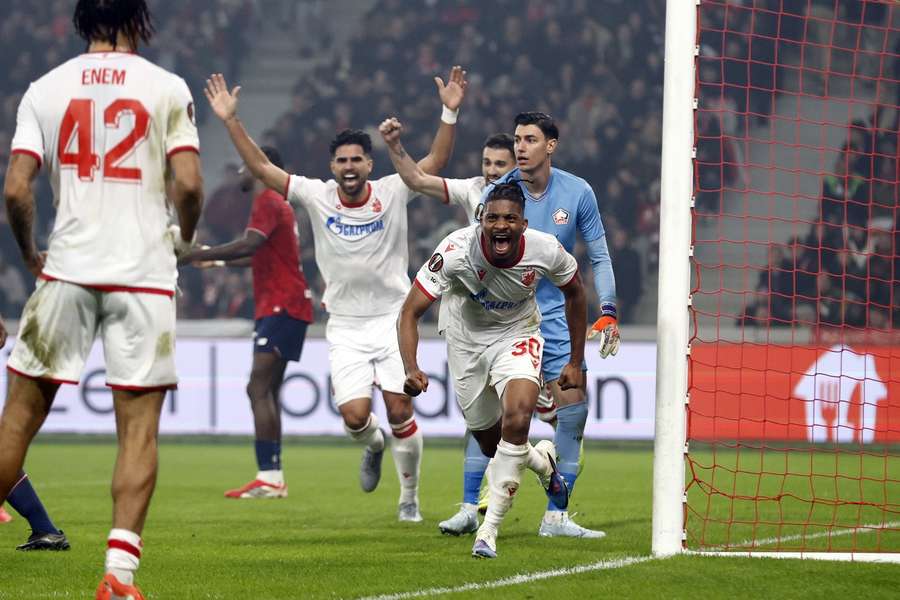
Europa League nights in Belgrade are rarely “just another fixture”. For Crvena Zvezda, this is the type of tie that can define a season — financially, emotionally, and reputationally. Lille arrive with a different kind of pressure: the quiet obligation of a top-five-league club expected to handle a hostile away leg and bring control to chaos.
That contrast matters. Zvezda’s home edge isn’t only atmosphere; it’s a game-state weapon. They tend to start fast, push territory early, and try to turn the first 20 minutes into a stress test. Lille’s challenge is less about bravery and more about discipline — managing the noise, slowing the tempo, and avoiding the kind of transition game that makes Belgrade feel like a trap.
There’s also the schedule reality. Late February in Europe is where legs begin to carry accumulated minutes, and teams with deeper rotation can protect their intensity. Lille generally have more ways to manage load without collapsing structurally. Zvezda are more dependent on a familiar core, which makes their peaks high — but also makes second-half control harder when the match becomes stretched.
2️⃣ Form & Advanced Metrics
Zvezda’s profile in Europe typically follows a clear pattern: **high shot volume at home, but not always high shot quality**. They can rack up attempts through sustained territory and wide pressure, yet the best chances don’t always arrive unless they win the ball high or create chaos through second balls. That’s the trade-off of an aggressive home posture — it inflates pressure, but it can also inflate low-probability shooting if the opponent stays compact.
The numbers indicate Lille are closer to “repeatable football”. Across recent European cycles and domestic form, they tend to generate **cleaner chances per shot**, not just more shots. Their attacks are usually built on controlled entries into the half-spaces, with an emphasis on arriving in the box with balance rather than flooding it with bodies. When Lille are at their best, they don’t need a frantic pace to create danger — they create it through spacing.
Defensively, the gap often shows up in what opponents are allowed to do after they enter the final third. Zvezda can be intense in the first press and still concede **central access** if the first line is bypassed. That doesn’t always show in raw shots conceded, but it shows in the type of shots: cutbacks, zone-14 strikes, and late runners. That’s where volatility comes from — not “they concede a lot”, but **they concede chances that flip games quickly**.
Lille’s defensive structure is typically more stable. Their pressing intensity isn’t always all-out; it’s often situational. That matters because PPDA (passes per defensive action) isn’t just “how much they press” — it’s where and when they choose to engage. Lille often allow harmless circulation, then jump on triggers near the touchline or when the opponent’s pivot receives under pressure. In away legs, that selective press can be the difference between control and a track meet.
Home/away dynamics are central here. Zvezda’s territorial control usually rises at home, but so does their exposure behind the first wave. Lille away from home often reduce the game’s pace: fewer end-to-end sequences, longer rest phases, and a higher preference for attacking the next possession rather than forcing the next transition.
3️⃣ League Table Snapshot
| Team | Domestic Position | Key Read |
|---|---|---|
| Crvena Zvezda | 1st (Serbia) | Strong baseline control domestically; European games increase variance |
| Lille OSC | Top 6 (France) | Higher weekly tactical difficulty; generally more transferable away structure |
The table positions reflect different realities. Zvezda’s domestic dominance supports confidence and rhythm, but it can also mask how often they get to play in “easy mode” territorially. Lille’s league grind is tougher and usually builds resilience: **less comfort, more repetition against organized opponents**. In Europe, that tends to matter in tight margins.
4️⃣ Head-to-Head Analysis
Direct head-to-head history here is less useful than the structural matchup pattern that repeats in these cross-league ties. Zvezda versus top-five-league opponents often becomes a contest of “who controls the middle after the first wave.” If the Serbian champions win early duels and keep the second ball, they can make the game feel like a siege. If the opponent plays through pressure and pins Zvezda’s fullbacks, the match shifts into a territorial trade Zvezda don’t always want.
The psychological angle is also consistent: Belgrade amplifies emotion, but it also punishes impatience. Teams that chase an early goal against Zvezda can overextend. Teams that stay calm and progress with structure tend to create the clearest chances later, when the home intensity naturally drops.
5️⃣ Tactical Breakdown (Core Section)
Who dictates tempo?
Zvezda want a fast game early: aggressive counter-pressing, quick restarts, and wide attacks that keep the crowd engaged. Lille generally want to turn the match into phases — controlled circulation, deliberate progressions, and fewer chaotic possessions. The first 25 minutes are key: if Lille survive without gifting transitions, they can slowly re-write the tempo.
Where is the overload zone?
Zvezda’s most common route to territory is through the flanks, especially by pushing the fullback high and asking the winger to attack the half-space. The danger is not only the cross; it’s the second phase — recycled balls and shots from the edge. Lille’s wide defensive structure is usually organized, but they can be tested if Zvezda force repeated defensive clearances and keep the ball in the final third.
Lille’s overload zone is often the inside-left/right channel depending on personnel — using a winger to hold width while an attacking midfielder or forward attacks the gap between fullback and center-back. This is where Zvezda can be exposed: when their press is broken and their midfield has to run back toward its own goal.
Midfield control battle
The match can be decided by whether Zvezda’s midfield can win duels without losing shape. Against better technical sides, the issue isn’t effort — it’s spacing. If Zvezda’s central players jump to press and the second line doesn’t slide in time, Lille can find the “free man” and enter the box with balance.
Lille will likely target that with simple patterns: draw pressure, bounce passes into the pivot, then play forward into the half-space runner. If it works, Zvezda’s center-backs face the worst scenario: defending while backpedaling, with runners arriving late.
Pressing triggers and buildup resistance
Zvezda’s pressing triggers are emotional as much as tactical: a poor touch, a backward pass, a keeper under pressure. That can create momentum — but it can also create holes if Lille are comfortable playing out. The critical question: do Lille treat the first line as something to beat, or something to bypass? A more direct outlet to a forward who can secure the first contact may be Lille’s safest way to avoid “press-to-transition” traps.
Transition vulnerability
This is the match’s volatility engine. Zvezda committing numbers forward increases their chance of generating territory, but it also increases the cost of losing the ball. Lille’s counterattacking potential is less about sprinting in a straight line and more about the first two passes after recovery — quick, clean, into the right lane. If Lille consistently find those passes, Zvezda’s crowd-driven intensity can become a defensive liability.
Set-piece dynamics
Zvezda’s set pieces at home are always a factor: crowd, rhythm, and a willingness to load the box. Lille’s edge is organization and aerial matchups. This is where underdog home teams often steal expected goals without “outplaying” opponents. If Zvezda keep the game tight, their dead-ball threat becomes disproportionately valuable.
6️⃣ Odds & Market Evaluation
| Market | Crvena Zvezda | Draw | Lille |
|---|---|---|---|
| 1X2 (reference) | 3.30 | 3.35 | 2.15 |
Those reference odds imply roughly:
- Crvena Zvezda win: 1/3.30 ≈ 30.3%
- Draw: 1/3.35 ≈ 29.9%
- Lille win: 1/2.15 ≈ 46.5%
That totals above 100% due to bookmaker margin. According to our calculations at betlabel.games, the fairer “no-margin” picture lands closer to **Zvezda 29% / Draw 27% / Lille 44%**. That means the current shape of the market is broadly reasonable — but there may be a small inefficiency in totals and handicap derivatives, where game-state and home intensity are often mispriced.
7️⃣ The Hidden Edge (Mandatory Section)
There’s a structural nuance here: **Zvezda’s home pressure tends to look dominant, even when it isn’t producing elite chances**. Markets — and casual narratives — can overreact to sequences: corners, blocked shots, long spells in the final third. But if the shot map is mostly wide angles and second-phase strikes, it’s “heat” more than “fire.”
The flip side is also true: Lille can look passive for stretches while still creating the better chances because their attacks are cleaner and more central. That can create a perception gap. If Zvezda start fast and Lille spend 15 minutes absorbing pressure, the in-play market often drifts toward the home side. Yet tactically, that first wave is exactly what Lille expect — and what they are built to withstand.
The second hidden edge is fatigue distribution. Zvezda’s intensity is a weapon, but it is also expensive. In European matches, the pattern often becomes: **big first half, more open second half**. Lille’s bench depth and structural control can turn that into late advantage — not necessarily in dominance, but in the quality of the few chances that decide knockout football.
8️⃣ Final Prediction
Main Pick: Lille OSC Draw No Bet (DNB)
Alternative: Under 3.0 Asian Total Goals
Risk Level: Medium
Why these angles hold up:
- Structural stability travels. Lille’s chance creation is typically more repeatable away from home than Zvezda’s high-emotion territory game.
- Game-state protection. DNB reduces exposure to the draw in a match where Zvezda’s home intensity can drag the game into a tight, marginal contest.
- Knockout caution + away control. Even when Zvezda push, Lille often try to lower tempo and avoid transition chaos, which supports an unders position unless the match breaks early.
No guarantees — this is Belgrade, and set pieces plus early momentum can swing variance fast. But on probability logic, **Lille’s ability to manage phases and generate cleaner looks makes them the side to anchor**, with the draw protected.



Leave a Reply