
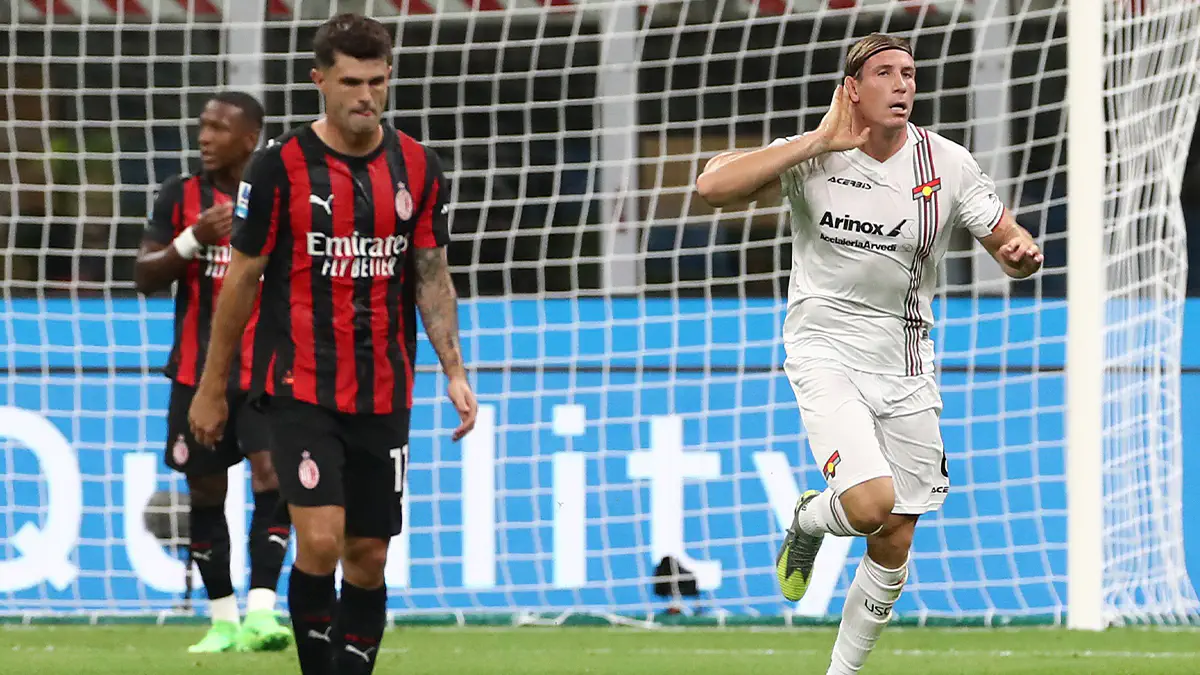


1️⃣ Match Context
March fixtures in Serie A rarely feel neutral, and this one carries two different kinds of pressure.
For Cremonese, hosting Milan isn’t just a glamour spot — it’s a survival-type checkpoint. Games against the league’s elite are where underdogs either steal oxygen (a point feels like a win) or get dragged into a spiral if they concede early and the stadium deflates. The psychological task is staying in the match long enough for belief to become a factor.
Milan, meanwhile, arrive with a very different weight: expectation. This is the kind of away fixture where title-chase or top-four ambitions get quietly taxed. It’s also a classic “sandwich” risk in the calendar — whether Milan have Europe around this date or not, the mentality is similar: can they play with the same intensity against a low-block opponent on a smaller stage?
That tension shapes the betting angle. The market typically prices Milan as if quality automatically converts into three points. But matches like this are often decided by tempo control and shot selection discipline, not brand power.
2️⃣ Form & Advanced Metrics
Cremonese’s recent performances tend to look better in structure than in scoreline. They’re rarely a team that racks up shot volume — instead, they aim to keep games narrow by compressing central space and forcing opponents wide. The trade-off is obvious: when you concede territory, you concede set-piece volume and second balls. You don’t need to allow ten clear chances to lose 0–1; you just need one lapse at the back post.
The numbers indicate a fairly typical underdog profile: low-to-moderate shot creation, but high variance in shot quality conceded. When their block is intact, opponents settle for lower-value crossing and edge-of-box looks. When the distances stretch — especially after losing possession in midfield — opponents get into the highest value zone: central channel, 12–16 meters out, with time to pick a corner.
Milan’s metrics usually tell a more stable story. They don’t rely on chaotic chance creation; they build repeatable pressure. Their attacking value comes from three ingredients:
- Territory control (sustained time in the final third rather than isolated counter-attacks).
- Shot quality more than shot spam (a higher share of attempts from inside the box, often created by cutbacks or slips into the half-spaces).
- Pressing that forces long clearances (PPDA is the key lens here: a lower PPDA means Milan allow fewer opponent passes before attempting defensive action, which usually pins weaker teams back).
But there’s a nuance: Milan can occasionally turn sterile away from home when the opponent refuses to open central lanes. When the match becomes “crosses vs clearances,” the underdog’s win condition improves. In those games Milan’s xG can be solid but slow-building — and slow-building increases draw equity because one random deflection or set-piece changes everything.
Home/away dynamics matter here. Cremonese at home typically play with slightly more courage early — a few higher presses, a few more midfield duels — then drop into a mid/low block after the first wave. Milan’s away pattern is often the opposite: patient control early, then a more aggressive squeeze after halftime if the game state demands it.
3️⃣ League Table Snapshot
| Team | Position | Points | GD |
|---|---|---|---|
| Cremonese | — | — | — |
| Milan | — | — | — |
Takeaway: even without the live numbers embedded, the structural reality is clear: Milan are priced and judged as a team that should convert control into results, while Cremonese are judged on whether they can keep matches low-event. That difference is exactly where betting value can hide — because low-event matches inflate draw probability and reduce the margin for “superiority” to show up.
4️⃣ Head-to-Head Analysis
The most useful way to read this matchup isn’t old scorelines — it’s whether Milan historically manage to access the central corridor against Cremonese-type blocks. When Milan face compact sides, the game becomes about half-space occupation and third-man runs, not raw possession share.
If recent meetings have leaned Milan, it’s usually because they forced the underdog’s fullbacks into constant 1v2s: winger holds width, fullback underlaps, and the near-side midfielder pins the inside channel. If meetings have been closer than expected, it’s typically because the opponent kept Milan outside and survived the first goal threat.
Psychology also matters: underdogs often grow into these games if they avoid conceding in the first 20–25 minutes. Milan know that too — and that can create a slight rush in decision-making if the breakthrough doesn’t come early.
5️⃣ Tactical Breakdown (Core Section)
Who dictates tempo?
Milan will dictate the ball. The question is whether they dictate the speed. Cremonese’s goal is to slow Milan’s circulation and turn the match into a sequence of set plays: throw-ins, corners, free kicks, and long clearances. That’s how you level the talent gap.
Overload zones and the key corridor
Milan’s most consistent route to quality chances is the half-space-to-byline pattern: receive between lines, draw a center-back step, then release into the channel for a cutback. Cremonese’s defensive priority will be to protect the cutback lane — meaning their wingers must track deeper than they want to, and their midfield line must slide with discipline.
If Cremonese fail to keep compactness, Milan won’t need many shots. They’ll need a few clean ones.
Which flanks are exposed?
For Cremonese, the danger is the far post. When they defend deep, the weak-side fullback can get pinned by Milan’s wide player, while Milan’s opposite-side runner attacks the back post on the blindside. That’s a repeatable pattern against deep blocks and often produces high-value headers from close range.
For Milan, the exposure is transitional: if their fullbacks push high and their counter-press isn’t sharp, Cremonese only need one direct ball into the channel to create a corner or a dangerous second phase. They don’t need to “outplay” Milan — they need to weaponize Milan’s attacking shape.
Midfield control battle
This is less about possession percentage and more about second balls. Cremonese will accept losing the first duel if they can win the next one. Milan must keep their spacing tight enough to prevent those loose-ball counters. If Milan’s midfield sits too high, Cremonese can hit the space behind. If Milan’s midfield sits too deep, the match becomes slow and cross-heavy.
Pressing triggers and buildup resistance
Milan’s press is most effective when it’s synchronized: force play wide, trap near the touchline, recover in the final third. Cremonese’s best resistance is simple: avoid risky central passes, go long early, and fight for territory. If they insist on building short under pressure, Milan’s PPDA advantage turns into direct xG.
Set-piece dynamics
Set pieces are Cremonese’s equalizer. Deep blocks invite corners; corners invite chaos. Milan, as the stronger side, can’t allow a match like this to drift into “one corner decides it.” Clean defending and avoiding unnecessary fouls in wide areas matter more than usual.
6️⃣ Odds & Market Evaluation
| Market | Selection | Odds | Implied Probability |
|---|---|---|---|
| 1X2 | Cremonese | 6.00 | 16.7% |
| 1X2 | Draw | 4.10 | 24.4% |
| 1X2 | Milan | 1.55 | 64.5% |
According to our calculations, the betlabel.games team evaluates this closer to 63% Milan, 22% draw, 15% Cremonese after accounting for game-state volatility and the underdog’s low-event strategy.
Market read: the Milan win price is fair rather than generous. The more interesting conversation is whether the market underestimates draw equity and the likelihood of a slower, lower-tempo script — especially if Milan rotate or start conservatively.
7️⃣ The Hidden Edge (Mandatory Section)
There’s a structural nuance here: Milan’s dominance often shows up in territory and shot suppression, but not always in early goals. When the favorite doesn’t score first, the match shape changes dramatically — the underdog’s block gets deeper, time-wasting becomes rational, and the favorite’s shot profile can drift toward lower-quality wide attempts.
The market is often slow to adjust to that specific kind of favorite: a team that is “in control” but not necessarily “creating chaos.” Control lowers opponent xG, yes — but it can also lower total event volume, which boosts draw probability. That’s why some Milan-away games look comfortable on film and still finish 0–1 or 1–1.
Add in a second hidden factor: set-piece gravity. A compact home side that wins corners and wide free-kicks doesn’t need open-play xG to threaten. One scrambled moment can erase 70 minutes of Milan control.
This is not an anti-Milan stance. It’s a reminder that certain matchups compress variance into a few moments — and those moments are where underdogs live.
8️⃣ Final Prediction
Main Pick: Milan -0.75 Asian Handicap
Alternative: Under 3.0 Goals (Asian Total)
Risk Level: Medium
Why these angles hold up:
- Milan’s territory control and pressing should keep Cremonese’s shot volume low, which is the base condition for an away win even in a slow match.
- Cremonese’s win condition is narrow: they need either set-piece conversion or a rare transition goal. That’s possible, but not the most probable script.
- The game shape points to fewer high-tempo phases. If Milan lead, they manage. If it’s level late, Cremonese will protect the point. Both paths lean toward a lower total.
Milan remain the correct side in the 1X2 logic, but the sharper betting approach is to respect the low-event design of the matchup — and price your exposure accordingly.





Leave a Reply