


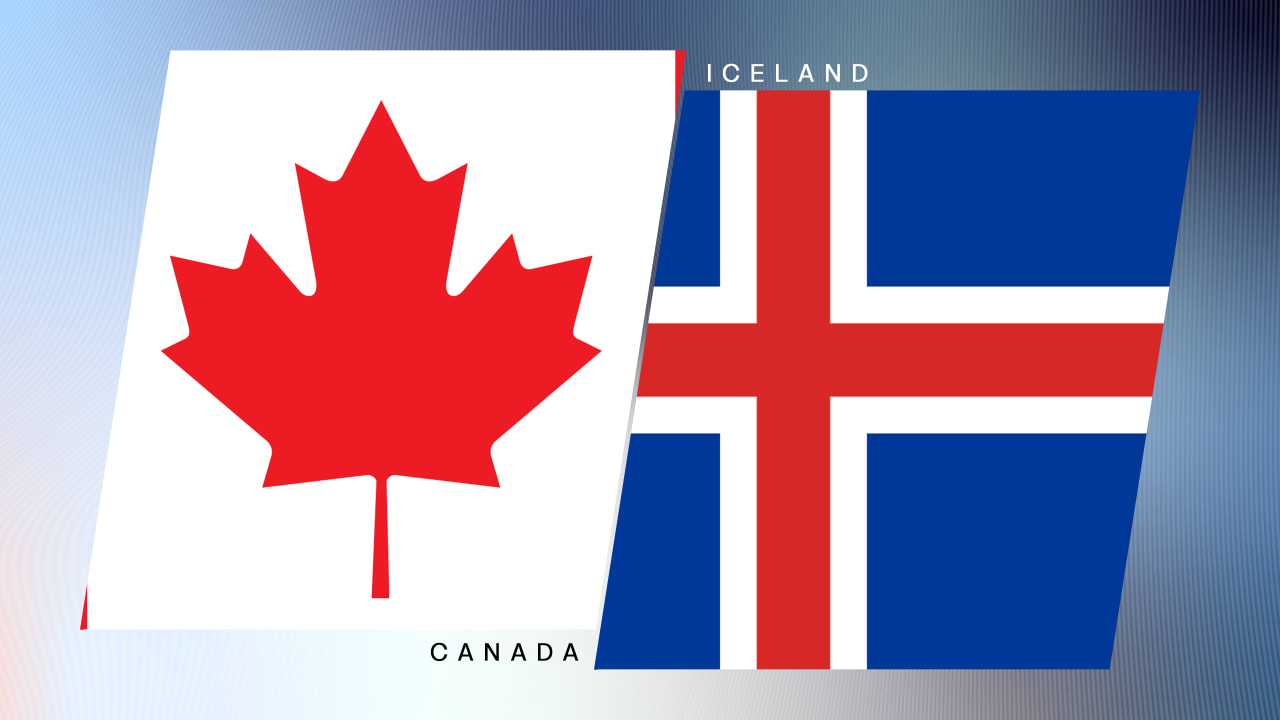


1️⃣ Match Context
Friendlies can be noisy, but this one isn’t meaningless. Canada are in the phase where performance consistency matters as much as results: they’re trying to harden patterns under pressure, not just win a one-off. Iceland, meanwhile, are typically treated by markets as a “known quantity” — compact, direct, physically honest — but they’re also in a cycle where squad turnover and identity tweaks can swing their level sharply from window to window.
That creates a particular psychological dynamic. Canada have the heavier expectation load at home: they’re the side with higher-ceiling talent and a fan base that increasingly expects control, not chaos. Iceland arrive with the classic underdog freedom: fewer external demands, more willingness to accept long spells without the ball, and a strong comfort zone in turning the match into a sequence of duels and set-piece moments.
Schedule and fatigue also matter in March windows. You’re pulling players from different competitive rhythms: some are mid-season sharp, others are coming off heavy club minutes or managing knocks. In that context, structure usually beats inspiration. The team that can keep its spacing and rest defence intact after rotations wins the “friendly within the friendly”: the second-half game state.
2️⃣ Form & Advanced Metrics
Canada’s recent profile has generally leaned toward proactive football: more territory, more ball progression, and a higher share of shots — but with occasional volatility when transitions are poorly managed. The key isn’t raw shot volume; it’s where those shots come from. Canada can manufacture high-value chances when they break lines cleanly and arrive in the box with multiple runners. When they don’t, the attack becomes shot-heavy but not chance-rich: a lot of efforts from the edges of the box or rushed finishes after wide deliveries.
Defensively, the numbers indicate a side that can press and squeeze games — but the trade-off is exposure if the first wave is bypassed. PPDA (passes allowed per defensive action) is a useful lens here: Canada’s better performances come when they reduce opponents’ passing sequences early, forcing direct clearances and winning second balls. When their PPDA rises, it usually isn’t “tactical patience” — it’s a sign they’ve lost the jump in midfield, and opponents can progress into the half-spaces more comfortably.
Iceland’s underlying shape trends are typically the inverse. They’re happy to concede territory if it protects the centre. Their shot suppression tends to be about shot quality control: allowing attempts from wider or deeper zones and trusting the box to remain crowded. The downside is obvious: if the wide defender gets isolated, the second line is forced to shift, and the far-post zone opens for cutbacks — the exact chance type that modern xG models punish.
Tempo is the hidden layer. Canada want games played at a higher pace: quick restarts, vertical carries, early entries. Iceland tend to slow the match, reset shape, and live off moments. That clash is why friendly matchups like this can look comfortable for 60 minutes and then suddenly swing on one transition or one set-piece.
3️⃣ League Table Snapshot
There’s no league table in an international friendly, but there is a competitive “table” in the background: squad hierarchy and pathway pressure. Here’s the practical snapshot that matters for this camp.
| Team | Status in window | Primary objective | Pressure level |
|---|---|---|---|
| Canada | Home, favored | Control + chance creation | High (expectation + identity) |
| Iceland | Away, underdog | Compactness + transition threat | Moderate (selection battles) |
Takeaway: This game is less about a “must-win” and more about whether Canada can translate territorial dominance into clean, repeatable chance quality — and whether Iceland can resist without giving up premium cutback zones.
4️⃣ Head-to-Head Analysis
Head-to-head history in international football often misleads because squads turn over and contexts change. What’s more useful is the stylistic repetition: Canada typically look best against teams that either press high (opening space behind) or defend deep but narrow (allowing switch-and-attack patterns). Iceland, by habit, defend with enough width to protect the immediate flank but try to keep the central lanes crowded. That structure can bait Canada into crossing volume — and crossing volume without second-wave occupation is how favourites waste good field position.
If we look deeper, the matchup tends to hinge on one question: can Canada create central access before the ball goes wide? When they do, the wide play becomes a finishing action (cutback, low cross). When they don’t, the wide play becomes a hopeful action (lofted deliveries against set defences). Iceland are comfortable with the second scenario.
5️⃣ Tactical Breakdown (Core Section)
Who dictates tempo?
Canada will try to set the rhythm early: higher defensive line, quicker restarts, and early pressure to lock Iceland into their own half. Iceland’s plan is to survive the first 20 minutes, lower the emotional temperature, and force Canada into longer possessions where impatience creeps in. In friendlies, the first goal matters even more than usual because substitutions can fracture structure. If Canada score first, they can play the game in transitions. If Iceland keep it level, Canada often end up pressing the clock, not just the opponent.
Overload zones and the key flank
The most valuable attacking pattern for Canada is the half-space entry followed by a low ball across the face — not the early aerial cross. Iceland’s defensive scheme typically tries to deny the half-space receive. That means Canada need either (1) midfield rotations to create a free man between the lines, or (2) wide overloads to force Iceland’s block to slide, then attack the gap behind the shifting midfielder.
Watch for Canada’s fullbacks/wingbacks stepping high to pin Iceland’s wide midfielder. If that pin works, Iceland’s wide defender is isolated 1v1. If it doesn’t, Canada’s buildup can become predictable, and Iceland can time pressing triggers when the ball travels to the touchline.
Midfield control battle
This is where friendlies are won quietly. Canada’s best versions control second balls: they compress the pitch, win loose clearances, and keep Iceland defending in waves. If Canada’s midfield spacing is too aggressive, Iceland’s direct outlet becomes dangerous — not because of long-ball artistry, but because one knockdown turns into a broken-structure sprint.
For Iceland, the midfield job is ugly but clear: screen the central lane, make Canada play around the block, then jump on any backwards pass as a pressing trigger. If their first jump is late, Canada will settle into rhythm and start generating higher-quality shots.
Transition vulnerability
Canada’s risk is the classic proactive-team problem: if the attacking rest defence isn’t set, one lost dribble or one loose pass into a crowded zone can open a direct counter. Iceland don’t need many of these moments — two or three clean transition entries can equal a match’s worth of xG in a friendly setting.
Set-piece dynamics
Iceland remain structurally dangerous on dead balls. Even if open-play chance creation is limited, they can produce real scoring probability through corners and wide free kicks. Canada must avoid cheap fouls in wide areas and defend the second phase cleanly — friendlies often get sloppy here because of rotation and communication gaps.
6️⃣ Odds & Market Evaluation
| Market | Selection | Odds | Implied Probability |
|---|---|---|---|
| 1X2 | Canada | 1.72 | 58.1% |
| 1X2 | Draw | 3.70 | 27.0% |
| 1X2 | Iceland | 5.40 | 18.5% |
Note: implied probabilities above are raw (not margin-adjusted). The bookmaker overround is present, so true “market” probabilities are slightly lower per outcome once normalized.
The betlabel.games team evaluates this matchup closer to a Canada win around the mid-50s, with draw chances meaningful because Iceland’s structure compresses shot quality and friendlies amplify second-half variance. That creates a subtle tension: Canada are rightly favored, but the price can become thin if the market assumes full competitive intensity and stable lineups.
7️⃣ The Hidden Edge (Mandatory Section)
The market often underrates draw equity in friendlies when a favourite has territorial dominance but inconsistent shot quality. Canada can dominate field tilt — lots of time in the final third, plenty of entries — yet still produce a chance map that’s more “quantity” than “clarity” if Iceland keep central lanes closed. That’s how you get matches that feel one-sided but remain 0–0 or 1–1 deep into the second half.
There’s also a substitution angle that is consistently underpriced. Coaches use March friendlies to test combinations, not to protect a lead with perfect game management. That means: late-game structure breaks. If Canada rotate their midfield spine, their rest defence can loosen, and Iceland’s most valuable moments (set-pieces, counters, second balls) increase disproportionately.
Finally, finishing variance cuts harder in this kind of matchup. When underdogs generate fewer shots, each shot tends to be higher leverage (transition, set-piece). One Iceland header from a corner can swing the entire bet landscape, even if Canada “win the game” on underlying play. That makes certain Canada prices less attractive than they look at first glance.
8️⃣ Final Prediction
Main Pick: Iceland +1.0 Asian Handicap
Alternative: Under 3.0 Goals (Asian total)
Risk Level: Medium
Why these angles fit the matchup:
1) Structural resistance: Iceland’s compact block is designed to reduce central shot quality, which keeps them live even when Canada dominate territory.
2) Friendly volatility: rotations and experimental lineups inflate late variance and increase draw probability — a key tail risk against backing Canada at a relatively short price.
3) Game-state logic: Canada can win without running away with it; Iceland’s set-piece and transition threat gives them realistic paths to keep the scoreline within one.







Leave a Reply