

1️⃣ Match Context
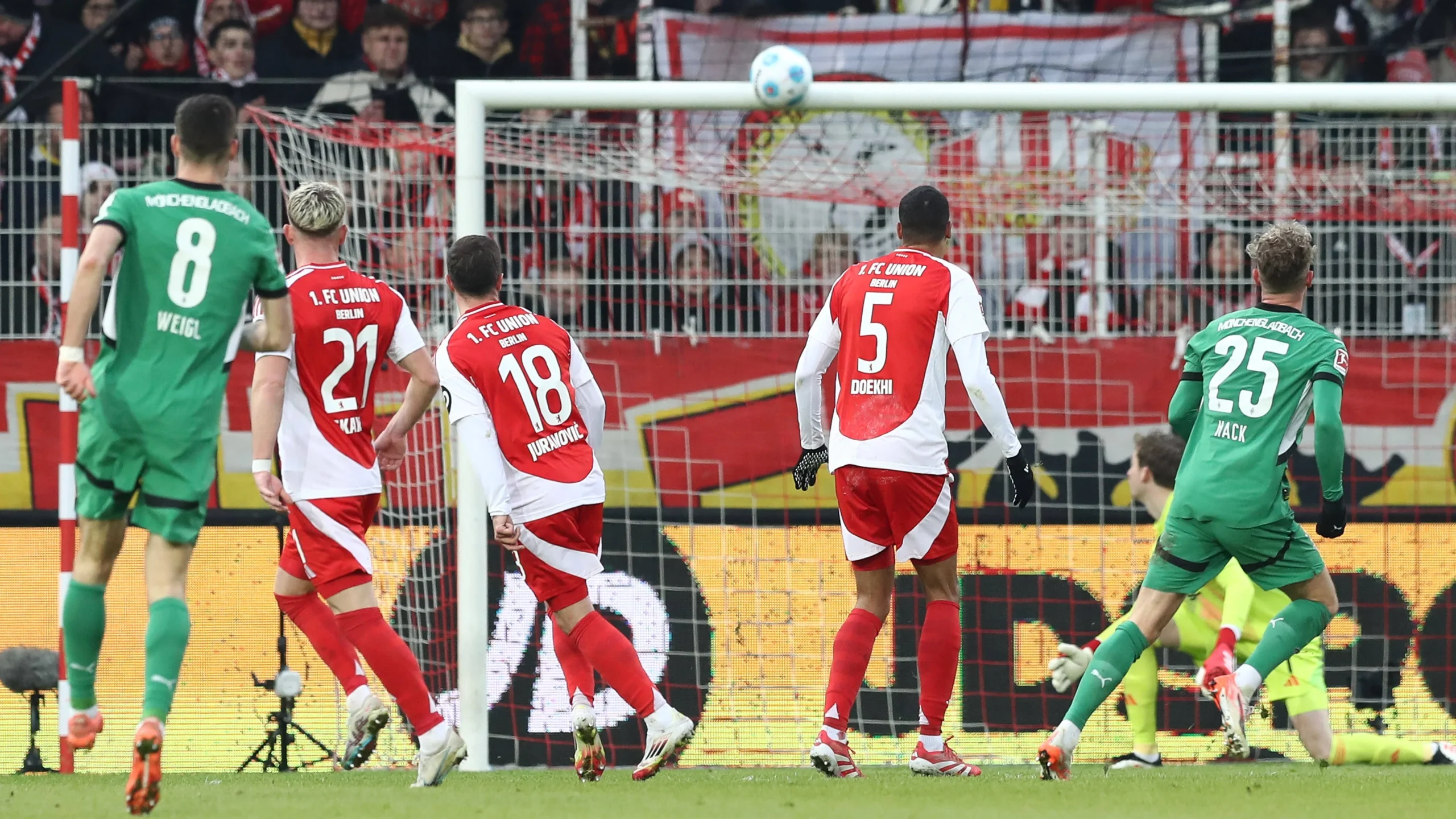
Late February in the Bundesliga is where “fine margins” stops being a cliché and becomes a weekly reality. Borussia Mönchengladbach vs Union Berlin lands in that exact pressure pocket: two sides typically living around the European chase / top-half security line, where one win can swing the narrative from survival management to ambition.
For Gladbach, this is a home fixture that has to pay rent. Their best spells this season have come when they can set the emotional temperature early at Borussia-Park, get the crowd into the game, and force opponents to defend deeper than they want. But that comes with risk: their game state can flip quickly when transitions go against them.
Union, meanwhile, are built for these moments. They are comfortable making the match ugly, slowing the rhythm, and turning it into a sequence of set-pieces, second balls, and repeatable patterns. The psychological edge in games like this often belongs to the team that doesn’t need aesthetic control — and Union rarely do.
Schedule pressure also matters here. At this point of the calendar, legs are heavy and squads look thinner. That tends to punish high-tempo, high-sprint teams, and reward those with compact spacing and clear defensive reference points. This match is less about glamour and more about who blinks first.
2️⃣ Form & Advanced Metrics
Gladbach’s underlying profile typically reads like a team with attacking intent but a defensive floor that can suddenly collapse. The numbers indicate they can build decent expected goals through volume — especially when their wingers can receive facing forward — but the shot quality can swing wildly depending on how cleanly they progress through midfield. When the build-up gets pressed into lateral circulation, Gladbach often settle for lower-value shots from wider zones.
Defensively, their biggest issue isn’t always how many shots they concede — it’s where those shots come from. When their structure stretches, opponents can access central lanes too easily, creating higher-quality chances even without huge shot volume. That’s the kind of profile that produces volatility: a match can look “controlled” for long spells, then break open on two or three decisive moments.
Union’s data usually tells a different story. They are not designed to win the xG beauty contest in open play, but they are good at keeping opponents away from clean central shots. Their shot concessions often come from distance or wide areas, and they are comfortable allowing sterile possession if the back line stays protected.
Pressing intensity is the key contrast. If we look deeper at PPDA (passes per defensive action), Gladbach tend to have phases of aggressive engagement — they want to force a rushed pass and attack quickly. Union are more selective. They’ll press on triggers (a poor touch, a backwards pass, a fullback receiving under pressure), but otherwise they sit in compact blocks and make you play in front of them. This shapes the tempo: Gladbach want pace and momentum; Union want repeatability and control through denial.
Home/away dynamics sharpen it further. Gladbach at home generally push more numbers forward and play with more vertical intent. Union away are comfortable absorbing that and playing for territory swings rather than sustained possession. The match becomes a question: can Gladbach turn pressure into high-quality chances — or will it just inflate shot count without real bite?
3️⃣ League Table Snapshot
| Team | Position | Points | Goal Diff |
|---|---|---|---|
| Borussia Mönchengladbach | — | — | — |
| Union Berlin | — | — | — |
Takeaway: without live standings embedded, the strategic reading still holds: both clubs typically operate in a results band where one match can shift risk tolerance. In these fixtures, you often see the first 20 minutes played with exaggerated caution — not because teams lack ideas, but because the downside of conceding first is brutally high for their game models.
4️⃣ Head-to-Head Analysis
Head-to-heads between these types of sides rarely come down to “who is better” and more to “whose structure travels.” Union’s approach tends to travel well: compact block, defend the box, create pressure moments through set-pieces and direct attacks. Gladbach’s approach is more sensitive to opponent style — they look far better against teams that leave them space in midfield than against sides that deny central access and force wide crossing.
The recurring pattern in this matchup is often tactical friction: Gladbach can have more of the ball, but Union control the meaning of the ball. If past meetings looked tight, it usually aligned with underlying mechanics rather than randomness — Union are good at dragging opponents into low-margin games where one set-piece or transition defines the outcome.
5️⃣ Tactical Breakdown (Core Section)
Who dictates tempo?
Gladbach will try to set an early tempo spike: win the ball high, attack before Union’s block settles, and force the match into a sequence of fast possessions. Union will attempt to “cool” those phases by slowing restarts, winning fouls, and keeping the game in structured pockets.
If Gladbach don’t score during their early high-energy stretch, the match often tilts toward Union’s preferred environment — fewer transitions, more duels, more set-piece volume. And that’s where the value of game control shows up: not in possession, but in repeatable outcomes.
Overload zones and spacing
Gladbach’s most dangerous moments generally come when they can overload one side to create a diagonal switch into the far half-space — the receiver arrives facing goal, and suddenly Union’s block has to turn. But Union’s defensive spacing is designed to prevent that exact “third-man” reception. They will allow circulation outside, but protect the interior like it’s non-negotiable.
So the key question becomes: can Gladbach’s fullbacks and wide players create quality from wide zones, not just crosses? Low cutbacks and delayed passes into the penalty spot area are higher-value than floated deliveries. Union are comfortable defending the latter all day.
Midfield battle: progression vs denial
This game will be decided by the midfield’s ability to resist pressure and play forward. When Gladbach’s pivots receive under pressure and are forced into safe sideways passes, their attack becomes predictable. Union’s block then steps higher with confidence because they know the next pass is going wide, not splitting them.
Union’s midfield, on the other hand, is built to compete in second-ball phases. They may not progress with elegant combinations, but they can repeatedly turn half-chances into territory — and territory into set-pieces.
Pressing triggers and build-up resistance
Gladbach pressing high is a double-edged sword. If they win the ball, they create immediate high-value shots. If they don’t, they expose the exact space Union want to hit: channels behind the first line, with direct balls into runners or target-man layoffs into the next wave.
Union’s build-up under pressure is rarely about playing through — it’s about playing over with purpose. That reduces their error rate in dangerous zones, which is why their defensive metrics can look stable even when they don’t dominate possession.
Transition vulnerability
There’s a structural nuance here: Gladbach can be vulnerable after their own attacks. When they commit numbers forward and the counter-press doesn’t bite, opponents can attack them in the first two passes — especially into the half-spaces. Union are not a pure counterattacking team in volume, but they are ruthless when the trigger appears.
Set-piece dynamics
Union’s set-piece threat is not just “they’re tall.” It’s the repeatability: they win the first contact often enough to keep sequences alive. Second balls, recycled crosses, and box chaos become a feature. If Gladbach concede unnecessary fouls in wide areas, they’re inviting Union’s strongest weapon into the match.
6️⃣ Odds & Market Evaluation
| Market | Odds | Implied Probability |
|---|---|---|
| Borussia Mönchengladbach win | 2.25 | 44.44% |
| Draw | 3.30 | 30.30% |
| Union Berlin win | 3.30 | 30.30% |
Market read: those implied probabilities add up to more than 100%, reflecting bookmaker margin. Strip the vig out and you get a tighter picture: Gladbach still a narrow favourite, but not dominant.
The betlabel.games team evaluates this closer to a near-even contest than the home-favourite label suggests, mainly because Union’s away structure compresses match variance and keeps the draw very live. The edge here is not about calling a single outcome with certainty — it’s about pricing the game state: a tight match with limited clean chances.
7️⃣ The Hidden Edge (Mandatory Section)
The market often overpays for “home initiative” against Union. Gladbach can look better on the eye early — more possession, more territory, more entries. But Union are one of the league’s best at turning that into low-quality production.
If we look deeper, this is where shot quality matters more than shot count. Gladbach can rack up attempts from wide or semi-blocked positions, inflating perceived dominance. Meanwhile, Union’s best moments are fewer but can be cleaner: a transition into the channel, a cutback after a direct ball, or a set-piece second phase where structure breaks down.
There’s also a psychological pricing lag: bettors remember Union as a “difficult opponent,” but markets still tend to shade toward the home team when the home side is proactive. Against Union, proactivity can be a trap — it increases exposure to the one thing they do extremely well: punishing disorganization.
So the hidden edge is this: Union’s style reduces the probability of Gladbach turning pressure into decisive advantage. That keeps draw-heavy angles and Union-protected lines more attractive than the pure 1X2 home win.
8️⃣ Final Prediction
Main Pick: Union Berlin +0.5 (Asian Handicap)
Alternative: Under 3.0 Goals (Asian Total)
Risk Level: Medium
Why:
1) Structural matchup: Union’s compact denial of central zones tends to force Gladbach into lower-value wide production, which reduces the home side’s ability to separate.
2) Game-state logic: if Gladbach don’t score early, the match naturally drifts into Union’s preferred tempo — slower, duel-heavy, set-piece driven — which keeps the draw and away cover live.
3) Transition and set-piece leverage: Union need fewer moments to create danger because their best chances come from repeatable patterns (direct attacks and dead-ball phases), while Gladbach’s defensive stability can fluctuate when spacing stretches.
No guarantees — but on probability and structure, the value sits with Union not to lose, and a total that respects how these games often get squeezed.



Leave a Reply