


1️⃣ Match Context
This is the type of Bundesliga fixture that looks routine on the calendar and turns into a pressure test in real time.
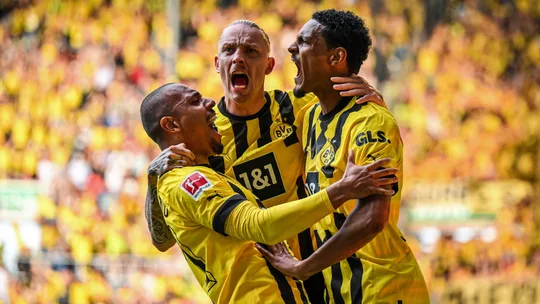
Borussia Dortmund at home means expectation, not just advantage. The Signal Iduna Park crowd doesn’t negotiate with game state: if the first 20 minutes aren’t dominant, the temperature rises quickly. By mid-March, that psychological layer matters because points don’t just shape the table — they shape the narrative heading into the final run-in.
Augsburg arrive with a different kind of pressure. Their season is often defined by survival math and matchup pragmatism: take what the game gives you, avoid chaotic scorelines, and hunt the moments that swing away fixtures into points. Against Dortmund, that means accepting long stretches without the ball and treating transitions and set-pieces like premium assets.
Scheduling dynamics also tilt the mental game. Dortmund’s spring weeks tend to be congested, and even when rotation is available, rhythm becomes fragile. In these spots, the favorite is often “good enough” rather than ruthless — and markets sometimes price ruthlessness as a default.
2️⃣ Form & Advanced Metrics
Dortmund’s recent profile is typically built on territory and shot volume, but the quality of those shots is the real tell. When they’re at their best, the attack isn’t just crossing volume or long-range attempts — it’s repeated access to the half-spaces, cutbacks, and second-phase shots inside the box. That’s when xG climbs in a sustainable way rather than being padded by low-probability efforts.
Defensively, the volatility tends to come from how they concede rather than how often they allow shots. Dortmund can hold strong field tilt and still leak high-value chances if their rest defense is stretched: fullbacks high, midfield spacing too ambitious, and one vertical pass turning possession dominance into a footrace. That’s why their xGA can look “fine” while the actual concession pattern feels dangerous.
Augsburg’s form usually reads like a team that lives on game management. They don’t need huge possession shares to be competitive; they need the match to stay within a narrow range of states. Their shot profile is often asymmetric: fewer shots overall, but a meaningful share coming from transitions, second balls, and set-piece sequences — situations where a mid-table underdog can generate high-quality looks without sustained buildup.
Pressing intensity is where the mechanics get interesting. Dortmund’s high press is rarely about constant sprinting; it’s about triggers — a slow center-back touch, a forced back pass, a fullback receiving under pressure. When their PPDA (passes allowed per defensive action) is low, it reflects an organized attempt to win the ball higher and compress the pitch. Augsburg generally prefer a more compact mid-block and selective pressure, meaning their PPDA can be higher without necessarily being passive — it’s deliberate spacing to protect central zones.
Home/away splits matter here. Dortmund at home usually sustain higher pace and territory control, but that can also increase transition exposure. Augsburg away often accept low field tilt, yet they can be stubborn if they defend the box well and avoid cheap fouls in wide areas.
3️⃣ League Table Snapshot
| Team | Position | Points | GF | GA | GD |
|---|---|---|---|---|---|
| Borussia Dortmund | — | — | — | — | — |
| Augsburg | — | — | — | — | — |
Takeaway: even without the exact table numbers, the structural expectations are clear: Dortmund are priced like a top-side chasing objectives; Augsburg like a team whose path to points is variance management. The key is whether Dortmund’s dominance converts into clean chances, or whether Augsburg keep the game in that uncomfortable “one moment decides it” zone.
4️⃣ Head-to-Head Analysis
This matchup often repeats a familiar shape: Dortmund control territory, Augsburg try to survive the first wave, and the game hinges on whether Augsburg can escape the press into open grass.
Psychologically, Dortmund can fall into a trap against compact opponents: forcing the final ball too early, turning possession into predictability, and allowing the underdog to grow into the match. Augsburg don’t need to “outplay” Dortmund; they need to stay connected, keep central lanes protected, and wait for Dortmund’s spacing to overextend.
When past meetings have swung heavily toward Dortmund, it’s usually because they scored first and turned the game into a pressing carousel — Augsburg chasing, distances opening, and chances stacking. When Augsburg have stayed competitive, it’s typically because the first goal didn’t arrive quickly and Dortmund’s shot selection drifted away from high-quality zones.
5️⃣ Tactical Breakdown (Core Section)
Who dictates tempo?
Dortmund will dictate possession and field position. The real question is tempo within possession: do they move Augsburg laterally until gaps appear, or do they play at a high pace that creates their own transition risk? Augsburg’s preferred tempo is slower, more segmented, with breaks for restarts and dead balls. If Augsburg can turn the game into a series of short phases, Dortmund’s fluency is easier to disrupt.
Overload zones and chance creation
Dortmund’s best route is the half-space: overload one side, pull Augsburg’s midfield line across, then attack the weak-side channel with a runner arriving for a cutback. Augsburg’s defensive priority will be to deny those cutback lanes and force shots from wider angles.
Watch for Dortmund’s wide players pinning Augsburg fullbacks. If Augsburg’s wingers drop too deep, Dortmund can lock them in and create a permanent territorial cage. If they stay higher to threaten transition, Augsburg risk exposing their fullbacks in 1v1s.
Midfield control and pressing triggers
The midfield battle is less about elegant buildup and more about second balls. Dortmund want to keep Augsburg under pressure after clearances, immediately recycling possession and sustaining attacks. Augsburg want to turn those clearances into structured exits — even if that means longer passes into channels followed by a compact reset.
Pressing triggers will revolve around Augsburg’s first pass out. If Dortmund can force Augsburg into predictable outlets, they can win possession in advanced zones and generate high xG shots without long possession chains. If Augsburg break the first line, Dortmund’s rest defense will be tested: center-backs defending large spaces, midfielders sprinting back toward their own goal.
Transition vulnerability
There’s a structural nuance here: Dortmund’s attacking shape can leave them vulnerable immediately after losing the ball, especially if both fullbacks are high and the No.6 is pulled toward the ball side. Augsburg don’t need many transition chances — they need two or three good ones. If they can isolate a Dortmund defender in open field, the shot quality spikes quickly.
Set-piece dynamics
Augsburg will view corners and wide free kicks as a primary scoring channel. Dortmund, in turn, must avoid cheap fouls in the wide corridors and must be clean on first contacts. On the other end, Dortmund’s set pieces can also matter because compact blocks often concede dead-ball volume even when they defend open play well.
6️⃣ Odds & Market Evaluation
| Market | Selection | Odds | Implied Probability |
|---|---|---|---|
| 1X2 | Borussia Dortmund | 1.45 | 68.97% |
| 1X2 | Draw | 4.80 | 20.83% |
| 1X2 | Augsburg | 6.80 | 14.71% |
Note: implied probabilities above are raw (they sum over 100% due to bookmaker margin).
According to our calculations at betlabel.games, Dortmund are rightly favored — but the price assumes a relatively smooth conversion of territory into goals. That’s the key risk. Against compact, transition-minded opponents, Dortmund can dominate and still end up in a one-goal game for long stretches.
If the market is offering Dortmund near the mid-1.40s, the edge on a straight home win is often marginal unless you strongly believe Augsburg’s transition threat is muted (personnel, fatigue, or tactical choice). Value hunting may be cleaner in derivatives that price match state better.
7️⃣ The Hidden Edge (Mandatory Section)
The market tends to anchor on Dortmund’s home dominance and Augsburg’s underdog label. But the slow-to-adjust angle is chance quality distribution rather than overall shot counts.
Dortmund can run up shot volume without necessarily generating the “right” shots if Augsburg successfully blocks the half-spaces and forces wide deliveries. That creates a familiar pattern: lots of territory, lots of attempts, but a lower share of high-value central chances. Bettors see domination; the xG texture can be less convincing.
On the flip side, Augsburg’s attack can look quiet for 70 minutes and still be “alive” because their best chances often arrive in the exact moments Dortmund are most exposed: after an overcommitted attack or a broken counterpress. This is where regression narratives appear — not necessarily finishing regression, but event timing regression. If Augsburg have recently failed to convert their limited high-quality transition looks, markets may treat them as toothless. Structurally, they are not.
That makes match flow critical. If Dortmund score early, the underdog’s plan collapses. If Dortmund don’t, Augsburg’s probability curve rises sharply as the game stays within one goal.
8️⃣ Final Prediction
Main Pick: Augsburg +1.5 Asian Handicap
Alternative: Under 3.5 Goals
Risk Level: Medium
Why this angle holds up:
1) Game-state resilience. Augsburg’s compact structure is designed to keep matches close, and Dortmund’s dominance doesn’t always translate into clean, repeated box entries against disciplined mid-blocks.
2) Dortmund transition exposure. The favorite’s attacking shape can create high-value concession moments even in games they control. Augsburg need few chances, not many.
3) Market pricing leans toward comfort. The 1X2 home price often bakes in a smoother win than the matchup mechanics suggest. Taking goals (or reducing total-goals exposure) aligns better with the tactical reality.
No guarantees here. But in a fixture where Dortmund should control the ball and Augsburg should control the variance, the handicap and the lower total tend to be the more rational side of the market.



Leave a Reply