
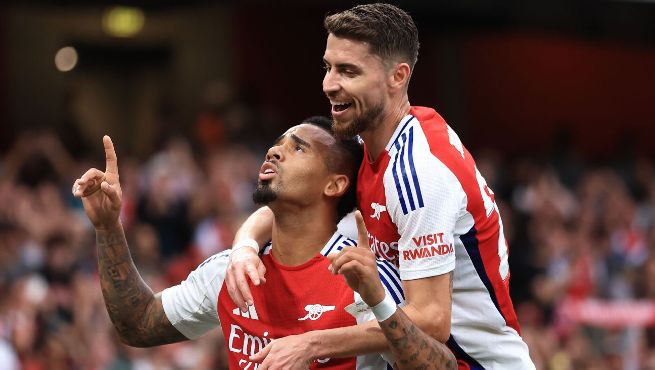


1️⃣ Match Context
Champions League nights don’t need extra narrative — but this one has it anyway. Bayer 04 Leverkusen host Arsenal with the kind of tie tension that changes decision-making: when to press, when to protect, and how much risk you can afford in build-up before a single mistake turns into a season-defining clip.
Leverkusen’s home leg carries a clear psychological instruction: impose their rhythm early, because allowing Arsenal to settle into controlled possession usually means the game drifts into Arsenal’s preferred tempo management. For Arsenal, the context is equally sharp: European away legs are less about dominance and more about surviving the opponent’s best punch without conceding game-state leverage.
There’s also the calendar reality. March is where rotation becomes a tax. The teams that can maintain intensity without breaking their structure usually win these ties. Fatigue doesn’t just reduce running; it slows decisions, widens pressing distances, and increases set-piece concessions — exactly the hidden margins that decide Champions League knockouts.
2️⃣ Form & Advanced Metrics
Leverkusen’s recent profile typically reads like a team that creates control through territory rather than chaos. Their best spells come when the ball lives in the opponent’s half — high field tilt, sustained pressure, and shot creation that’s less about volume from anywhere and more about repeated access to the edge of the box and the cutback lane. When they’re on it, the shot map is “inside the width of the posts,” not hopeful diagonals.
The trade-off is structural: when Leverkusen commit numbers high, their defensive rest shape matters more than their individual defenders. If the spacing behind the ball gets stretched, opponents don’t need many shots to generate value — they just need one clean transition into the central corridor. That’s where their xGA can spike in isolated phases even if the game looks comfortable.
Arsenal arrive with a different kind of efficiency. Their shot quality trend is usually stronger than their raw shot totals, because they’re good at turning possession into high-probability sequences: third-man runs, underlaps, and the kind of half-space entries that force low blocks to collapse. When Arsenal are in rhythm, the opponent’s box touches increase even without frantic pace.
Pressing intensity is the other key layer. Arsenal’s press, when fully switched on, isn’t just “high”; it’s coordinated — a lower PPDA profile in big matches because the triggers are clear: back pass to a full-back, poor body shape from the pivot, or a center-back receiving closed. Leverkusen can handle pressure when their build-up angles are clean, but if Arsenal lock the first pass and force play wide, Leverkusen’s possession can become sideways, then risky.
In short: Leverkusen can generate long waves of territory and chances at home, but Arsenal are built to punish the moments between waves. That combination usually produces volatility in game state rather than a quiet 1–0 type of script.
3️⃣ League Table Snapshot
| Team | Played | Points | GF | GA |
|---|---|---|---|---|
| Bayer 04 Leverkusen | — | — | — | — |
| Arsenal | — | — | — | — |
Analytical takeaway: In Champions League knockouts, “table form” is often noise — what matters is whether a team’s underlying process travels. Arsenal’s control-based chance creation generally travels better than teams relying on emotional momentum. Leverkusen’s home pressure travels less, but at the BayArena it becomes a real force multiplier.
4️⃣ Head-to-Head Analysis
Head-to-head data is only useful if it reveals a repeating matchup pattern rather than random outcomes. The relevant question here isn’t who won last time — it’s whether one side consistently wins the same zone.
If we look deeper, the structural pattern that tends to emerge in similar matchups is this: teams like Arsenal will concede harmless wide possession but protect the central lane; teams like Leverkusen will try to stretch that protection with rotations and quick switches into the half-spaces. When Arsenal succeed, Leverkusen’s attacks become crossing-heavy and easier to defend. When Leverkusen succeed, Arsenal’s midfield is forced into lateral defending, and that’s when late box arrivals create high-quality looks.
Key point: past meetings are less predictive than the tactical geometry — and this geometry suggests a game where central access is the currency.
5️⃣ Tactical Breakdown (Core Section)
Who dictates tempo?
Leverkusen want a high-tempo, high-territory match where the ball returns quickly after loss — press, re-press, and keep Arsenal pinned. Arsenal want a match where they can choose when to accelerate. That doesn’t mean slow; it means controlled. Expect Arsenal to accept short periods without the ball if it prevents Leverkusen from turning the game into a sequence of 30-second attacks.
Overload zones and the half-space battle
Leverkusen’s best route is usually creating overloads in the half-spaces and attacking the space just outside the box, then finishing with cutbacks. Arsenal’s defensive structure is designed to suffocate that. The likely battleground is the zone between Arsenal’s full-back and nearest center-back — the channel that decides whether attacks become high-value cutbacks or low-value crosses.
If Leverkusen can pin Arsenal’s wingers deep, Arsenal’s outlet becomes weaker and their counters start from too low. But if Arsenal’s wide players can receive on the turn, Leverkusen’s high line starts to look less like control and more like exposure.
Pressing triggers and build-up resistance
Arsenal’s press will target Leverkusen’s first phase: forcing play to the touchline and isolating the receiver. The moment Leverkusen’s pivot receives with his back to play, Arsenal can collapse and force a turnover. That’s where the shot quality flips: a turnover in the middle third is far more valuable than winning the ball near the corner flag.
Leverkusen’s counter is to play through the press, not around it — using quick bounce passes and vertical third-man combinations. If they succeed early, Arsenal’s press becomes more conservative, and the match shifts toward a positional game where Leverkusen’s territory can accumulate.
Transition vulnerability
This is the tie’s pressure point. Leverkusen’s attacking spacing can leave them vulnerable if possession loss happens with full-backs high and the midfield line stretched. Arsenal are one of the better teams at turning those moments into clean entries rather than speculative shots — the difference between 0.05 xG attempts and 0.25 xG chances.
Arsenal, however, aren’t immune. If they commit their full-backs and lose the ball while their midfield is separated, Leverkusen’s directness can create immediate box pressure. The first 15 minutes will matter: whichever team establishes “safe” rest defense will control the match’s volatility.
Set-piece dynamics
Champions League knockouts often swing on dead-ball margins. Leverkusen at home tend to generate sustained pressure, which increases corner volume. Arsenal’s set-piece structure is usually strong, but the risk is second balls: repeated clearances invite re-deliveries, and tired legs switch off on the third phase. If Leverkusen’s chance creation stalls in open play, set pieces become their alternative route.
6️⃣ Odds & Market Evaluation
| Market | Odds | Implied Probability |
|---|---|---|
| Bayer 04 Leverkusen win | 2.75 | 36.36% |
| Draw | 3.40 | 29.41% |
| Arsenal win | 2.55 | 39.22% |
The implied probabilities above sum beyond 100% due to the bookmaker margin. According to our calculations at betlabel.games, the fair line is closer to a near-coinflip with Arsenal slightly shorter, but not enough to justify a heavy away bias at this venue.
Market read: the current pricing is efficient on the headline 1X2, with only a marginal edge available. The better value is likely in derivative markets tied to game state — totals and draw-protection angles — because both teams’ structural strengths can coexist in the same match without producing a clear “winner” profile.
7️⃣ The Hidden Edge (Mandatory Section)
There’s a structural nuance here the market often underprices: second-phase fatigue and the quality of the “next” chance. In high-level ties, the first chance is rarely decisive; it’s the second or third attack after a clearance, when defensive shape is half-reset and midfield distances widen.
Leverkusen’s home territory spells tend to increase corner counts and sustained box pressure. Arsenal can defend the first ball well, but repeated defending drains sprint capacity — and that’s when transition defense softens. The result isn’t always more shots; it’s better shots at the end of long sequences.
On the other side, Arsenal’s controlled possession can mask a key risk: if they become too patient and allow Leverkusen to keep re-pressing, Arsenal’s turnovers happen closer to their own half. Those are the turnovers that produce the highest-value concession pattern. Recent scorelines often hide this because Arsenal can still win while conceding a small number of very high-quality chances. Over a single leg, that’s dangerous variance.
Why the market is slow to adjust: 1X2 odds heavily weight perceived team strength. But in this matchup, the swing factor is the volume of “broken-shape” moments — and those correlate more with tempo, fatigue, and rest defense than with brand power.
8️⃣ Final Prediction
Main Pick: Arsenal – Draw No Bet (DNB)
Alternative: Over 2.25 Goals (Asian Total)
Risk Level: Medium
Arsenal DNB makes sense because it aligns with the most repeatable edge in this matchup: Arsenal’s ability to create high-quality chances from controlled possession and punish transitions without needing to “win the territory battle.” It also respects Leverkusen’s home pressure by protecting against the draw — a realistic outcome when both sides can impose phases of control.
The totals angle is viable because the match is structurally set up for high-value moments even if shot counts don’t explode: Leverkusen’s attacking commitment creates transition windows; Arsenal’s press creates turnover chances. If the first goal arrives early, the game state can open quickly.
Probability logic: this is not a spot for certainty. It’s a spot for draw protection, acknowledging that both teams can look better for 30 minutes and still end up level.



Leave a Reply