

1️⃣ Match Context
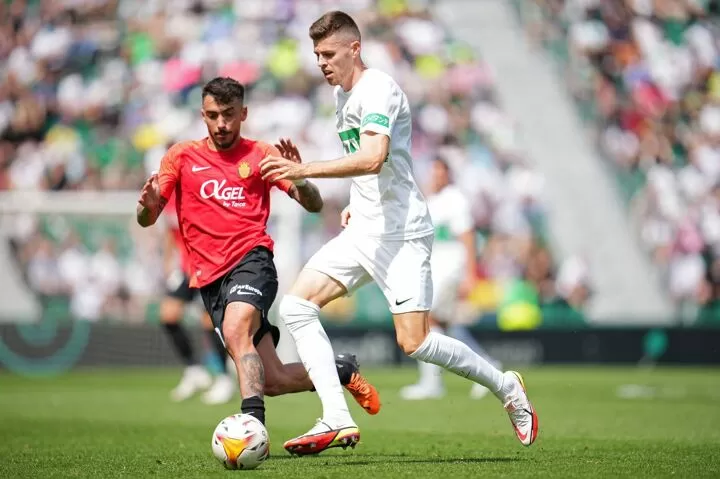
This is the kind of La Liga fixture that rarely feels neutral. Elche need points for oxygen; Mallorca need them for positioning. With the season sliding into its final third, matches like this stop being “three points available” and start being “three points that change the next eight weeks.”
For Elche, the pressure is direct: every dropped point feeds doubt, especially in home games where the crowd expects urgency. The psychological weight isn’t just about the table — it’s about game state. When a relegation-threatened side concedes first, the structure often collapses into emotional football: rushed crosses, broken rest defense, and transition concessions. That’s the trap.
Mallorca arrive with a different type of tension. Their season is usually defined by fine margins: strong defensive phases, low-scoring games, and a reliance on moments rather than volume. In March, those teams live and die on concentration — and on whether the market has caught up to their true ceiling.
Schedule context matters too. This mid-day kickoff often lowers tempo early, and both sides tend to accept long spells without the ball. If fatigue is present from recent congestion, it normally shows in pressing intensity and second-half distances — which is where Mallorca, in particular, can become conservative rather than assertive.
2️⃣ Form & Advanced Metrics
Elche’s recent performances typically look better in process than in headlines. The numbers indicate a team that can produce decent shot volume at home, but not always from premium zones. They’ll get attempts, they’ll get half-chances — yet too many of their shots are either rushed or blocked because the final action arrives a beat late.
That’s the key distinction: Elche often create “shots” rather than “shots that scare you.” Their expected goals profile tends to be dragged down by low shot quality — wide-angle efforts and crowded-box strikes — which keeps them in games but makes them vulnerable to a single clinical opponent moment.
Mallorca, by contrast, are built for control without dominance. They rarely chase chaotic games. Their attacking xG is usually modest, but the shot profile can be cleaner: fewer efforts, slightly better locations, and a heavier emphasis on set pieces and second balls. If Elche’s defensive concentration slips, Mallorca don’t need ten chances. They need two good ones.
Pressing tells you what kind of match you’re getting. Elche can press in short bursts at home, but their PPDA profile tends to spike as the match goes on — they start aggressive, then retreat into a mid-block. Mallorca are comfortable against that. They don’t need to win build-up beauty contests; they need to move the opponent and hit the space behind fullbacks when the block shifts.
Tempo patterns matter here. Expect lower overall pace, but higher volatility after the first goal. If Elche score first, they often become more direct rather than more controlled. If Mallorca score first, they’re excellent at turning the game into a sequence of small interruptions: slowed restarts, managed territory, and fewer open-field transitions.
3️⃣ League Table Snapshot
| Team | Position | Points | GD | Last 5 |
|---|---|---|---|---|
| Elche | 18th | 26 | -14 | L-D-W-L-D |
| Mallorca | 12th | 35 | -4 | D-W-D-L-W |
The table positions reflect two different realities. Elche are living week-to-week, where one win can lift them but one bad half can sink them. Mallorca’s mid-table slot is less about dominance and more about variance control: they avoid spirals, they keep games close, and that keeps the points ticking.
4️⃣ Head-to-Head Analysis
This matchup tends to repeat itself structurally. Mallorca are comfortable letting Elche have harmless possession in wide areas, then compressing the box and forcing low-quality deliveries. Elche, meanwhile, often struggle to generate central access against Mallorca’s layered block.
The psychological element is subtle but real: Mallorca don’t panic in tight away games. Elche can. When the game is 0–0 at 60 minutes, the home side often feels the urgency more sharply — which can lead to over-commitment and transition exposure. In past meetings, the pattern usually aligns with the underlying metrics: low scoring, few clear chances, and outcomes decided by either a set piece or a single defensive mistake.
5️⃣ Tactical Breakdown (Core Section)
Who dictates tempo?
Neither team wants a track meet. The first 25 minutes should be cautious, with Elche trying to establish territory and Mallorca trying to keep the ball out of central danger zones. If Mallorca can slow Elche’s early momentum, the game naturally tilts toward their preferred rhythm: fewer transitions, more structured defending, more patience.
The overload zone: Elche wide progression vs Mallorca box control
Elche’s most reliable progression route is often down the flanks. They’ll try to advance with fullbacks and wide midfielders, then deliver early balls or cutbacks. The problem is Mallorca’s defensive shape is designed to protect the “gold” area — the central corridor between the posts. They concede width, then collapse inside.
So the question becomes: can Elche create the extra pass that turns a cross into a cutback? If they can’t, it becomes a crossing contest, and Mallorca generally like those odds.
Midfield control: second balls decide it
This match is less about elegant midfield domination and more about who wins the messy possessions. Mallorca often build attacks through regains and second balls, especially when Elche’s attacks end with a blocked cross or a rushed shot. If Mallorca’s midfield unit can collect those loose balls and immediately find a forward pass, Elche’s rest defense is tested.
Elche’s risk is structural: when both fullbacks are high and the wingers are positioned for delivery, a single turnover can open a channel for Mallorca to attack the space behind the wide defenders.
Pressing triggers and buildup resistance
Elche’s pressing tends to be situational — they jump on poor first touches or backward passes. Mallorca’s response is usually pragmatic: direct balls into wide channels or into a forward’s feet to start a second-phase attack. That’s why PPDA alone doesn’t tell the whole story; what matters is whether Elche can sustain pressure without losing their spacing. If the press fails, Mallorca don’t need long possession sequences to hurt them.
Transition vulnerability
This is the game’s danger point. Elche will have spells in the final third; Mallorca will accept them. But every Elche attack that ends without a controlled reset increases the chance of a Mallorca transition. The betlabel.games team evaluates Mallorca as the more structurally stable side in these moments: they commit fewer bodies forward, and they’re more disciplined in covering central lanes.
Set pieces: the quiet leverage
In low-xG games, set pieces become a pricing inefficiency. Mallorca’s style naturally produces them: long throws, forced clearances, and territorial pressure without high shot volume. Elche, under pressure at home, can concede cheap fouls and corners when defending transitions. If this match stays tight, one set-piece sequence may be the difference between a 0–0 and a 0–1.
6️⃣ Odds & Market Evaluation
| Market | Selection | Odds | Implied Probability |
|---|---|---|---|
| 1X2 | Elche | 2.75 | 36.4% |
| 1X2 | Draw | 3.00 | 33.3% |
| 1X2 | Mallorca | 2.80 | 35.7% |
The 1X2 is priced like a coin flip with a heavy draw lean — which makes sense given stylistic overlap and expected low scoring. According to our calculations, Mallorca’s away win probability is slightly higher than the market’s implication, but the edge isn’t massive in pure 1X2 terms.
Where the market can misprice this fixture is in protecting the draw while underestimating Mallorca’s ability to control game state after going ahead. That’s why derivatives like Draw No Bet or Asian lines often carry cleaner value than chasing a tight 1X2.
7️⃣ The Hidden Edge (Mandatory Section)
There’s a structural nuance here: Elche’s urgency can become a tactical liability, not an advantage. Markets often treat relegation pressure as automatic intensity and therefore “home boost.” But intensity without control increases turnover frequency, and turnover frequency is exactly what Mallorca want.
If we look deeper, Elche’s attacking phases can be deceiving. They may post decent territory and field tilt — plenty of ball in the opponent half — but it’s often “outside possession,” not “inside possession.” That creates a pattern where they look on top, yet produce fewer high-quality shots than the match narrative suggests.
Mallorca’s edge is that they don’t need to win the territory battle. They need to win the moments: second balls, set pieces, and transitions into the channels. The market is sometimes slow to adjust to that because it rewards teams who appear proactive. Mallorca are comfortable being reactive — and in games like this, reactive can be optimal.
8️⃣ Final Prediction
Main Pick: Mallorca Draw No Bet (DNB)
Alternative: Under 2.25 Goals (Asian Total)
Risk Level: Medium
Why these angles hold up:
1) Game-state control. Mallorca are better equipped to manage a tight match, especially if they score first. Elche’s chasing structure can open transition lanes.
2) Shot quality profile. Elche can generate volume, but Mallorca are designed to force low-value wide shots and defended crosses. That reduces Elche’s conversion probability.
3) Set-piece leverage in low-event football. In a match likely defined by small margins, Mallorca’s ability to manufacture dead-ball situations gives them a repeatable scoring route even without high open-play xG.
No guarantees — just a probability stance. If the game stays level late, the draw is live. But structurally, Mallorca have the cleaner path to being the team that lands the decisive moment.




Leave a Reply