
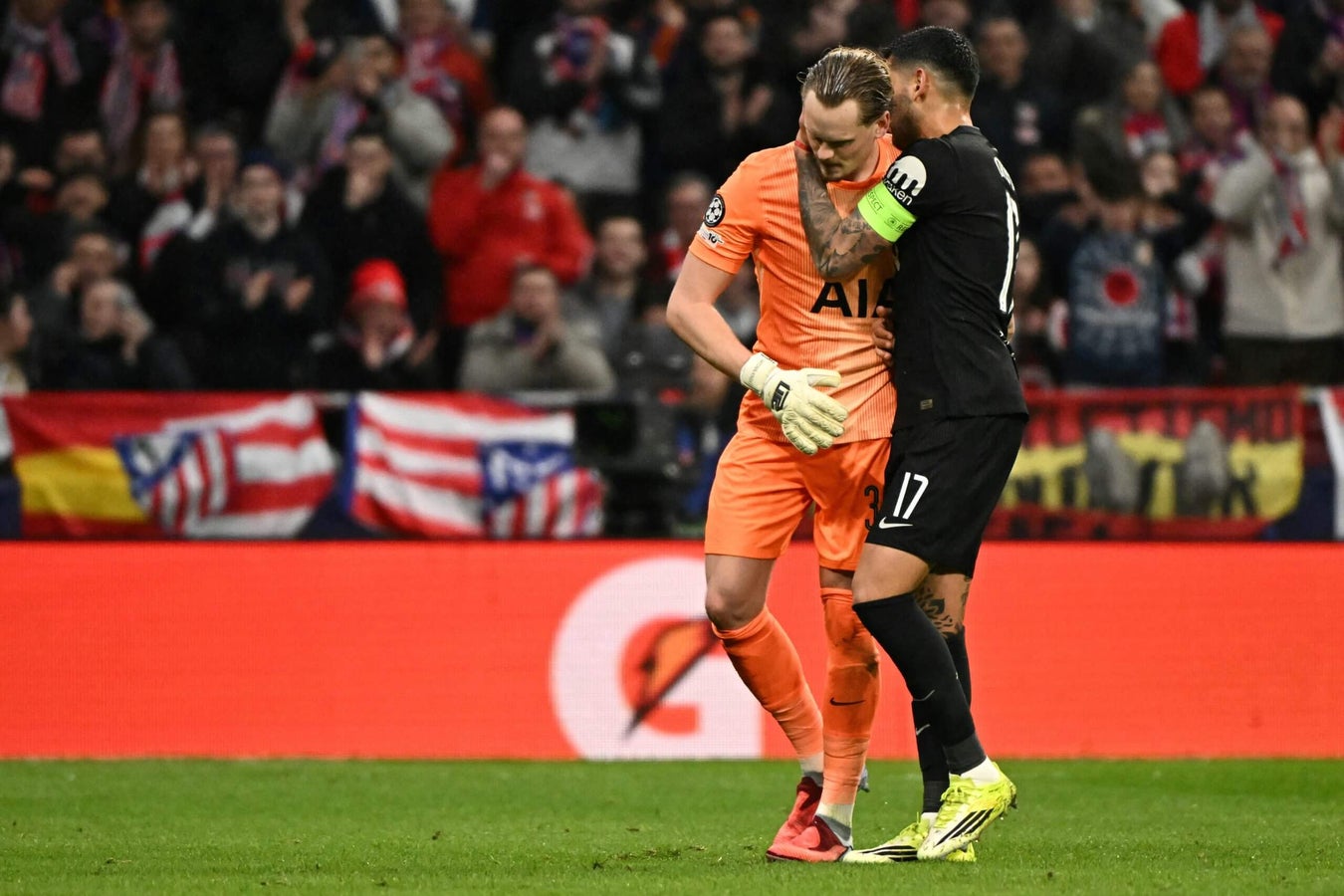


1️⃣ Match Context
Tottenham Hotspur vs Atletico Madrid in March is never “just another group-stage night” — and by this point of the UEFA Champions League, it’s usually about nerve, not novelty. Spurs arrive with the familiar tension of expectation: a side built to play front-foot football, but still judged on whether they can control the ugly minutes when the game turns into a trench fight.
Atletico Madrid don’t hide from that atmosphere — they cultivate it. This is a team structurally designed for knockout pressure: slow the opponent’s rhythm, force decisions into crowded areas, and weaponise the moment you blink in transition.
The psychological framing is simple. Tottenham carry the home narrative: impose tempo, create volume, win on merit. Atletico carry the away narrative: survive without suffering, then strike with precision. The stress point is obvious: if Spurs don’t score during their best spell, the game often starts to feel like Atletico’s game even while Tottenham have the ball.
Schedule-wise, mid-March is where legs start to talk. The Champions League sits on top of domestic runs, rotation becomes imperfect, and the small drop in sprint volume can decide pressing games. That matters here because Tottenham’s best version requires intensity, while Atletico’s best version requires timing.
2️⃣ Form & Advanced Metrics
Tottenham’s recent profile has been defined by territory and tempo. They typically push the game into the opponent’s half, maintain a strong field tilt (more touches and possession in the final third), and generate a healthy shot volume. But the key nuance is shot quality: Spurs can inflate totals with wide-angle efforts and fast releases under pressure, especially when opponents block central lanes and force them into the wings.
That’s the tactical trade. The numbers indicate Tottenham can create sustained pressure without always turning it into clean, central-box chances. When that happens, their xG can look solid over 90 minutes while the match itself feels fragile — because the best chances often arrive in transitions, not in the “possession phase” they control.
Defensively, Tottenham’s volatility tends to come from spacing behind the first press. When their press lands, they suffocate build-up and keep opponents far from goal. When it doesn’t, the game opens quickly — and they can concede high-value chances from central carries or early vertical passes.
Atletico’s form profile is the mirror image. Their shot volume can be modest, but their shot selection is usually sharper: fewer hopeful efforts, more targeted attacks once the opponent’s structure is stretched. In xG terms, they’re often comfortable living with lower totals if the opponent’s chances are low-quality.
Pressing intensity is where this gets interesting. PPDA (passes allowed per defensive action) helps explain the approach: lower PPDA means more aggressive pressing; higher PPDA means more passive, block-first defending. Atletico often accept a higher PPDA in big away games, using a compact mid-block to shepherd play wide and protect the box. Tottenham, at home, typically aim for the opposite: lower PPDA, earlier pressure, faster recoveries. The matchup question is whether Spurs can turn that pressure into turnovers in dangerous zones — not just “possession.”
Home/away splits matter too. Tottenham’s chance creation is usually more assertive at home, but they also tend to concede their most dangerous moments there because the line is higher and the rest-defense is tested. Atletico away are comfortable being out-possessed; what they don’t tolerate is being forced into repeated last-ditch defending against high-quality central entries. If Spurs can’t generate those, Atletico’s plan ages well across 90 minutes.
3️⃣ League Table Snapshot
| Team | Pos | Pts | GF | GA | GD |
|---|---|---|---|---|---|
| Tottenham Hotspur | — | — | — | — | — |
| Atletico Madrid | — | — | — | — | — |
Takeaway: Without the exact standings in view, the more reliable read comes from style sustainability. Tottenham’s performance level tends to correlate with game speed and pressing success. Atletico’s correlates with spacing control and chance suppression. In matches like this, the “better” team often isn’t the one with more possession — it’s the one whose game model survives the first concession or the first missed big chance.
4️⃣ Head-to-Head Analysis
When these profiles meet, the same structural pattern usually repeats: Tottenham try to build through the half-spaces with quick support triangles; Atletico collapse the centre and tempt wide circulation, betting that the final ball will be predictable or the shot will be blocked.
The psychological imbalance — if it appears — typically favours Atletico when the match stays level into the final third of the game. That isn’t superstition; it’s game-state logic. Atletico are comfortable at 0–0 or 1–1 away from home. Tottenham often feel the obligation to force a winner, and forced football is transition football — exactly the environment Atletico can punish.
If we look deeper, past results in this sort of matchup are often less about “who played better” and more about who scored first. First goal flips the game plan: a Tottenham lead forces Atletico out earlier; an Atletico lead forces Spurs into riskier rest-defense and bigger spaces.
5️⃣ Tactical Breakdown (Core Section)
Tempo control: Tottenham’s accelerator vs Atletico’s handbrake
Tottenham will try to dictate pace early: fast switches, early third-man runs, and a high starting position for full-backs to pin Atletico’s wide midfielders. The goal is to create overloads on the outside, then access the box via cutbacks or late arrivals — the highest-value route when central lanes are crowded.
Atletico’s priority is to slow that cycle. They will often allow circulation in non-threatening zones, then compress aggressively when the ball enters the half-space. This is where Spurs’ decision-making becomes the match: do they recycle and keep control, or do they force a low-percentage cross under pressure?
Overload zones: wide progressions vs half-space traps
The overload zone is likely Tottenham’s left or right flank depending on personnel, but the principle is constant: create 2v1s wide to pull Atletico’s block apart. Atletico counter with half-space traps — they don’t mind the ball going wide if the next pass becomes predictable. The moment Spurs look inside, Atletico’s midfield/defence connection tightens and the ball-winner steps out.
Spurs’ best route is not endless crossing — it’s getting behind the full-back and playing the ball back to the penalty spot. That’s where Atletico are least comfortable because it requires defenders to turn and track runners rather than simply head away deliveries.
Midfield battle: who wins the second ball decides the xG
This game can be won in the “quiet” moments: second balls after clearances, loose touches at the edge of the box, and rebound control. Tottenham need their midfield to keep attacks alive without being counter-pressed into turnovers. Atletico will happily clear their lines if the next phase creates a counter opportunity.
Watch for Tottenham’s rest-defense structure: typically two defenders + a holding midfielder positioned to stop the first forward pass. If that spacing is even slightly off, Atletico’s first vertical ball becomes high-leverage.
Transitions: the match’s real danger zone
Tottenham’s aggressive positioning creates the risk: lose the ball with full-backs high and midfielders ahead of the ball, and you’re defending large spaces. Atletico don’t need many shots in these games; they need a few shots with time and central access.
Conversely, if Atletico lose the ball while trying to play out, Spurs can generate instant chances from high recoveries. That’s the swing factor: whether Tottenham’s press creates turnovers in the final third, or whether Atletico bypass it with composure and drag Spurs into recovery runs.
Set-pieces: Atletico’s silent leverage
In tight Champions League ties, set-pieces act like hidden xG. Atletico are typically excellent at turning corners and wide free-kicks into repeat pressure — not always immediate goals, but sustained territory and nerves. Tottenham can’t afford cheap fouls in wide areas or soft corners conceded during their own attacking phases.
6️⃣ Odds & Market Evaluation
| Market | Tottenham | Draw | Atletico |
|---|---|---|---|
| 1X2 (average) | 2.45 | 3.25 | 2.95 |
Those prices imply roughly: Tottenham 40.8%, Draw 30.8%, Atletico 33.9% (before margin). After accounting for bookmaker overround, the true implied probabilities compress slightly, but the shape stays: Tottenham marginal favourite at home, Atletico live away, draw materially priced.
The betlabel.games team evaluates this closer to a near-coinflip with a draw leaning higher than the market wants to admit in a “brand-name” fixture. According to our calculations, Tottenham’s win probability is a touch overstated if the market assumes they’ll convert territory into clean chances against an elite block.
Edge strength: marginal-to-moderate, depending on totals and handicap lines. The strongest value usually appears in derivatives (draw protection, totals, or Atletico +0.5) rather than a pure 1X2 call.
7️⃣ The Hidden Edge (Mandatory Section)
There’s a structural nuance here the market often prices too slowly: Tottenham’s “dominance” can be low-leverage dominance against deep, compact teams. They can win the territory battle, rack up touches in the final third, and still struggle to generate high-quality shots if the opponent blocks cutbacks and forces early crosses.
That matters because it creates a mismatch between how the game looks and how dangerous it actually is. If Spurs take 16 shots but only a handful are from central, close-range zones, their xG might not separate enough to justify favourite pricing. Meanwhile, Atletico can produce fewer shots but higher average shot quality because their best moments arrive when Spurs are structurally stretched.
The second hidden angle: late-game game-state risk. Tottenham chasing a goal tends to increase match chaos; Atletico protecting a draw tends to increase match control. In the last 20 minutes, this often tilts expected goals toward the team that needs fewer events to win — Atletico. Markets regularly underweight that asymmetry when they anchor on home advantage and possession metrics.
8️⃣ Final Prediction
Main Pick: Atletico Madrid +0.5 (Double Chance: Draw or Atletico)
Alternative: Under 3.0 Asian Goals
Risk Level: Medium
Why this makes sense:
1) Style resistance. Atletico’s compact block is built to reduce Spurs’ chance quality, not just their shot count. If Tottenham can’t access cutbacks and central entries, favourite odds become hard to justify.
2) Transition asymmetry. Tottenham’s high line and aggressive rest-defense offer Atletico the type of chances they value most: fast, central, and decisive.
3) Draw gravity. In a tactical arm-wrestle with two elite structures, the match naturally drifts toward long spells of control without separation — exactly the environment where +0.5 protection is worth paying for.
All picks should be sized to bankroll discipline. In matches like this, the difference between a good read and a good bet is price — not confidence.







Leave a Reply