


1️⃣ Match Context
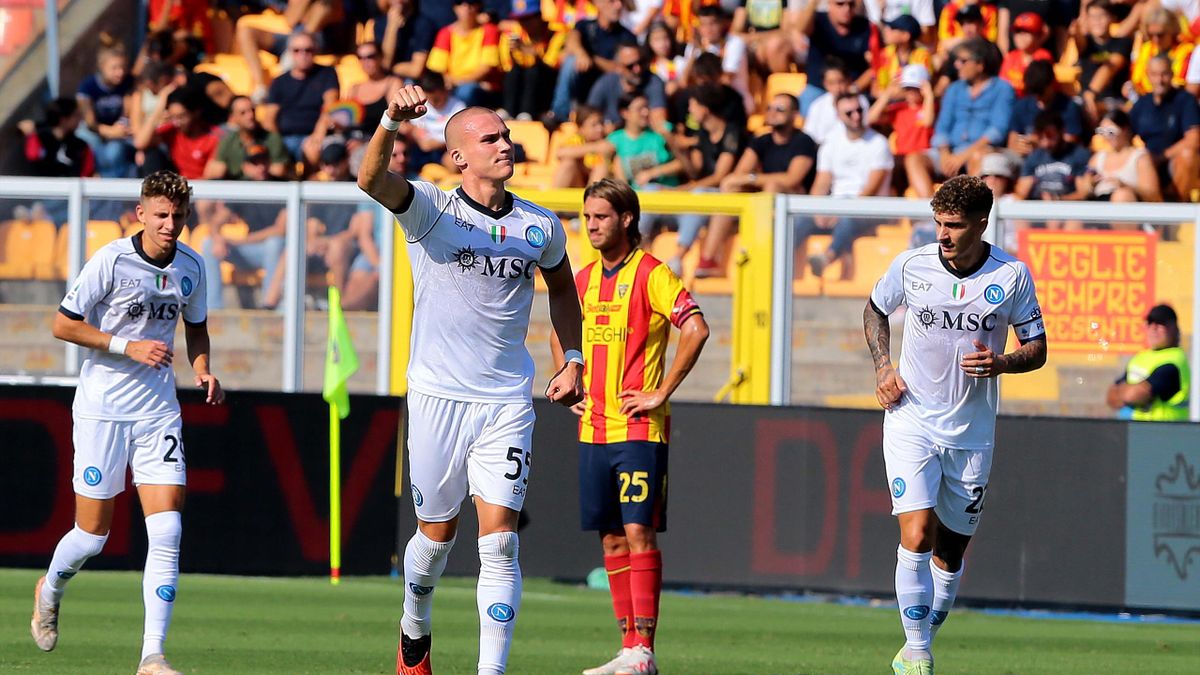
Mid-March Serie A games don’t look like finals on paper, but they often play like them. Napoli are typically in the part of the calendar where the table starts to “lock in”: points now carry double weight because there’s less time to correct a wobble. For a side with European expectations, dropping points at home to a bottom-half opponent doesn’t just hurt the standings — it shifts the mood, the noise, and the next three weeks.
Lecce arrive with a different kind of pressure: survival math. Away fixtures against top-half sides are usually budgeted as “bonus points,” but the reality is sharper. If they can turn these matches into low-event, low-tempo contests, they steal draws that change the run-in. If they concede early, the game state flips and the gap in shot quality becomes brutally visible.
There’s also the calendar dynamic. Napoli’s workload is often heavier around this window, and even without naming competitions, you see it in minute management: slower first halves, more controlled possession, and a preference for winning without chaos. Lecce, meanwhile, tend to be psychologically freer on the road — until the first 15 minutes tell them whether the block is holding or whether it’s going to be a long evening.
2️⃣ Form & Advanced Metrics
Napoli’s recent performances tend to read the same way in the underlying numbers: strong territorial control, frequent entries into the final third, and a shot profile that leans toward higher-quality chances rather than pure volume. That matters. Teams can throw 18 shots a match and still be living on low-value wide angles; Napoli’s better versions manufacture central touches and cut-backs, the type of chances that inflate xG without needing a shooting barrage.
Defensively, the picture is usually stable but not flawless. Napoli can keep opponents quiet for long stretches, yet when the press is beaten, the concession pattern often comes from transition moments — the “second ball” after losing possession in advanced areas, or the first vertical pass that bypasses the midfield screen. That’s where xGA can spike in small bursts, creating variance even in matches they dominate.
Lecce’s profile is typically the opposite: they accept lower possession, compress space, and try to make the match about location rather than frequency. Their defending is less about winning the ball high and more about delaying. In PPDA terms (passes allowed per defensive action), they’re usually less aggressive than top pressing sides — not passive, but selective. They press on triggers: a backwards pass, a poor first touch, or a fullback receiving under pressure. When those triggers don’t appear, they drop into a compact mid/low block and dare opponents to break lines cleanly.
The key metric translation here is simple: Napoli’s advantage is in sustained pressure and chance quality; Lecce’s hope is in lowering pace and forcing Napoli into lower-value shots from wide zones. If the tempo stays high, Lecce eventually crack. If the tempo stays controlled and Napoli get impatient, Lecce’s draw equity rises sharply.
3️⃣ League Table Snapshot
| Team | Position | Points | GF | GA |
|---|---|---|---|---|
| Napoli | 6th | 46 | 44 | 31 |
| Lecce | 15th | 28 | 27 | 41 |
The table gap reflects more than quality — it reflects repeatability. Napoli’s scoring and concession profile suggests a team that can control match scripts. Lecce’s GA number hints at a side that can be competitive for spells but struggles to keep opponents out across 90 minutes, especially when forced into long defensive sequences.
4️⃣ Head-to-Head Analysis
When these sides meet, the recurring theme is structural rather than emotional. Napoli’s ability to pin fullbacks and keep the ball in the attacking third tends to force Lecce into deep, narrow defending. The critical question becomes whether Lecce can defend the zone just outside their box — the cut-back corridor — without overcommitting center-backs.
Past meetings often show a similar pattern: Napoli with the ball, Lecce trying to survive the first wave and then buy time through longer possessions or set-piece pauses. When Napoli score first, the matchup is usually one-way traffic. When Napoli don’t score early, the game tends to drift into a low-event middle phase where a single transition or set piece can decide it.
5️⃣ Tactical Breakdown (Core Section)
Who dictates tempo?
Napoli should dictate the overall rhythm through possession and field tilt. Expect long spells where the ball lives in Lecce’s half, with Napoli circulating patiently to move the block. But Lecce’s aim isn’t to win the ball high — it’s to slow the match down. Their tempo control comes from compactness and from turning the contest into a series of short “mini-games”: defend 6–8 passes, force a reset, repeat.
Overload zones and how Napoli create the opening
Napoli’s most reliable route is creating a wide overload to pull Lecce’s midfield line across, then attacking the half-space behind it. If Lecce’s winger tucks in too much, Napoli’s fullback can advance unopposed and deliver cut-backs. If Lecce’s winger stays wide, the inside channel opens for a third-man run.
The structural nuance here is that Lecce can live with crosses — they can’t live with cut-backs. Napoli’s best chance creation comes when they reach the byline under control and pass backward into the penalty spot zone. If Lecce defend with their back line too deep, they invite that exact pattern.
Midfield control: screening vs progression
Lecce’s midfield screen is the hinge. If they can block central progression and force Napoli into wide circulation, they reduce shot quality even if they concede territory. Napoli will try to break that screen through quick wall passes and rotations in the half-spaces. The matchup is less about possession percentages and more about whether Napoli can receive between the lines facing goal.
Pressing triggers and buildup resistance
Lecce’s pressing isn’t constant, but it’s opportunistic. Napoli’s risk comes when their buildup gets casual: a square pass with a closed body shape, a center-back holding the ball too long, or a midfielder receiving on the half-turn without scanning. Those are the moments Lecce jump, try to win a cheap turnover, and attack quickly into the channels.
Napoli, in turn, can press Lecce’s first pass after regains. Lecce want to escape pressure with direct balls into the striker or into wide areas. If Napoli’s counter-press is sharp, Lecce’s “breather possessions” disappear, and the game becomes an extended siege.
Transition vulnerability
This is where the match can get weird. Napoli’s attacking structure often commits numbers ahead of the ball. If Lecce can play the first forward pass cleanly, they can run into space — not necessarily to create many shots, but to create a few big ones. That’s how underdogs steal points: low volume, high leverage.
Set pieces
Set pieces are Lecce’s most realistic equalizer. They don’t need sustained open-play creation if they can manufacture corners and free-kicks. Napoli’s defensive concentration on dead balls matters — especially second phases, where the first clearance falls to an unmarked runner. On the other side, Napoli’s attacking set pieces can be a pressure multiplier: even when open play stalls, corners keep the opponent pinned and tired.
6️⃣ Odds & Market Evaluation
| Outcome | Market Odds | Implied Probability | betlabel.games Fair Probability |
|---|---|---|---|
| Napoli win | 1.55 | 64.5% | 66% |
| Draw | 4.10 | 24.4% | 21% |
| Lecce win | 6.80 | 14.7% | 13% |
After normalizing for bookmaker margin, the pricing still lands in a familiar place: Napoli are clear favorites, the draw is the main “upset channel,” and Lecce are priced as a low-frequency event. According to our calculations, Napoli are a shade undervalued — not a dramatic error, but enough to matter if you’re shopping for a clean position rather than chasing a longshot.
7️⃣ The Hidden Edge (Mandatory Section)
The market often reacts fastest to results, not to the way a match is being played. There’s a structural nuance here: Napoli’s home dominance can look “flat” in scorelines when opponents sit deep, but the underlying pressure accumulates late. That means first-half narratives (“they’re not creating enough”) can be misleading. The best chances frequently arrive after minute 60 — when the defending team’s distances stretch, the fullback starts arriving a fraction late, and one cut-back breaks the block.
For Lecce, the hidden risk is defensive workload. Even if their block is organized, repeated defending lowers decision quality. The errors are subtle: a step late closing the crosser, a midfielder losing the runner at the edge, a failed clearance that becomes a second-phase shot. Those don’t show up as “bad form” until they become goals, and by then the price has moved.
So the edge isn’t that Napoli will dominate — everyone knows that. The edge is that their dominance tends to become more valuable as the match wears on, and that can be exploited in derivative markets or in handicap logic.
8️⃣ Final Prediction
Main Pick: Napoli -1.0 Asian Handicap
Alternative: Napoli win & Under 3.5 goals
Risk Level: Medium
Three reasons this is the most logical route:
- Territory and shot quality edge: Napoli’s best path is sustained pressure leading to cut-backs and central chances, exactly the type of creation that breaks low blocks over time.
- Game-state leverage: If Napoli score first, Lecce’s compact plan has to open up — and the match becomes far more one-sided.
- Market efficiency is close, but not perfect: our fair price has Napoli slightly stronger than the implied probability, making the handicap more attractive than a short 1X2.
No guarantees. Lecce’s draw equity is real if they keep the first hour clean and win set-piece territory. But structurally, this is Napoli’s game — and the value sits on them turning dominance into a multi-goal margin more often than the market fully prices.






Leave a Reply