
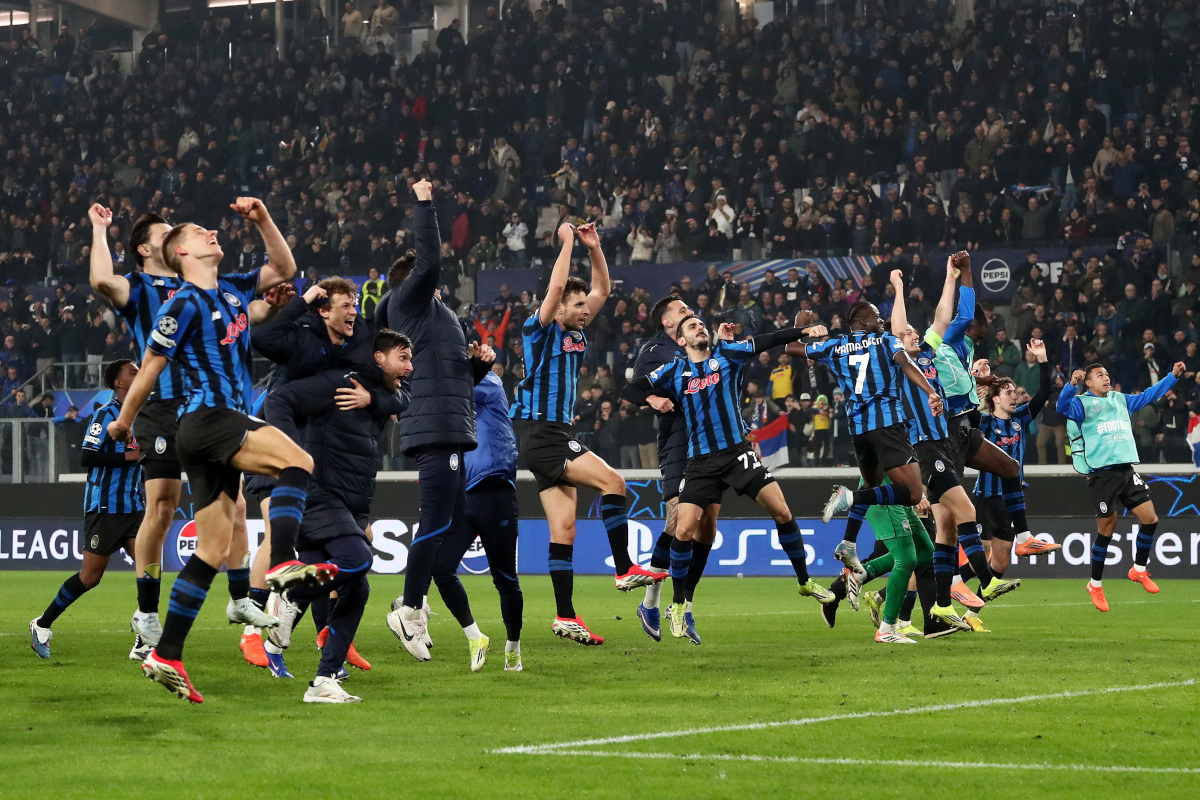


1️⃣ Match Context
Atalanta vs Bayern Munich in March is never “just another group game” — and in the Champions League knockout window it becomes a referendum on identity. Atalanta’s entire European story is built on controlled chaos: man-oriented pressure, aggressive wing-back height, and a willingness to turn matches into transition marathons. Bayern’s story is different: ownership of territory, sustained shot volume, and the quiet confidence of a team that expects to be here every year.
That contrast creates real psychological pressure. Atalanta feel the stakes in a way Bayern often don’t — not because Bayern care less, but because their risk tolerance is different. Bayern can accept long spells of probing possession and wait for their moments. Atalanta tend to chase the game even when it doesn’t need chasing. In a two-leg context, that impulse matters: it can win you a night, or lose you a tie.
Schedule and fatigue are part of the equation too. Atalanta’s intensity game is expensive: constant sprinting to press, recover, then attack. Bayern’s workload is also heavy, but their control phases let them “rest with the ball” more naturally. If this match tilts into end-to-end football, it favors Atalanta’s identity. If it becomes a territory siege with Bayern recycling pressure, Atalanta’s legs and discipline get tested.
2️⃣ Form & Advanced Metrics
Atalanta’s recent profile typically reads like this: healthy chance creation, but with volatility baked in. They don’t just take shots — they manufacture high-leverage moments through aggressive verticality and third-man runs. When they’re sharp, shot quality climbs because they arrive into the box at speed and create cutback angles rather than low-percentage crosses. When they’re slightly off, the same aggressive spacing leaves them open to direct counters into the channels behind the wing-backs.
Defensively, Atalanta’s numbers often look better in raw volume than in danger. They can suppress total shots through pressure, but still allow opponents into central lanes when the man-marking chain breaks. That’s the trade-off: a system built to win duels can also lose structure if even one duel is lost cleanly. The numbers indicate a team whose xGA is less about passive defending and more about “event risk.” Fewer attacks faced, but the ones that arrive are high quality.
Bayern, by contrast, are usually a shot-volume machine with consistent field tilt. Their territory control forces opponents into long defending sequences, and that sustained pressure tends to produce repeatable xG rather than one-off bursts. Even when Bayern’s finishing runs hot or cold, the underlying mechanism remains: they generate multiple box entries, keep the ball in the final third, and compress the game so opponents struggle to escape.
Pressing intensity is a key junction. PPDA (passes per defensive action) is not just a number here — it tells you how quickly a team tries to win the ball back after allowing the opponent to start possession. Atalanta’s approach is aggressive and often man-oriented; Bayern’s press is more situational but ruthless when triggered, especially after turnovers. If we look deeper, the question isn’t “who presses more,” it’s “who presses cleaner.” Bayern’s best versions turn presses into territorial pins. Atalanta’s best versions turn presses into immediate shots. Those are different forms of control.
3️⃣ League Table Snapshot
| Team | Domestic Position | Points (approx.) | Goal Difference (approx.) |
|---|---|---|---|
| Atalanta | Top-6 contention | Mid-to-high | Positive |
| Bayern Munich | Title contention | High | Strong positive |
Takeaway: the table positions typically reflect what these teams are: Bayern are built for week-to-week control and repeatability, while Atalanta’s ceiling is high but their week-to-week output is more variance-driven. That variance isn’t “random” — it’s structural, tied to a high-intensity style that can either overwhelm or unravel depending on timing, legs, and game state.
4️⃣ Head-to-Head Analysis
Head-to-head history matters only when it repeats tactically. The recurring pattern in matchups like this is that Bayern rarely get emotionally pulled into the chaos for long — they’ll accept a few transition punches, then reassert structure. Atalanta, on the other hand, can become even more aggressive when they feel they’re “in the game,” which paradoxically can widen the spaces Bayern want to attack.
If past meetings show anything, it’s less about the scoreboard and more about the zones: Bayern tend to find value attacking the half-spaces behind Atalanta’s midfield line, especially when Atalanta’s man-marking drags a center-back or midfielder out of the chain. When those chains break, Bayern’s decision-making speed in the final third becomes decisive. The underlying metrics in these matchups often align with that story: Bayern don’t need many “clean” counters — they create control-based chances until one structural gap appears.
5️⃣ Tactical Breakdown (Core Section)
Who dictates tempo?
Tempo is the battleground. Atalanta want a match of repeated transitions: win it, play forward, attack the box quickly. Bayern want a match of territorial compression: keep Atalanta penned in, recycle attacks, and gradually increase shot volume and expected threat. The first 20 minutes will be telling. If Atalanta can force Bayern into hurried exits and broken build-up phases, the match becomes an “events” game. If Bayern can settle into their rest-defense shape, it becomes a siege.
Overload zones and exposed flanks
Atalanta’s wing-back height is both their weapon and their vulnerability. When the wing-backs are high, they create natural overloads wide and open cutback lanes. But it also asks the outside center-backs to defend huge spaces in the channels. Bayern’s wingers and advanced midfield runners love those channels. Expect Bayern to target the space behind the wing-back with diagonal switches and third-man runs rather than only dribbling 1v1.
There’s a structural nuance here: Atalanta’s man-oriented defending can “win” the first duel but still lose the second ball because the shape is stretched. Bayern are excellent at sustaining attacks after the first clearance — their field tilt and counterpressing keep the ball in the attacking third, which is precisely where Atalanta don’t want long sequences.
Midfield control and pressing triggers
Atalanta’s midfield battle is about timing. Step out too early and Bayern play around you; step out too late and Bayern set up camp. Bayern’s build-up resistance against man-marking is often about rotation: dropping a midfielder into the back line, dragging markers, then exploiting the vacated zone. If Atalanta chase these rotations man-to-man, the risk is that they create the exact half-space gaps Bayern punish.
Pressing triggers will be decisive. Atalanta will likely jump aggressively on Bayern’s first touch near the touchline or on back-passes into pressured zones. Bayern’s counter to that is quick wall passes and switching the point of attack before the press fully locks. If Bayern execute those switches, Atalanta’s wing-backs are forced into long recovery runs — and that’s where fatigue becomes a tactical problem, not a physical one.
Transition vulnerability
This match could be decided by what happens immediately after possession changes. Atalanta are dangerous when they win the ball and attack within two or three passes, especially into the channel between full-back and center-back. But Bayern are equally dangerous when Atalanta lose the ball with wing-backs high and midfielders advanced. Bayern’s transition game isn’t always high volume — but the shot quality can spike fast because the first pass after the turnover is often forward and into space.
Set-piece dynamics
Set pieces can quietly swing ties between teams with contrasting styles. Atalanta tend to generate corners through wide attacks and second balls; Bayern tend to concede fewer corners but can be vulnerable to well-designed crowding and near-post runs. If Atalanta can keep the match close, dead-ball situations become a realistic lever — especially if open-play control leans Bayern.
6️⃣ Odds & Market Evaluation
| Market | Selection | Odds (decimal) | Implied Probability |
|---|---|---|---|
| 1X2 | Atalanta | 3.60 | 27.8% |
| 1X2 | Draw | 3.70 | 27.0% |
| 1X2 | Bayern Munich | 2.05 | 48.8% |
Note: implied probabilities above are simple conversions and don’t remove bookmaker margin.
According to our calculations at betlabel.games, Bayern should be favored, but not to the point where Atalanta are written off. The market price essentially assumes Bayern control is stable and that Atalanta’s volatility mostly hurts them. That’s a reasonable baseline — Bayern’s territory dominance travels well — but the edge question is whether the market is underpricing the specific way Atalanta can turn this into a high-variance match.
Evaluation: the biggest inefficiency tends to appear not in the 1X2 headline, but in goal and handicap derivatives. If Atalanta can create an events game, totals and “both teams to score” type markets often carry more value than trying to fade Bayern outright.
7️⃣ The Hidden Edge (Mandatory Section)
The hidden edge is about game state and the market’s tendency to assume Bayern can always slow the game down. That’s true in many fixtures, but against a team like Atalanta, the control tax is higher. If Bayern’s first line of build-up gets disrupted a few times, the match can flip into repeated transition sequences — and transition sequences inflate variance fast.
Here’s the part the market can be slow to price: Atalanta’s chance quality can jump without a huge increase in shot volume. They don’t need 15 shots to threaten. They need 6–9 shots, but from the right moments: cutbacks, broken defensive recoveries, and central arrivals after a forced turnover. That’s why a match can look “Bayern dominant” on territory and still end up with Atalanta posting comparable xG from fewer, cleaner looks.
On the other side, Bayern’s structural advantage is clear — but it can come with a small downside in Italy: if they overcommit to sustaining pressure, they can concede the one shot you don’t want to concede, the transition chance after a half-cleared attack. In knockout football, that single moment often decides whether “dominance” becomes a lead or just a narrative.
8️⃣ Final Prediction
Main Pick: Both Teams To Score (BTTS) – Yes
Alternative: Over 2.5 Goals (or split-stake: Over 2.75 Asian Total if available)
Risk Level: Medium
Why this works logically:
1) Styles collide in a way that produces high-quality chances. Bayern’s field tilt will create sustained pressure and box touches; Atalanta’s pressing and vertical attacks create fewer chances, but higher leverage ones.
2) Transition vulnerability is live on both sides. Atalanta’s wing-back height opens channels; Bayern’s counterpressing can be bypassed when Atalanta win duels and play forward immediately. That’s a two-way goal recipe.
3) Market focus leans toward Bayern control, not Atalanta’s event creation. The 1X2 pricing makes sense, but goal markets can lag when a “favorite controls” assumption meets a matchup that naturally increases variance.



Leave a Reply