
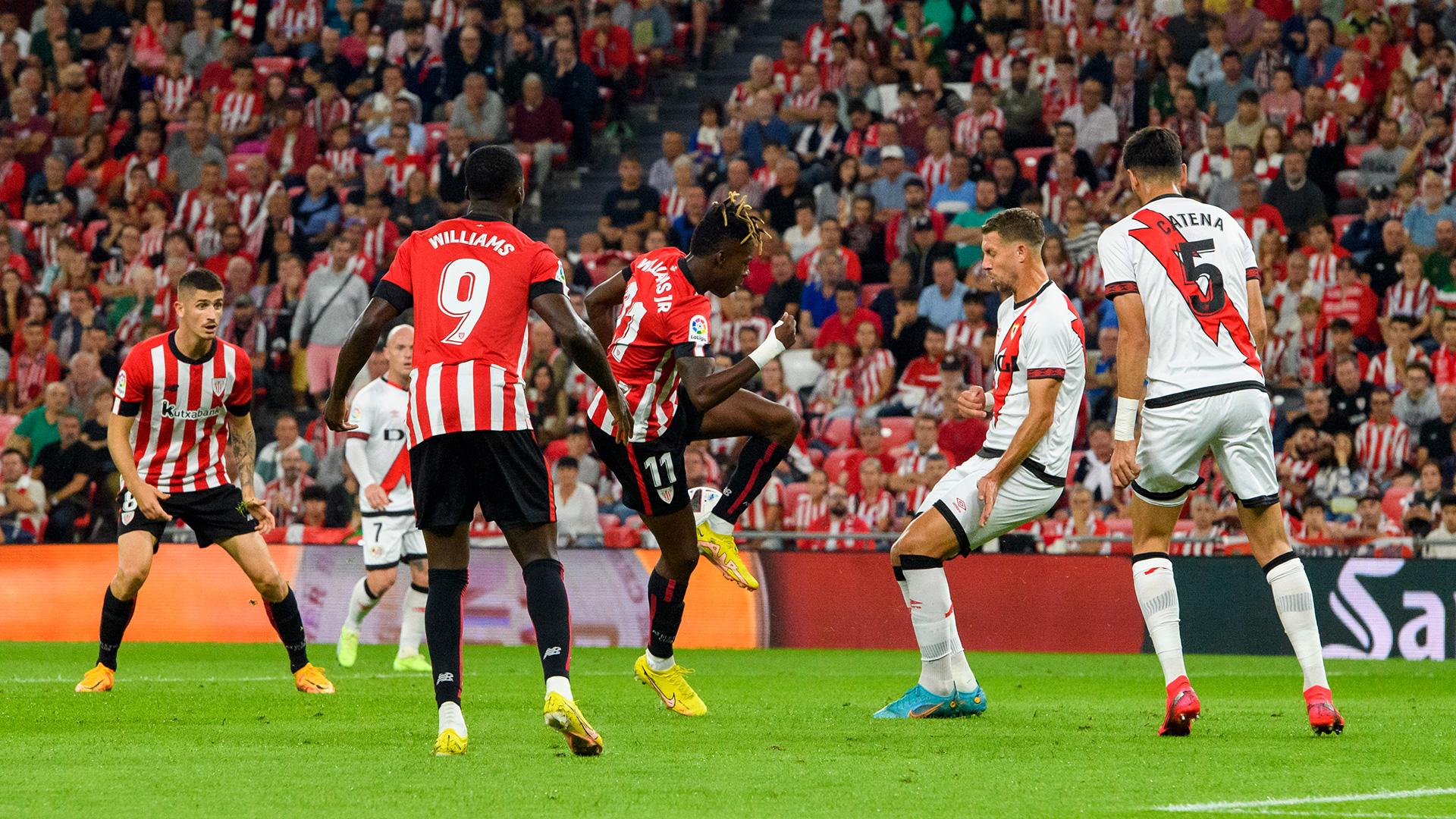


1️⃣ Match Context
Rayo Vallecano vs Athletic Bilbao lands in that awkward part of the La Liga calendar where the table begins to harden and “one bad month” becomes more than a cliché. For Rayo, home fixtures are the oxygen supply: Vallecas is where their intensity has to translate into points, because their margin for error away from home is usually thin. This isn’t just about three points — it’s about maintaining distance from the danger zone and avoiding the psychological drag of playing every weekend with a calculator.
Athletic arrive with a different pressure profile. Their season targets are typically European, and games like this are where those ambitions either become sustainable or start to feel fragile. Away days against high-energy mid-table sides often decide whether a top-six chase is real or just narrative. The dynamic is simple: Rayo need the game to be chaotic and emotional; Athletic want it to be controlled and repeatable.
There’s also a time-of-day nuance here: early kickoffs can flatten rhythm, and teams that rely on intensity spikes sometimes struggle to hit their usual tempo from minute one. That matters for a Rayo side whose best football often comes when Vallecas is noisy and the match is stretched.
2️⃣ Form & Advanced Metrics
Rayo’s profile is usually built on volume rather than pure shot quality. They can generate a decent number of entries and attempts, but the real question is where those shots come from. When their build-up becomes rushed, the attack turns into low-value wide deliveries and speculative efforts — plenty of shots, not always plenty of danger. In xG terms, that’s the difference between “busy” and “threatening.”
Defensively, Rayo’s volatility often stems from the same mechanism that makes them competitive: an aggressive approach without perfect rest-defense structure. If the press is bypassed, opponents can find central lanes or attack the half-spaces with runners arriving at speed. That’s why Rayo matches can swing quickly on one or two sequences: one lost duel in midfield, one mistimed step from the back line, and suddenly the shot quality conceded jumps.
Athletic Bilbao, by contrast, tend to produce a cleaner shot profile. They’re not always the fastest team in raw pace, but their best moments come from coordinated pressure, forcing turnovers and attacking quickly into organized zones. Their pressing intensity is usually reflected in PPDA (passes allowed per defensive action): when Athletic are in rhythm, they reduce opponent buildup time and keep the game in the opponent’s half. That’s not just “running more” — it’s closing the first pass, then winning the second ball in midfield.
If we look deeper, Athletic’s away performance is often less about creating waves and more about controlling the match state. They can tolerate periods without the ball, but they want territorial stability: fewer cheap transitions, fewer broken phases. Against Rayo, that’s critical, because Vallecano’s best chances often come when the game loses structure.
3️⃣ League Table Snapshot
| Team | Likely Table Zone | Season Pressure |
|---|---|---|
| Rayo Vallecano | Lower mid-table / safety battle | Points security, avoiding drag toward relegation scrap |
| Athletic Bilbao | Upper mid-table / Europe chase | Need wins in “shouldn’t lose” away fixtures |
Takeaway: This isn’t a pure “form vs form” game — it’s a motivation asymmetry match. Rayo’s urgency is survival-oriented; Athletic’s urgency is aspiration-oriented. Those pressures create different risk tolerances in-game, especially after the first goal.
4️⃣ Head-to-Head Analysis
The useful angle in this matchup is rarely the raw results; it’s the repeated pattern of game states. When Athletic can establish midfield control early, Rayo’s attacking becomes more predictable — wide progression, fewer central combinations, and an increasing reliance on second balls. When Rayo disrupt Athletic’s first phase with aggressive triggers, the game tilts into transitions, and Athletic’s clean structure gets tested by chaos.
Psychologically, Vallecas can create a “compressed” feel for visiting teams: every duel is loud, every stoppage is a small event. Athletic, however, are one of the Spanish sides that often cope better with that because their baseline is intensity, not comfort. The past meetings generally support that: the underlying dynamics tend to reward the team that wins the midfield duel rather than the team that “has more of the ball.”
5️⃣ Tactical Breakdown (Core Section)
Who dictates tempo?
Rayo will try to speed the match up through pressure and early forward actions. Athletic will try to slow it down through structure: longer possessions in safe zones, controlled switches, and selective pressing. The first 20 minutes matter. If Athletic can avoid turnovers in their own half, they can turn Vallecas from a storm into a standard away game.
Overload zones and the key lanes
The critical spaces are the half-spaces either side of Rayo’s midfield line. Rayo’s press can be proactive, but when the midfield steps out to engage, it can leave pockets behind. Athletic’s best attacking sequences often come when they pin wide, then find a receiver between lines who can release a runner into the channel.
For Rayo, the target is the space behind Athletic’s advanced fullback positions during attacking phases. If Athletic commit numbers to sustain pressure, the immediate counter lane becomes available. Rayo’s problem is execution: transition opportunities are only valuable if the first pass is clean and the second action is decisive. Otherwise, Athletic recover shape quickly and the moment is gone.
Pressing triggers and buildup resistance
Athletic’s press is typically smarter than reckless: they’ll trigger aggressively on back passes, poor body orientation from the pivot, or a wide receiver receiving with back to goal. If Rayo build short under pressure, the risk is that they invite the trap and concede a high-value chance from a turnover. If they go long too often, they concede territory and ask for repeat defending.
The tactical sweet spot for Rayo is mixed buildup: enough direct play to bypass the first wave, but with structure to win second balls and keep attacks alive. Without that, their field tilt can look positive while the shot quality stays mediocre.
Transition vulnerability
This game is likely decided by which side manages transitions. Rayo can be exposed if they lose the ball with both fullbacks high and the midfield line stretched. Athletic can be exposed if their counter-press fails and Rayo can run into open grass. Expect Athletic to prioritize rest-defense: keeping at least two plus a holding midfielder in positions to stop the first counter pass.
Set-piece dynamics
In tight La Liga games, set pieces often decide the margin. Rayo at home will treat corners and wide free-kicks as momentum tools — not just scoring chances, but pressure multipliers. Athletic generally defend set pieces with good structure and athleticism, but if Rayo can win repeated dead balls, they can manufacture danger even without open-play superiority.
6️⃣ Odds & Market Evaluation
| Market | Selection | Odds | Implied Probability |
|---|---|---|---|
| 1X2 | Rayo Vallecano | 3.40 | 29.4% |
| 1X2 | Draw | 3.10 | 32.3% |
| 1X2 | Athletic Bilbao | 2.25 | 44.4% |
Market read: The pricing leans Athletic, but not overwhelmingly. Once you account for bookmaker margin, the market is saying: Athletic are the better team, but this is still a match with significant draw gravity.
The betlabel.games team evaluates the true win probabilities closer to a tighter spread than the raw away favoritism suggests. According to our calculations, the away side is justified as favorite — but the edge in straight 1X2 is not automatically huge unless you believe Athletic can dominate territory and suppress transitions for long spells.
7️⃣ The Hidden Edge (Mandatory Section)
There’s a structural nuance here that markets sometimes underprice: Rayo’s home intensity tends to create second-half chaos even when the first hour looks controlled by the opponent. That doesn’t always show in full-time scorelines, because a single late chance can be missed and disappear from memory — but in chance creation terms, Vallecas games often tilt toward “one big moment” late.
Why? Two reasons.
First, Athletic’s away control can be real, but it can also become conservative if they lead or if the match stays level. That slight drop in forward risk reduces their ability to keep the ball in advanced zones, which invites Rayo back into the game through territory and set pieces.
Second, Rayo’s chance quality can be misleading over short samples. If they’ve recently scored from low-probability shots or conceded from isolated high-quality chances, the market can overreact to results instead of process. In this type of fixture, the process matters more: repeated entries, repeated dead balls, repeated transition looks. It only takes one to land.
Net effect: the draw and the “Athletic not to lose” lanes can both be rational, but the value often sits in protecting against the late-game swing rather than betting on clean domination.
8️⃣ Final Prediction
Main Pick: Athletic Bilbao – Draw No Bet
Alternative: Under 2.5 Goals
Risk Level: Medium
Why this is the best lane:
1) Athletic’s structural edge is real. Their pressing and midfield control typically produce cleaner chances than Rayo generate in settled possession.
2) DNB respects Vallecas volatility. Rayo’s late pressure cycles and set-piece accumulation can create draw gravity even when the away side look “better.”
3) Game-state logic points to a tighter scoreline. Both teams have incentives to manage transitions; that usually suppresses open-play xG swings and favors lower totals unless an early goal breaks the script.






Leave a Reply