

1️⃣ Match Context
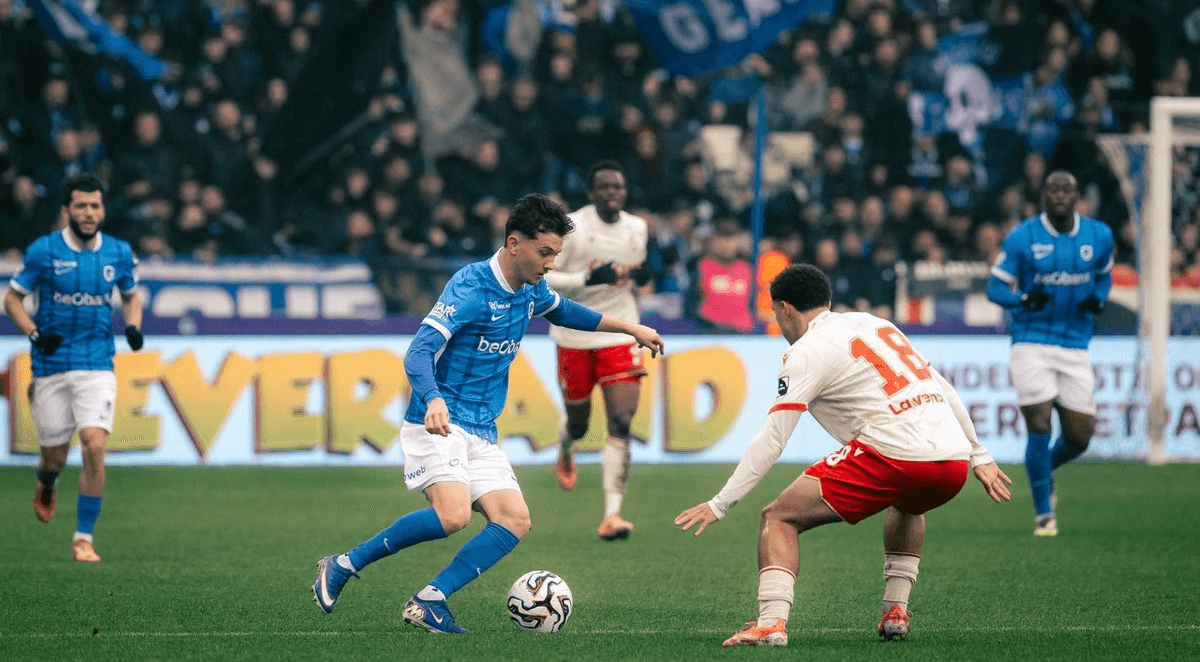
Europa League nights don’t usually need extra narrative — but this one has it anyway. Genk return home knowing that in this competition, home legs are where ties get bent out of shape. They’re a side built on rhythm: strong tempo, aggressive territory, and the kind of crowd energy that amplifies pressing triggers. Dinamo Zagreb, meanwhile, arrive with a different kind of pressure: the expectation that they “should” be here, and the reality that away European ties often punish even small structural lapses.
This match matters because it’s not just about taking a lead; it’s about controlling the emotional direction of the tie. Genk want a game state where they can pin you in and keep you defending your box. Dinamo want the opposite: slow the match, break the crowd’s momentum, and create moments — not phases.
Schedule context is relevant too. Late February is where domestic title races and cup fixtures start to compress. Teams with thinner rotation feel it in their second-half running and in the clarity of their defensive spacing. In two-leg football, fatigue doesn’t just lower intensity — it increases mistake rate. And mistake rate is where these games swing.
2️⃣ Form & Advanced Metrics
Genk’s recent profile typically reads like a modern proactive home side: strong shot volume, consistent territory, and a willingness to win the ball high. The key is how those shots are created. When Genk are at their best, the chances come from sustained pressure — cutbacks, second balls, and possessions that end inside the box rather than speculative efforts. That kind of chance creation travels well across matchups because it isn’t dependent on a single counterattack pattern.
But there’s volatility baked in. If you look deeper at their defensive work, Genk can concede quality even when they concede few shots. That’s often the trade-off of an aggressive structure: when the press is beaten, opponents arrive into central lanes with speed. It’s not “they defend badly”; it’s that the distance between lines can stretch when the first press doesn’t land cleanly.
Dinamo Zagreb’s European identity is usually more pragmatic. The numbers tend to show lower pace, more controlled phases, and a preference for game management rather than constant push-and-pull. They can look quiet for 20 minutes and still produce two high-leverage attacks — because their best moments often come from exploiting the moment a rival overcommits.
Pressing intensity is the hinge point here. PPDA (passes allowed per defensive action) is essentially a measure of how early you engage: lower PPDA means you press earlier and more often. Genk generally want that lower PPDA feel at home. Dinamo, away in Europe, often accept a higher PPDA game — a mid-block that protects the middle first. That clash of preferences creates a clear question: does Genk turn territory into clean chances, or does Dinamo turn resistance into counters?
Home/away splits matter. Genk’s best work usually comes when their field tilt is heavy — the ball living in the opponent’s half — because it multiplies set-piece volume and second-phase pressure. Dinamo’s away profile can be more variable: if they take an early hit, they can be forced into a higher tempo than they’d like, which exposes their defensive transitions.
3️⃣ League Table Snapshot
| Team | Domestic Position (Snapshot) | General Profile | Key Indicator |
|---|---|---|---|
| Genk | Top-tier contender range | Proactive, tempo-driven | Territory and shot volume |
| Dinamo Zagreb | Title expectation range | Control-first, moment-based | Game-state management |
Takeaway: this isn’t “good team vs underdog” in the simplistic sense — it’s two clubs used to being domestically dominant in different ways. The table dynamics typically reflect that: Genk lean into intensity and volume, Dinamo lean into control and results. In Europe, those styles collide, and the tie often goes to the side that forces the other to play outside its comfort tempo.
4️⃣ Head-to-Head Analysis
Head-to-head history between clubs like these is rarely about the badge; it’s about the pattern. When Genk face structured European sides, the recurring problem is not creating chances — it’s creating unblocked, central chances rather than settling for half-spaces and crowded shooting lanes.
Dinamo’s recurring European advantage in similar matchups is psychological as much as tactical: they’re comfortable being “second-best” in possession for long spells if they can keep the game’s high-value moments close. That means prior meetings — even beyond this specific opponent — often look like this: one team dominates territory, the other dominates the most dangerous transitions.
If past results between these profiles feel contradictory, that’s normal. These are the ties where underlying performance (territory, box entries) can point one way, while the scoreline swings the other because finishing and counter-precision carry a bigger share of the outcome.
5️⃣ Tactical Breakdown (Core Section)
Who dictates tempo?
Genk will try to set the match’s “heartbeat” early: quick restarts, aggressive fullback positioning, and pressing traps near the touchline. They want Dinamo’s build-up to feel rushed. Dinamo’s priority will be to slow the first 20 minutes, keep the crowd quiet, and make Genk prove they can create through a set block rather than through chaos.
Overload zones and the key flank dynamic
Genk’s most reliable attacking mechanism in these games is often the overload-to-cross or overload-to-cutback pattern. They’ll commit numbers around the ball, look for third-man combinations, and try to turn Dinamo’s wide defenders inward. The goal isn’t “cross a lot.” The goal is to create the moment where a low ball arrives behind the midfield line — the highest-value chance type for volume teams.
Dinamo’s defensive response will likely be compactness first, then counters into the space behind Genk’s advanced wide players. There’s a structural nuance here: the more Genk commit to keeping Dinamo pinned, the more valuable Dinamo’s first pass after regain becomes. If that first pass is clean, Genk’s rest defense gets tested immediately.
Midfield control and buildup resistance
This is where the game will be decided. Genk’s press is designed to force predictable exits — play wide, then spring. But Dinamo are typically comfortable using a pivot to reset and invite pressure before switching. If Dinamo can resist the first wave, they can create temporary numerical superiority in the second line, which is exactly where Genk’s shape can open.
Expect Genk to use pressing triggers on backward passes and heavy touches. Dinamo will counter that by playing earlier and more direct at times — not as a plan A, but as a release valve. In Europe, those release valves are everything.
Transition vulnerability
Genk’s risk is straightforward: lose the ball with both fullbacks high, and you’re defending large spaces with limited cover. Dinamo’s risk is different: if they sit too deep for too long, they invite second-phase pressure — those repeated waves of attacks where one clearance just becomes the next entry.
Set-piece dynamics
Set pieces could quietly tilt this match. Genk’s territorial style tends to generate corners and wide free-kicks. Dinamo, if they spend long spells in a low block, will be forced into repeated defensive set-piece sequences. That’s not just about aerial duels; it’s about concentration. In a tight European game, one poorly tracked runner is enough.
6️⃣ Odds & Market Evaluation
| Market | Odds | Implied Probability |
|---|---|---|
| Genk win | 2.05 | 48.8% |
| Draw | 3.35 | 29.9% |
| Dinamo Zagreb win | 3.75 | 26.7% |
Note: implied probabilities above are raw (not margin-adjusted). Markets will typically sum above 100% due to bookmaker overround.
According to our calculations at betlabel.games, the fair line is closer to Genk 46% / Draw 28% / Dinamo 26%. That frames Genk as a rightful favorite at home, but not an overwhelming one. The current market pricing slightly inflates the home win, which is common when a high-tempo home team faces a “name” European traveler — bettors tend to overpay for the atmosphere narrative.
Edge rating: marginal on 1X2. Better angles appear in derivatives where tactical shape matters more than brand perception.
7️⃣ The Hidden Edge (Mandatory Section)
The market can be slow to price one thing properly in ties like this: how fragile shot quality becomes when a volume team faces a compact, control-first opponent. Genk can dominate territory and still produce a shot map that’s wide, blocked, or forced under pressure — which keeps xG per shot modest even while the shot count climbs.
That creates a betting nuance: a match can “feel” like Genk control it, and still land in a low-scoring script because Dinamo are happy to concede low-leverage shots and protect the central corridor. If Genk don’t score early, the game state can turn into a long, tense possession grind — exactly what Dinamo prefer away from home.
There’s also a subtle second-half factor. In many European away performances, Dinamo’s best attacking moments arrive after halftime when the home side’s press intensity drops slightly and fullbacks are still high. If Genk’s first-half press doesn’t produce a lead, the later phases can become more transitional — and that favors the cleaner countering team.
Why might the market lag? Because casual pricing leans on “home intensity = goals.” But against a disciplined mid/low block, intensity often equals corners and pressure — not necessarily clear chances.
8️⃣ Final Prediction
Main Pick: Dinamo Zagreb +0.5 (Asian Handicap) / Double Chance (Draw or Dinamo)
Alternative: Under 2.75 goals (Asian Total)
Risk Level: Medium
The logic is structural rather than emotional:
1) Matchup geometry: Dinamo’s compactness can force Genk into lower-quality shot profiles, even if Genk win territory.
2) Game-state resilience: If Genk don’t score early, Dinamo’s control tendencies and counter outlets become more valuable as the match stretches.
3) Market nuance: The 1X2 price slightly leans into the home narrative. The better value sits in protecting against the draw — the most common outcome when one side controls territory and the other controls risk.




Leave a Reply