

1️⃣ Match Context
Europa League knockout football is rarely about “who’s better” in the abstract. It’s about who can impose their game under pressure, with one bad five-minute spell capable of erasing 85 minutes of control.
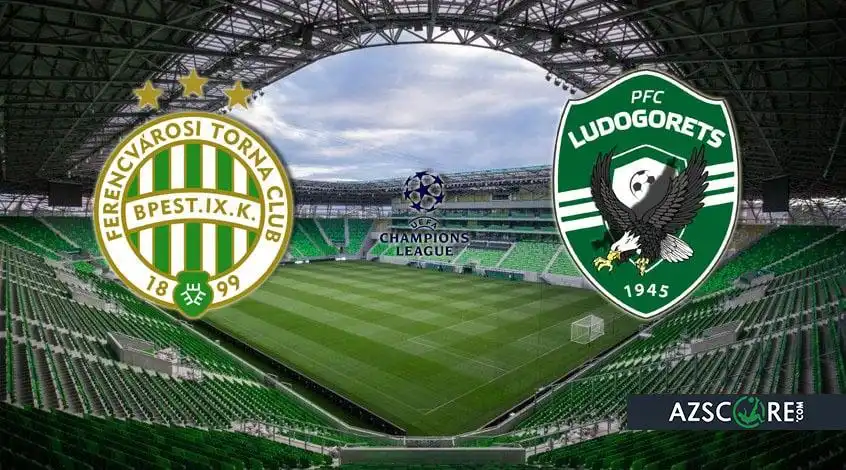
Ferencvarosi come into this tie with the weight of expectation that follows a home-first narrative: start fast in Budapest, create separation early, and avoid the kind of slow-burn match that lets a disciplined opponent hang around. Ludogorets 1945, meanwhile, are one of those European regulars who rarely look spectacular, but almost never look panicked. Their psychology is built on staying in the tie.
That creates a familiar knockout tension. Ferencvarosi are incentivized to push territory and tempo; Ludogorets are incentivized to keep the game state neutral for as long as possible and punish the first structural overreach.
There’s also a practical layer: by late February, domestic campaigns are either resuming or in full swing, which often shows up as uneven rhythm and fitness peaks that are not perfectly priced into early markets. The team that can manage intensity without losing defensive spacing usually wins these ties more than any “form” headline.
2️⃣ Form & Advanced Metrics
Ferencvarosi’s recent profile tends to be built on territorial control rather than pure shot volume. When they’re functioning, they tilt the pitch: sustained possession in the opponent’s half, frequent entries into the final third, and a willingness to take shots after recycling pressure rather than forcing the first window.
The numbers indicate they create a healthy amount of expected goals through repeated attacking phases — not just counterattacks. That matters against Ludogorets, who are usually comfortable defending one or two transitions, but can start to bend when they’re asked to defend wave after wave and clear second balls.
Where Ferencvarosi can get volatile is shot quality allowed. Their defensive issues are less about being constantly outplayed and more about conceding clean central looks when their midfield line gets stretched. In xG terms, that’s the dangerous kind of concession: fewer shots, but higher value. It’s also why their matches can swing quickly if they chase the game with too many bodies ahead of the ball.
Ludogorets’ underlying style is typically more controlled than it looks. They don’t always dominate territory, but they tend to win the “decision-making” battle: when to press, when to drop, when to slow the game down. Their pressing intensity is often situational — think selective pressure rather than constant hunting. In PPDA terms, that usually shows up as a mid-block team that can spike pressure in triggers (bad touches, backward passes, isolated fullbacks) rather than pressing as a lifestyle.
Shot creation for Ludogorets tends to be more about shot quality over shot volume. They don’t need 18 shots; they prefer 10 that come from the right lanes. That’s relevant here because Ferencvarosi’s “over-commit then scramble” moments are exactly the kind of moments Ludogorets are engineered to exploit.
Home/away dynamics matter in this matchup. Ferencvarosi at home generally play with higher pace and more forward risk, while Ludogorets away are comfortable trimming variance: fewer transition exchanges, longer spells without shots, more emphasis on protecting the half-spaces.
3️⃣ League Table Snapshot
| Team | Domestic Position* | Points* | Goal Diff.* | Recent Trend* |
|---|---|---|---|---|
| Ferencvarosi | — | — | — | — |
| Ludogorets 1945 | — | — | — | — |
*Domestic standings can shift rapidly around late-February scheduling and winter breaks; the more stable takeaway comes from performance structure rather than raw table rank.
Analytical takeaway: in ties like this, domestic position is often a weak proxy for European readiness. What matters more is whether each side’s underlying process travels: can Ferencvarosi create repeatable chances without opening transition doors, and can Ludogorets generate enough threat without needing long spells of possession?
4️⃣ Head-to-Head Analysis
With these clubs, the most relevant “head-to-head” factor is not a specific scoreline — it’s the stylistic mirror. Central European vs Balkan European qualifiers and group-stage regulars often share one theme: both are comfortable in structured phases, but one usually tries to raise pace (Ferencvarosi) while the other tries to lower it (Ludogorets).
When similar matchups have played out historically, the pattern is consistent: games are often decided by first-goal timing and who controls the second ball after clearances. If Ferencvarosi score early, they can turn it into a territory siege. If Ludogorets keep it level into the second half, the tie tends to shift toward patience, set pieces, and isolated mistakes.
The important question is whether past results align with underlying metrics. In these styles, they often don’t — because low-volume matches produce noisy outcomes. That’s why this preview leans more on structural matchups than on “who won last time.”
5️⃣ Tactical Breakdown (Core Section)
Who dictates tempo?
Ferencvarosi will try to dictate tempo through field tilt: fullbacks high, wide players pinning the opposition back line, and midfielders positioned to immediately recycle possession after the first clearance. The goal is to keep Ludogorets defending facing their own goal.
Ludogorets’ objective is the opposite: break rhythm. That means slowing restarts, inviting Ferencvarosi to commit extra numbers, and then playing through the first press into the channels. If they can turn the match into alternating spells rather than a continuous siege, they’ve done their job.
Where is the overload zone?
Ferencvarosi’s most valuable attacks usually come when they overload one flank to create a far-post switch — not just crosses for crossing’s sake, but switches that force the defensive line to travel and lose spacing. Against Ludogorets’ compact block, that’s the cleanest route to high-quality shots: move the block, then attack the seam.
Ludogorets will try to defend the half-spaces first. Expect them to concede some wide territory and focus on keeping the central lanes protected. That can leave Ferencvarosi with plenty of touches in non-dangerous areas — a classic “you can have the ball, but not the middle” approach.
Midfield control battle
This is where the tie tilts. If Ferencvarosi’s double-pivot (or deepest midfielder) can receive under pressure and progress cleanly, they can keep Ludogorets pinned and force repeated defensive actions. But if Ludogorets can disrupt that first progression pass, Ferencvarosi’s shape can get stretched: center-backs exposed to runners, midfielders chasing back toward their own goal.
There’s a structural nuance here: Ferencvarosi’s attacking confidence can become a defensive vulnerability if their counter-press is late. Ludogorets don’t need to “outplay” them; they need two or three clean transition releases to manufacture high-xG moments.
Pressing triggers and buildup resistance
Expect Ferencvarosi to press higher early, especially at home, with obvious triggers: back passes, heavy touches, and passes into fullbacks near the sideline. The risk is that a high press without perfect spacing opens the lane behind the first line, and Ludogorets are typically well-drilled at finding that second pass.
If Ludogorets beat the first pressure, they can force Ferencvarosi into retreat sprints — and that’s when fouls, set pieces, and nervous defending arrive.
Transition vulnerability and game state
This match is likely to be decided by game state management. If Ferencvarosi go ahead, their best move is not to sit deep — it’s to keep controlled possession and deny transitions. If they chase too aggressively for a second goal, they may hand Ludogorets the exact match they want: open grass, isolated defenders, and a lower shot count with higher average chance quality.
Set pieces
Knockout ties routinely swing on set pieces because they compress variance: one well-delivered ball can bypass all tactical plans. Ferencvarosi’s home pressure should win corners and free kicks; Ludogorets will look to turn defensive set pieces into counter set pieces (clear, carry, win a foul). The team that wins the second ball after the first contact will generate the better repeatable threat.
6️⃣ Odds & Market Evaluation
| Market | Selection | Odds | Implied Probability |
|---|---|---|---|
| 1X2 | Ferencvarosi | 2.20 | 45.45% |
| 1X2 | Draw | 3.20 | 31.25% |
| 1X2 | Ludogorets 1945 | 3.40 | 29.41% |
Note: implied probabilities above are raw (not margin-adjusted), so they will sum above 100%.
According to our calculations, this is priced like a fairly standard home edge spot in Europe: Ferencvarosi favored, draw meaningful, away win not dismissed. The betlabel.games team evaluates the true win probabilities as slightly more draw-leaning than many public markets naturally price in for a first-leg-style tactical battle.
Value read: any edge here is likely marginal rather than massive. The sharper angles tend to live in derivative markets (draw protection, totals, or team totals) where match state and tempo expectations matter more than raw team strength branding.
7️⃣ The Hidden Edge (Mandatory Section)
The market is often slow to adjust for one key dynamic in this type of matchup: possession can be misleading when the opponent is built to defend the middle.
Ferencvarosi can rack up field tilt and touches in the final third without necessarily improving shot quality if Ludogorets successfully protect Zone 14 and the half-spaces. That creates a subtle trap for bettors who rely on territorial dominance alone: it looks like control, but it may be low-leverage control.
On the other side, Ludogorets’ chance creation can look “quiet” until it suddenly isn’t. A handful of transition sequences and set-piece situations can generate a disproportionate share of their xG. If recent results have gone against them, it can read like poor form — but in reality it may be finishing variance in low-volume matches.
So the hidden edge is this: the draw is not simply a neutral outcome; it’s often a structurally likely outcome when one side wants to raise tempo and the other is competent at lowering it. Markets sometimes underprice that equilibrium because narrative tends to favor the home aggressor.
8️⃣ Final Prediction
Main Pick: Draw (1X2)
Alternative: Under 2.5 Goals
Risk Level: Medium
Why: (1) The tactical matchup points toward tempo friction: Ferencvarosi will have territory, Ludogorets will defend central zones and look for selective transitions. That combination often produces long periods without high-quality chances. (2) Both teams are structurally capable of keeping the game in a “one-event” state, where set pieces and isolated mistakes decide outcomes — a natural draw environment. (3) Market pricing tends to slightly over-reward the home initiative; draw probability often holds stronger in disciplined European ties than public sentiment suggests.
No guarantees. But in probability terms, the draw and a lower-scoring game align with how this match is likely to breathe.



Leave a Reply